
Heavy-Duty Expanded Metal Overview
Heavy-duty expanded metal is designed for applications requiring higher strength, improved impact resistance and increased structural rigidity compared with standard expanded metal.
Manufactured from thicker metal sheets with wider strands and stronger bonds, heavy-duty expanded metal provides a durable open structure while maintaining airflow, visibility and weight efficiency.
It is commonly used for protective panels, industrial enclosures, security barriers and heavy fabrication projects.
Heavy-Duty Expanded Metal Features
Heavy-duty expanded metal is selected when standard expanded metal cannot provide sufficient strength or durability.
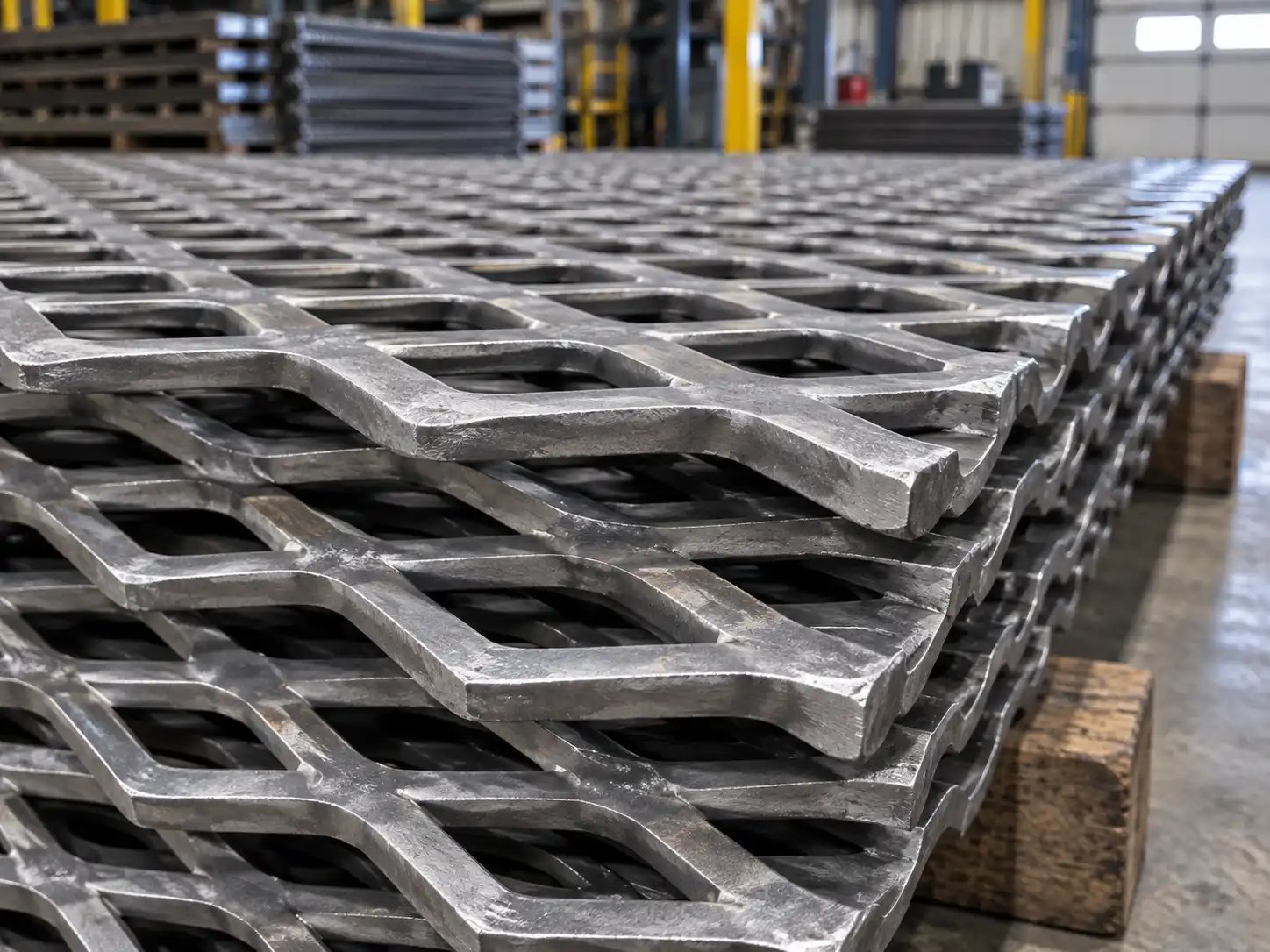
Thicker Material
A heavier starting sheet provides greater resistance to bending, impact and deformation than lighter expanded metal.
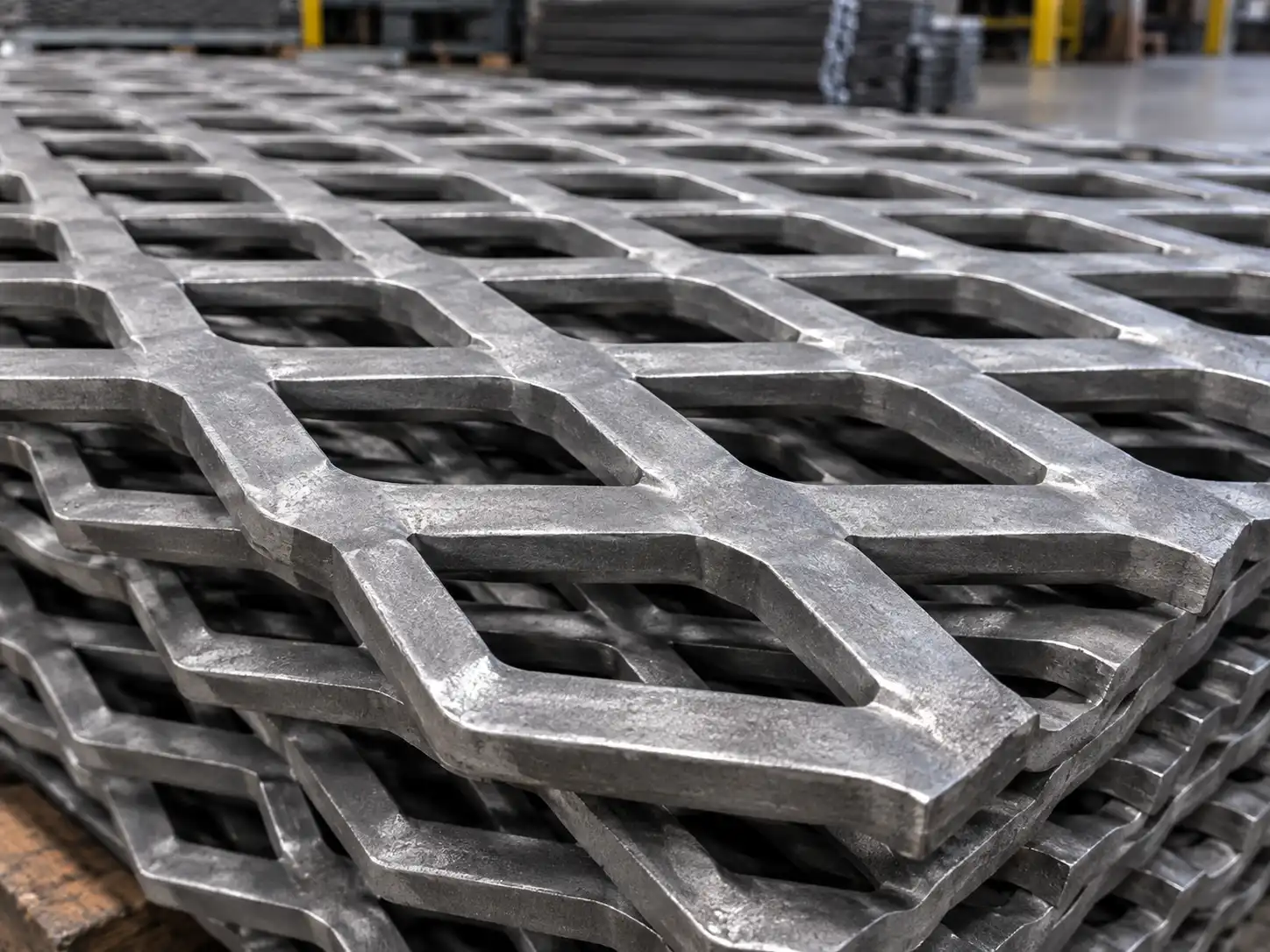
Wider Strands
Wider strands increase the metal section within the mesh and improve overall panel rigidity.
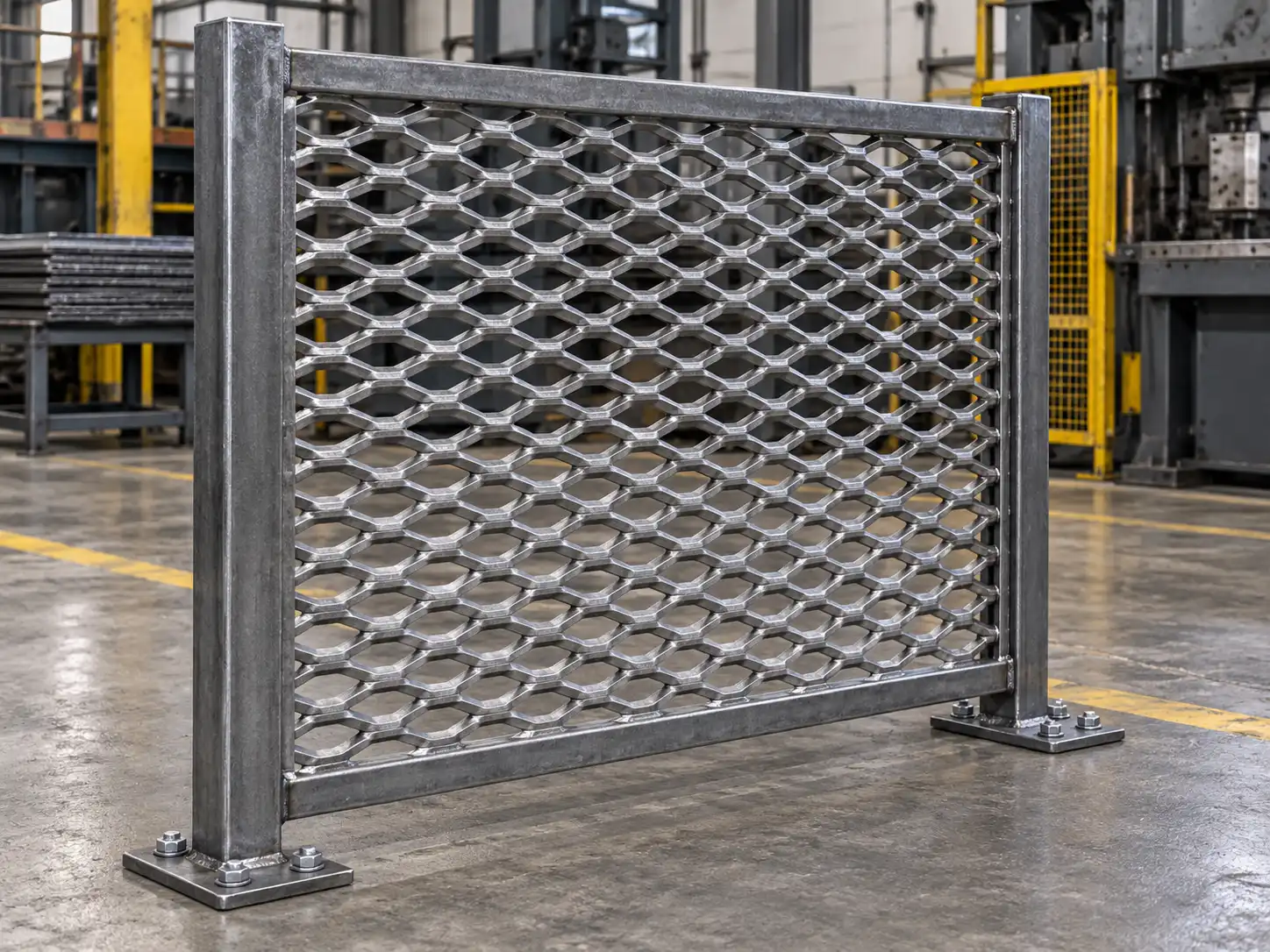
Rigid Structure
The continuous expanded pattern creates a strong mesh structure without welded intersections.
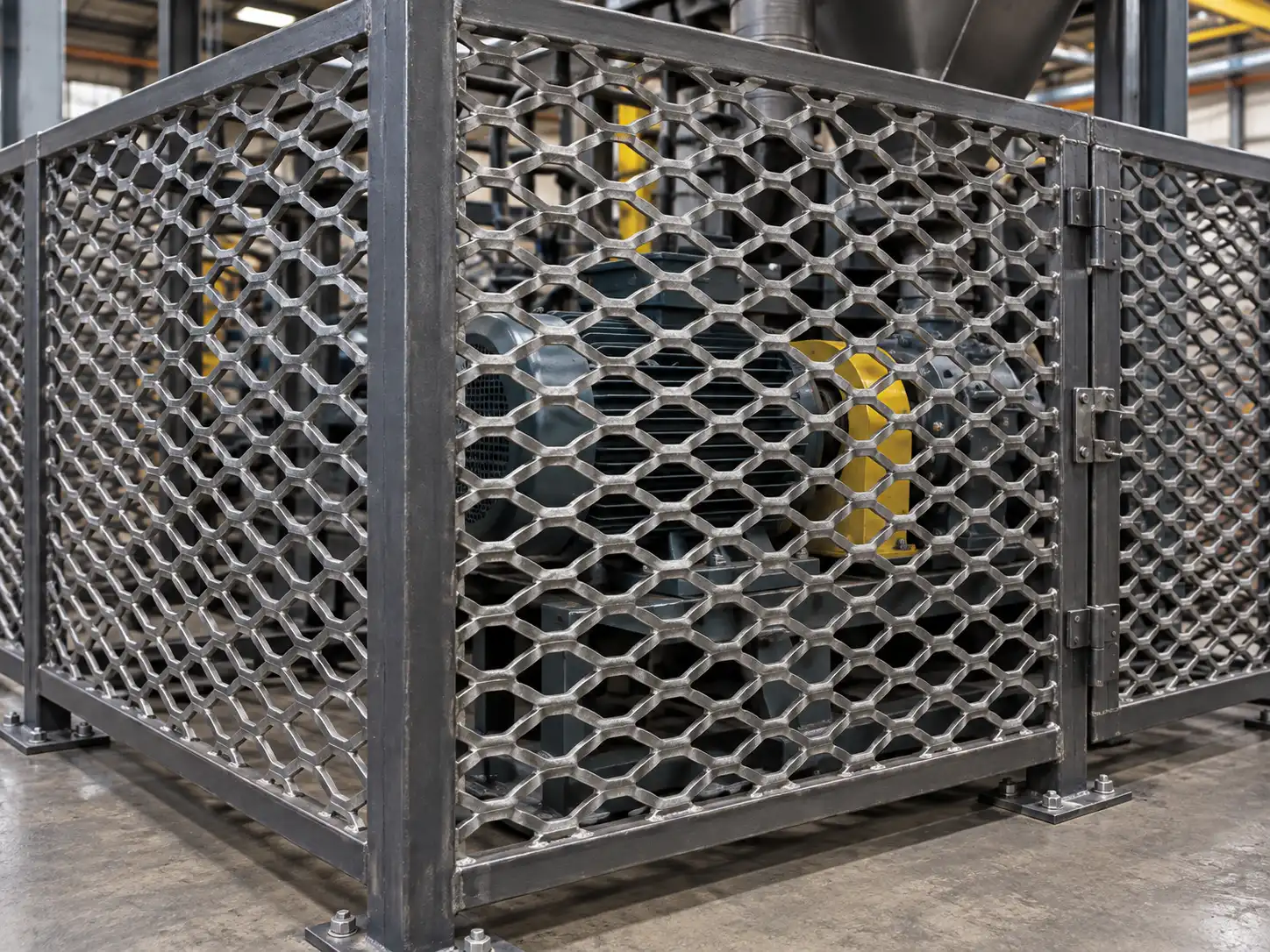
Open Design
The open mesh maintains airflow, visibility and drainage while providing a durable protective surface.
Heavy-Duty Expanded Metal Sizes and Specifications
The correct heavy-duty expanded metal specification depends on material, base thickness, opening size, strand dimensions and final fabrication requirements.
| Specification | Available Options | Selection Notes |
|---|---|---|
| Material | Carbon steel, galvanized steel, stainless steel, aluminum | Select according to strength, corrosion resistance and weight |
| Base Thickness | According to project requirements | One of the main factors affecting rigidity and weight |
| SWD | Custom according to mesh pattern | Defines the short-way opening |
| LWD | Custom according to mesh pattern | Defines the long-way opening and mesh direction |
| Strand Width | According to strength and opening requirements | Wider strands generally increase rigidity |
| Sheet Size | Standard or custom dimensions | Confirm final width and length |
| Mesh Direction | SWD or LWD orientation | Important for fabrication, appearance and panel behavior |
| Edge Condition | Cut, trimmed, framed or reinforced | Selected according to installation method |
| Surface Finish | Mill finish, galvanized, painted, powder-coated | Depends on material and environment |
| Fabrication | Cutting, bending, welding, framing | Available according to drawings |
For mesh terminology and measurement methods, see Expanded Metal Sizes & How to Measure.
How to Select Heavy-Duty Expanded Metal
Heavy-duty expanded metal should not be selected by thickness alone. The entire mesh geometry affects finished performance.
Required Strength
Start with the expected impact, rigidity or protection requirement for the finished panel.
Opening Size
Larger openings improve airflow and visibility, while smaller openings provide a denser protective barrier.
Strand Width and Thickness
These two dimensions have a major influence on panel rigidity, weight and resistance to deformation.
Panel Size and Support
Large unsupported panels may require framing or additional reinforcement even when heavy-duty mesh is used.
Custom Heavy-Duty Expanded Metal Fabrication
Heavy-duty expanded metal can be supplied as raw sheets or fabricated into finished industrial components.
Cutting and Sizing
Sheets can be cut into custom panels, blanks and shaped parts according to finished dimensions.
Framing and Reinforcement
Perimeter frames, angles and reinforcement sections can be added where additional panel stability is required.
Bending and Forming
Heavy-duty mesh can be formed into guards, covers and enclosures according to the required geometry.
Welding and Assembly
Panels can be welded to frames, brackets, mounting plates and structural sections for installation-ready assemblies.
Heavy-Duty Expanded Metal Materials
Material selection should be based on strength, corrosion resistance, weight and service environment.
Stainless Steel Expanded Metal
Stainless steel provides corrosion resistance for food processing, chemical, marine and demanding industrial environments.
Aluminum Expanded Metal
Aluminum is lightweight and corrosion-resistant for transportation, ventilation, architectural and decorative components.
Carbon Steel Expanded Metal
Carbon steel provides strength and cost efficiency for industrial guards, covers, racks and fabricated parts.
Galvanized Expanded Metal
Galvanized steel has a zinc-protected surface for outdoor, construction, security and general industrial projects.
Heavy-Duty Expanded Metal Applications
Heavy-duty expanded metal is mainly used where increased panel rigidity, impact resistance and physical protection are required.
Machine Guards & Safety Barriers
Wire Mesh Security Cages & Storage Lockers
Expanded Metal Security Fencing
Why Choose Us for Heavy-Duty Expanded Metal Supplier?
We focus on the manufacturing details that affect heavy-duty panel performance and repeat production.
Controlled Mesh Geometry
SWD, LWD and strand dimensions are produced according to the approved specification.
Stable Panel Dimensions
Finished sheet size and mesh direction are checked before secondary fabrication.
Heavy-Duty Fabrication Support
Cutting, framing, welding and reinforcement can be completed according to project drawings.
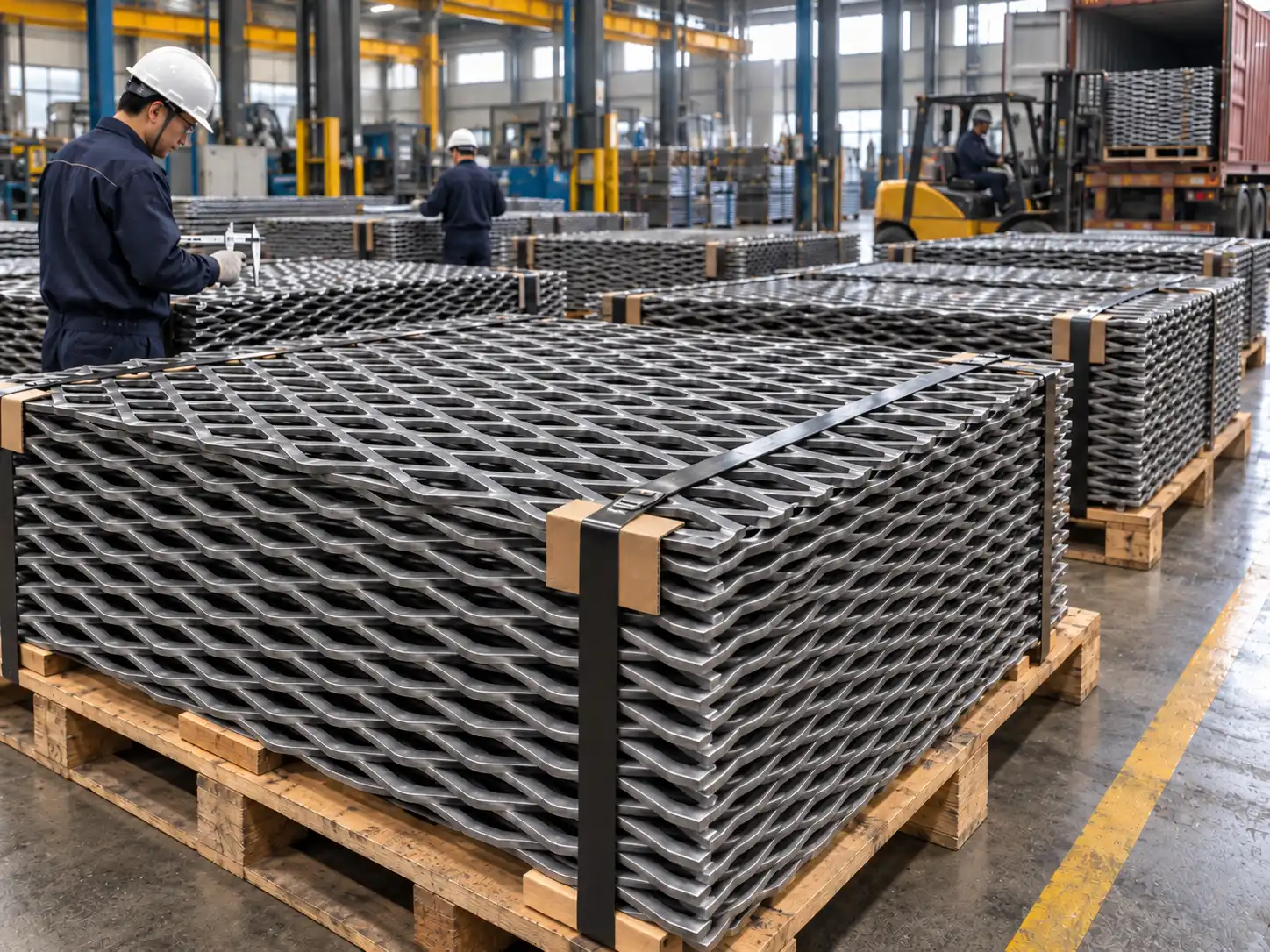
Protected Export Packaging
Heavy panels and finished assemblies are supported and secured to reduce deformation during transportation.
How to Order Heavy-Duty Expanded Metal
Provide the following information so we can review the specification and prepare an accurate quotation.
Application
Describe whether the product will be used for guarding, security, enclosure or another heavy-duty application.
Material
Specify carbon steel, galvanized steel, stainless steel, aluminum or another required material.
Mesh Specification
Provide SWD, LWD, strand width or an existing reference specification.
Base Thickness
Provide the required metal thickness or expected strength requirement.
Panel Dimensions
Confirm finished width, length, quantity and mesh orientation.
Fabrication and Finish
Send drawings for cutting, bending, framing, welding, mounting details and surface treatment.
Heavy-Duty Expanded Metal or Expanded Metal Grating?
Heavy-duty expanded metal and expanded metal grating can both use thicker mesh structures, but their primary selection criteria are different.
| Heavy-Duty Expanded Metal | Expanded Metal Grating |
|---|---|
| Selected mainly for rigidity and protection | Selected mainly for flooring and access |
| Used for guards, barriers and enclosures | Used for walkways, platforms and flooring |
| Impact resistance is important | Load and support span are important |
| Usually installed vertically or as protective panels | Usually installed as a walking surface |
If the product will carry pedestrian loads, use the Expanded Metal Grating page for load and span selection.
Typical Manufacturing Case: Heavy-Duty Expanded Metal Security Enclosures
Project Background
A logistics company required custom security enclosures for high-value equipment and storage areas inside a distribution facility.
The enclosure needed to provide physical protection while maintaining visibility for daily inspections and allowing airflow around the stored equipment.
Project Requirements
The customer required:
- High-strength metal panels resistant to impact
- Open visibility for monitoring the protected area
- Ventilation to prevent heat accumulation
- Custom panel dimensions to fit the existing steel framework
Manufacturing Solution
Heavy-duty galvanized expanded metal was selected because it provided a rigid protective structure while maintaining an open mesh design.
The expanded metal panels were cut according to the enclosure layout and reinforced with welded steel frames.
Mounting holes and connection sections were added to simplify installation at the customer’s facility.
A galvanized finish was selected to improve corrosion resistance and maintain long-term performance in the warehouse environment.
Quality Inspection and Delivery
Before shipment, the finished panels were inspected for:
- Panel dimensions
- Mesh consistency
- Frame alignment
- Surface finish quality
The fabricated sections were packed with protective separators and secured to prevent deformation during transportation.
Application Result
The completed security enclosure provided a durable physical barrier while maintaining visibility, ventilation and easy access for authorized personnel.
This solution is suitable for equipment cages, storage protection areas and industrial security partitions.
Heavy-Duty Expanded Metal FAQs
Heavy-duty expanded metal is produced from thicker metal sheet with a stronger strand structure for applications requiring greater rigidity and impact resistance.
Heavy-duty products generally use thicker base metal and wider strands, creating a more rigid and durable mesh structure.
No. Heavy-duty expanded metal is mainly selected for protection, barriers and industrial fabrication, while expanded metal grating is selected primarily for flooring and walking surfaces.
Yes. Galvanized steel, stainless steel and suitable protective finishes can be used for outdoor environments.
Yes. Cutting, forming, framing, welding, mounting details and finishing can be completed according to approved drawings.
Common options include carbon steel, galvanized steel, stainless steel and aluminum.
Yes. Panels can be cut to specified widths and lengths and supplied with controlled mesh orientation.
Yes. Heavy-duty expanded metal can be welded to steel or aluminum frames and supplied as finished protective panels.
Thickness should be considered together with strand width, opening size, panel dimensions, support conditions and required protection level.
Provide material, mesh dimensions, thickness, panel size, quantity, application, finish and any fabrication drawings.
Related Expanded Metal Products
Explore other expanded metal products based on the required mesh structure, surface profile, strength and final application.
Expanded Metal Sheet
Full-size, cut-to-size and fabricated expanded metal sheets for industrial and OEM production.
Expanded Metal Mesh
Expanded metal selected according to opening dimensions, strand size and open area.
Expanded Metal Screen
Framed and fabricated panels for protection, ventilation and architectural screening.
Expanded Metal Lath
Expanded metal products for plaster, stucco and construction reinforcement systems.
Raised Expanded Metal
Raised mesh with a textured profile, increased rigidity and improved surface grip.
Standard Expanded Metal
Standard unflattened expanded metal for general industrial manufacturing and fabrication.
Flattened Expanded Metal
Smooth and low-profile expanded metal for panels, inserts and decorative applications.
Expanded Metal Grating
Expanded metal grating is designed for industrial flooring, platforms, walkways and stair treads requiring drainage, traction and load-bearing performance.