
Perforated Metal Overview
Perforated metal is produced by punching controlled openings into metal sheet to create a combination of airflow, visibility, screening, strength and architectural appearance.
Hole shape, opening size, pitch and arrangement can be adjusted to control the finished open area and performance of the sheet.
We supply perforated metal in different product forms, materials and hole patterns, from raw perforated sheet metal for further fabrication to finished architectural panels and screening systems.
Perforated Metal Product Types
Choose the perforated metal product according to the required sheet form, panel design, screening function or hole pattern.
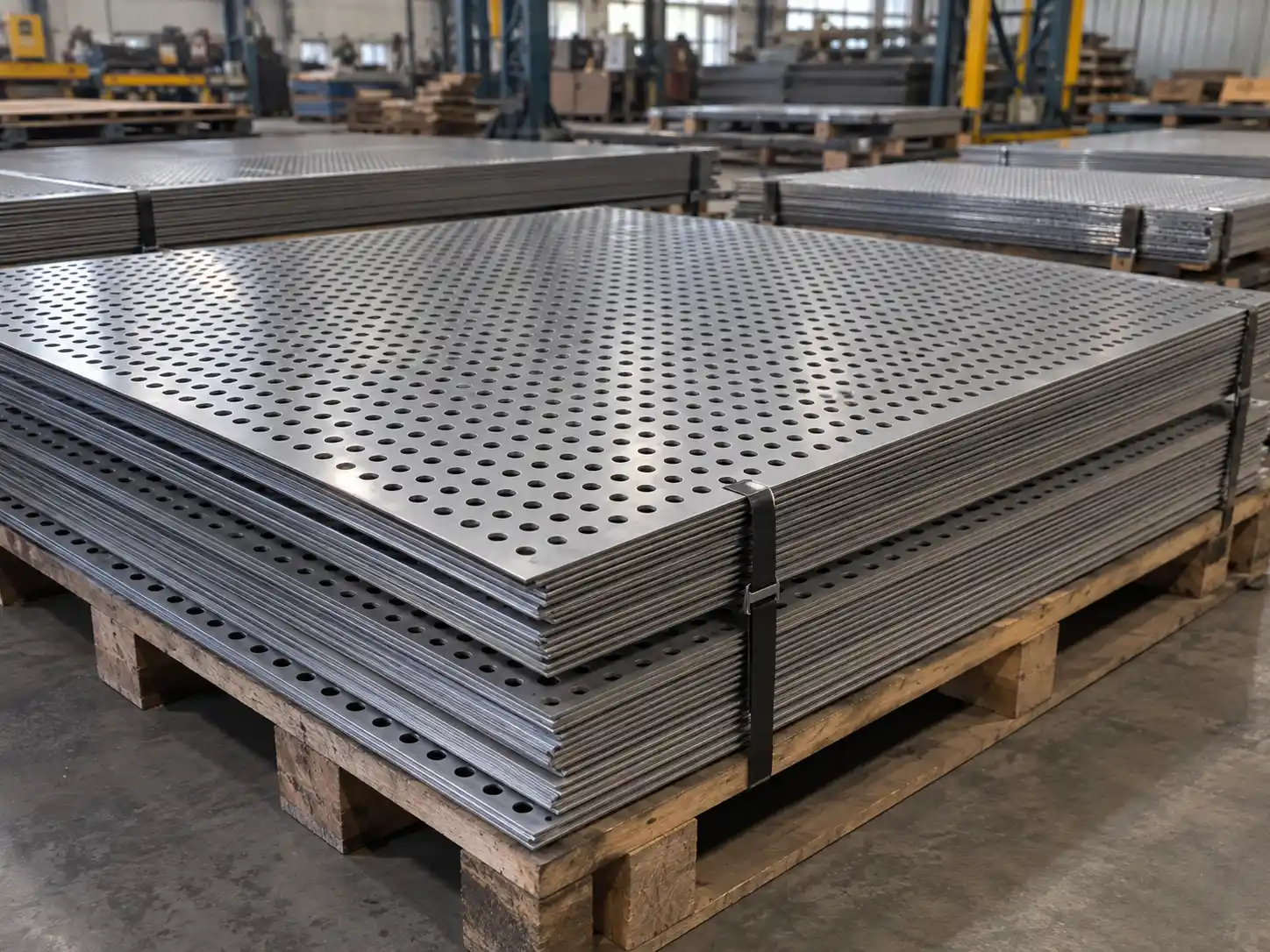
Perforated Metal Sheet
General perforated sheet metal with customizable material, thickness, hole size and open area for fabrication, screening and industrial applications.
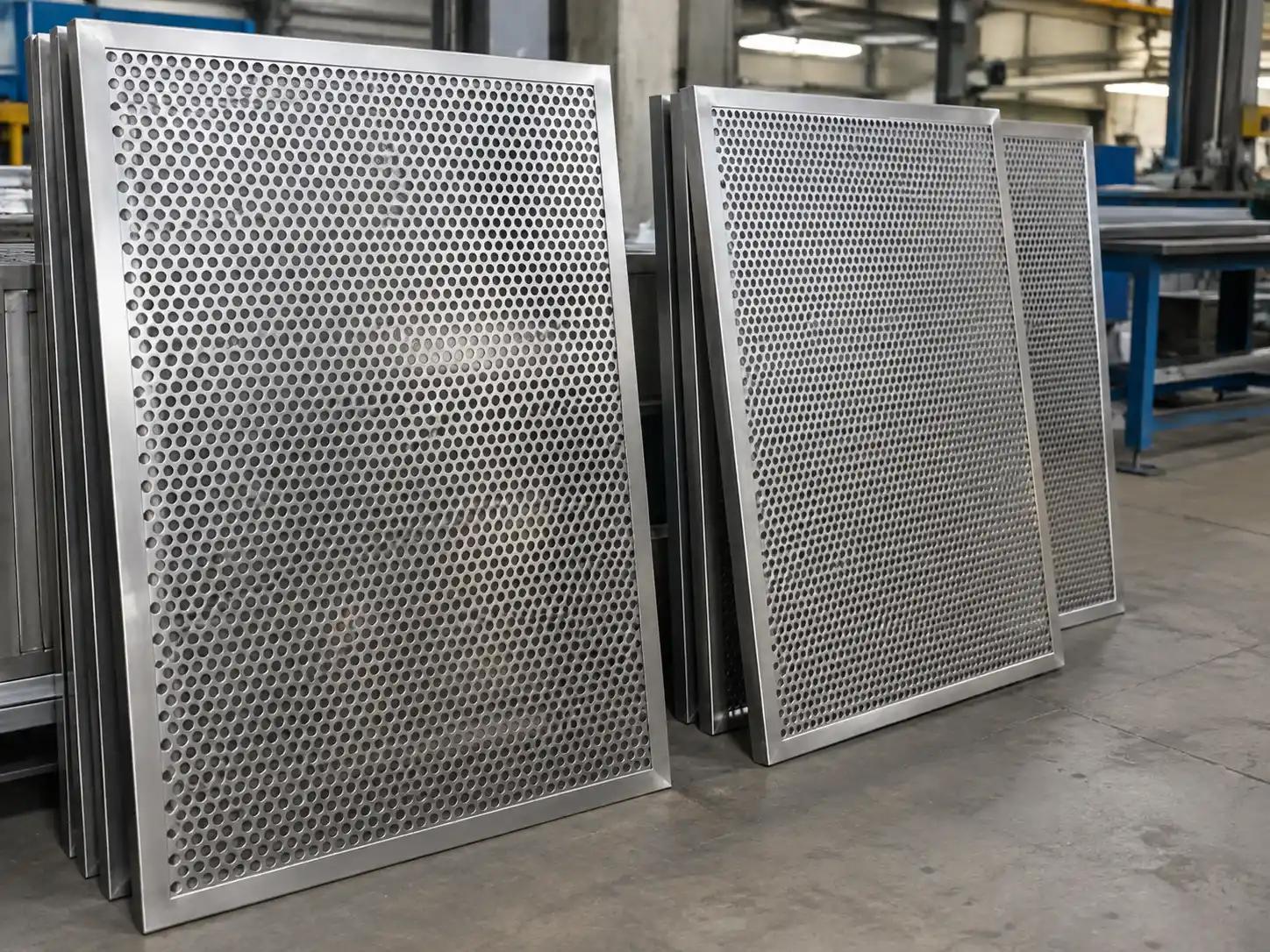
Perforated Metal Panels
Finished perforated metal panels for walls, ceilings, facades and project-based architectural installations.
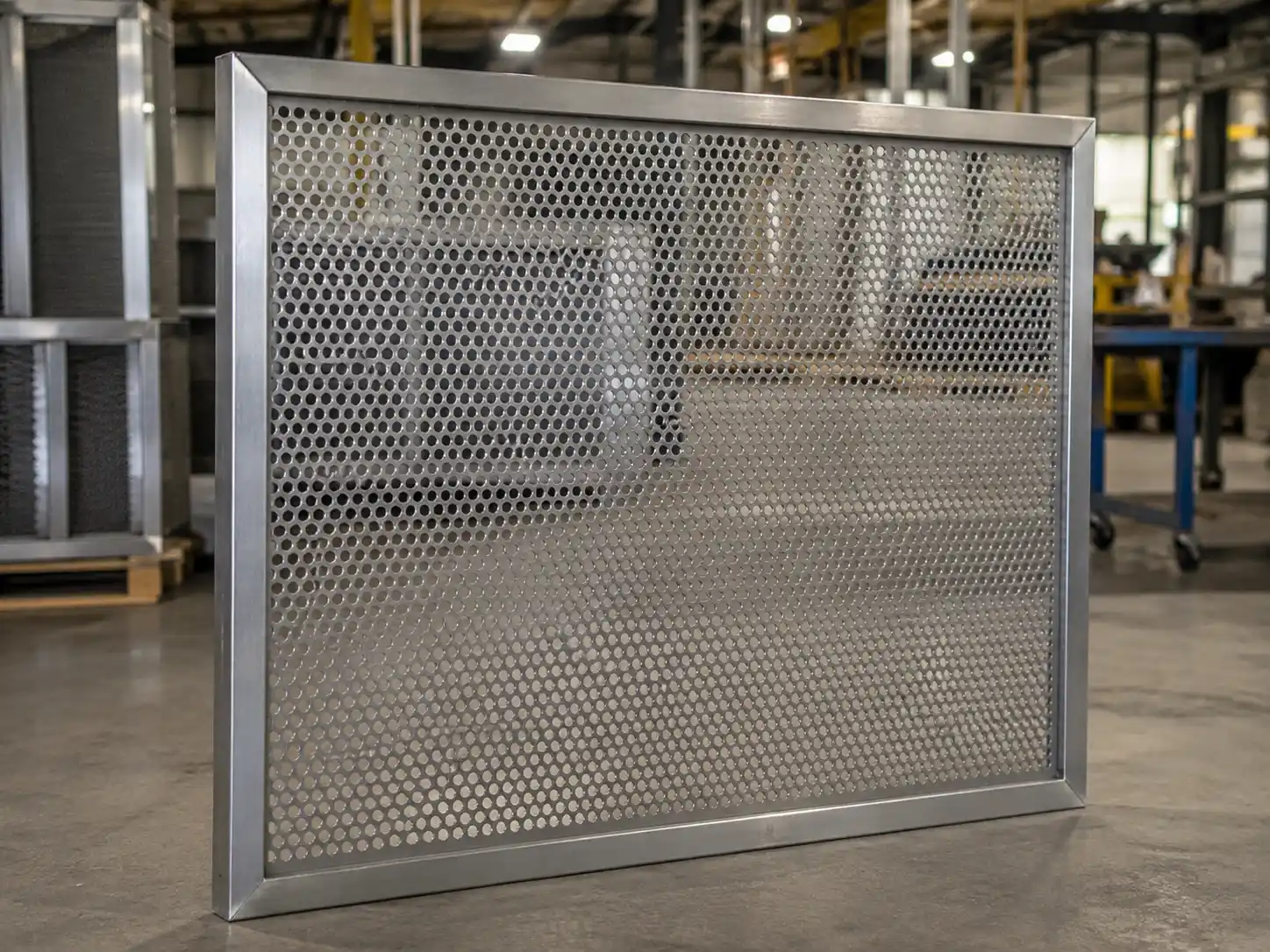
Perforated Metal Screen
Perforated screens for privacy, ventilation, protection and separation with custom panel dimensions and mounting details.
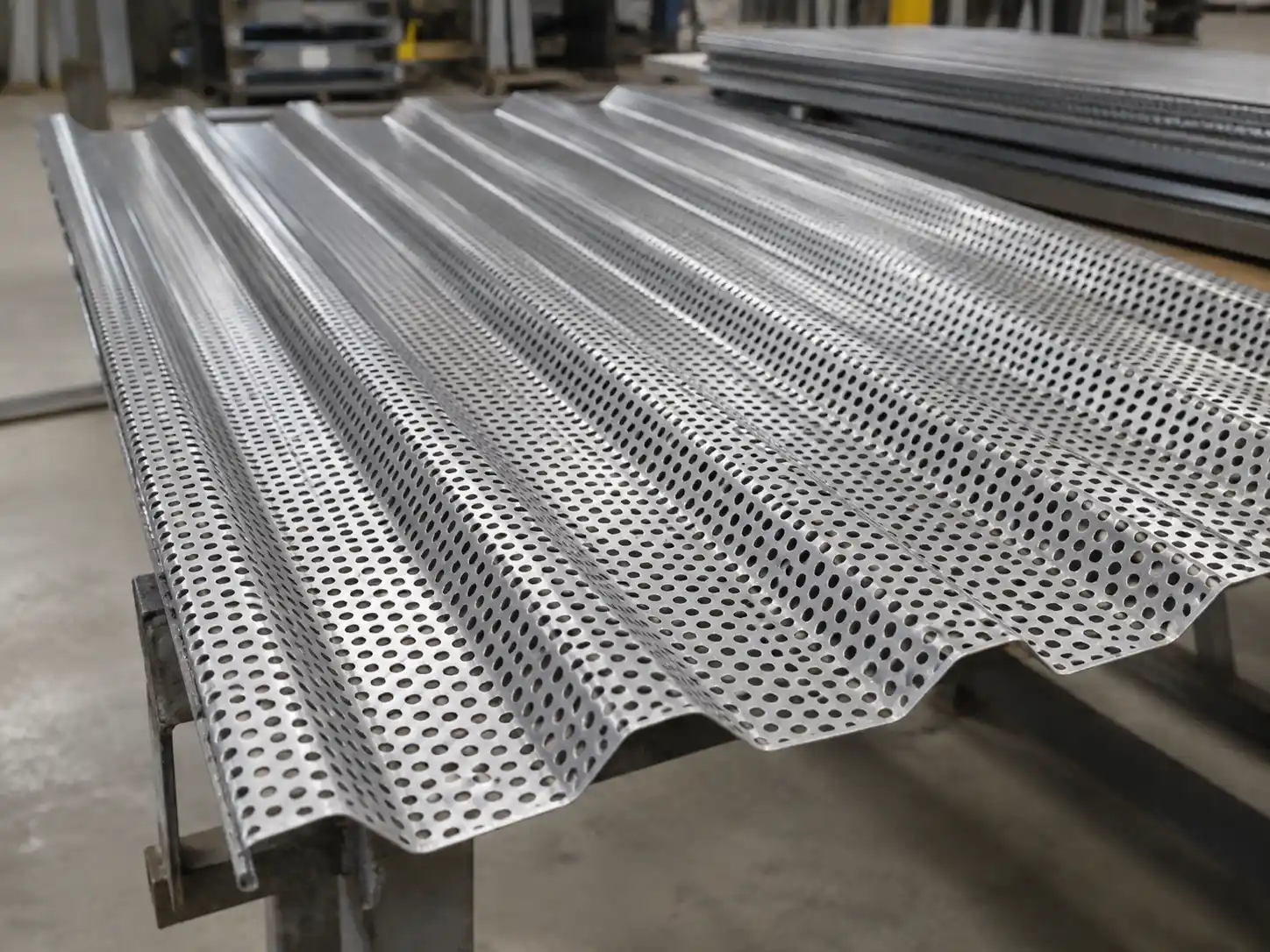
Corrugated Perforated Metal Panels
Profiled perforated panels combining controlled openings with increased rigidity and a three-dimensional surface.
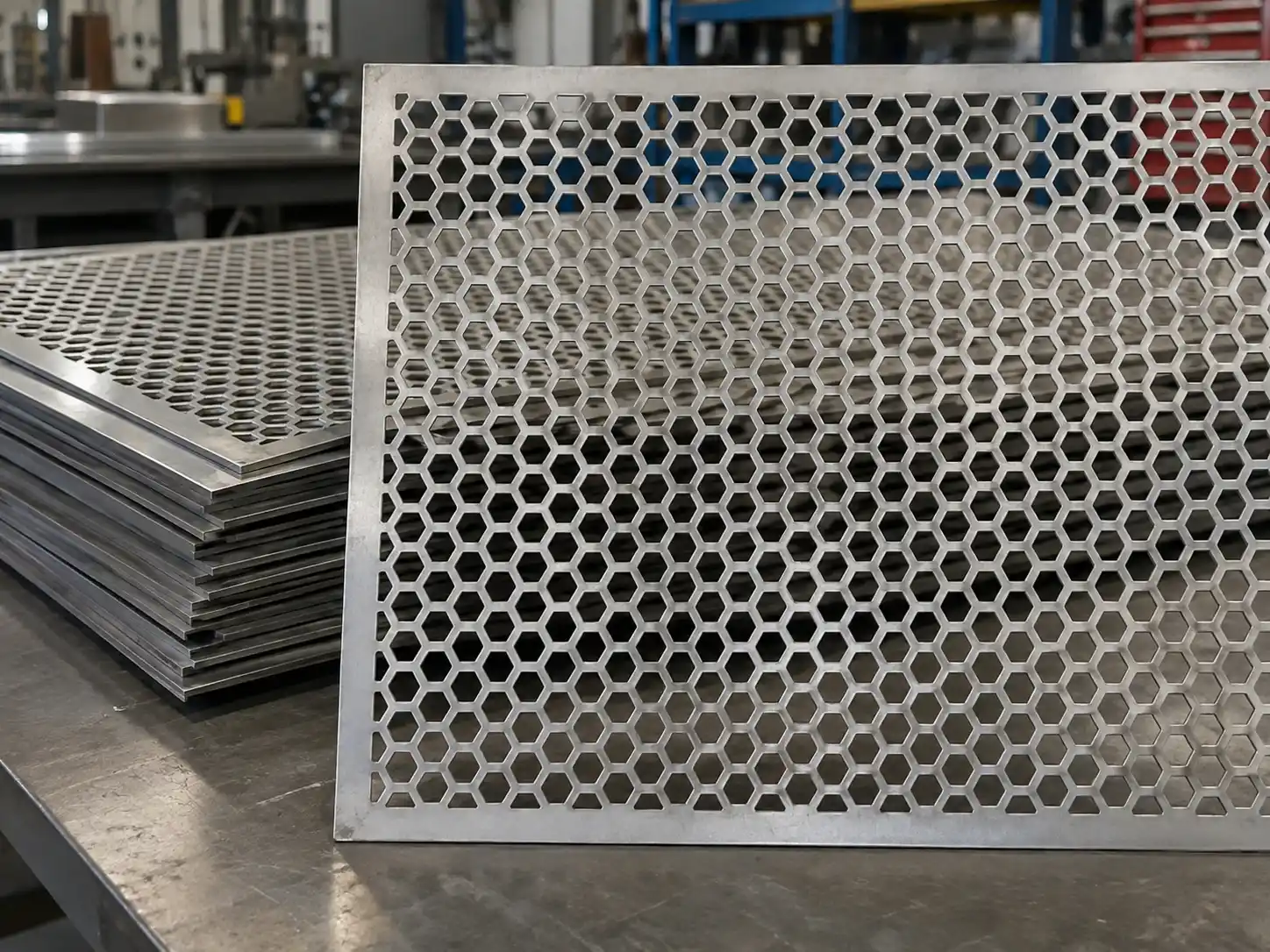
Hexagonal Perforated Metal
Six-sided perforations providing a distinctive geometric pattern for screening, grilles and architectural applications.
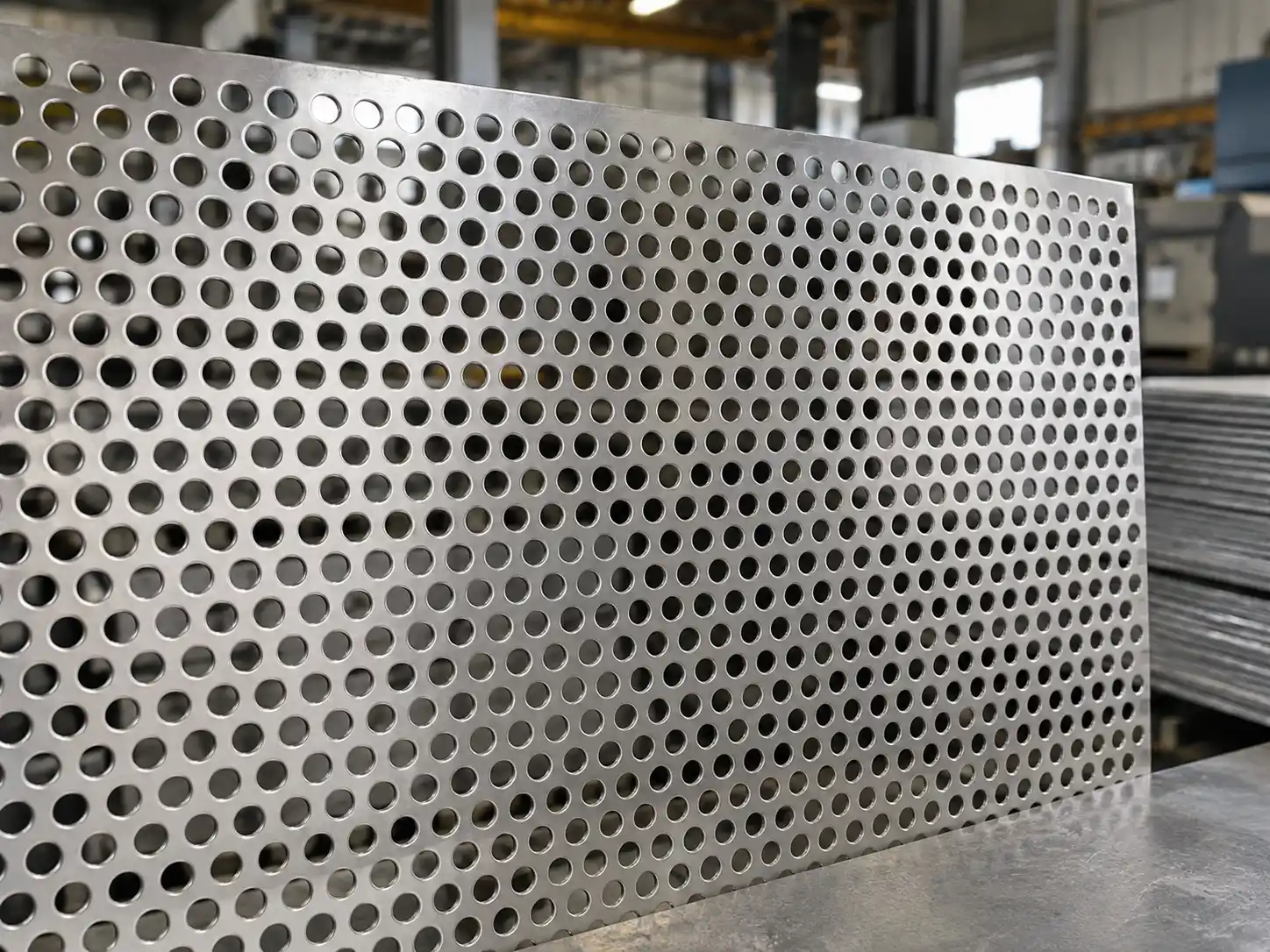
Round Hole Perforated Metal
Round perforations provide a versatile solution for ventilation, filtration, screening and general fabrication.
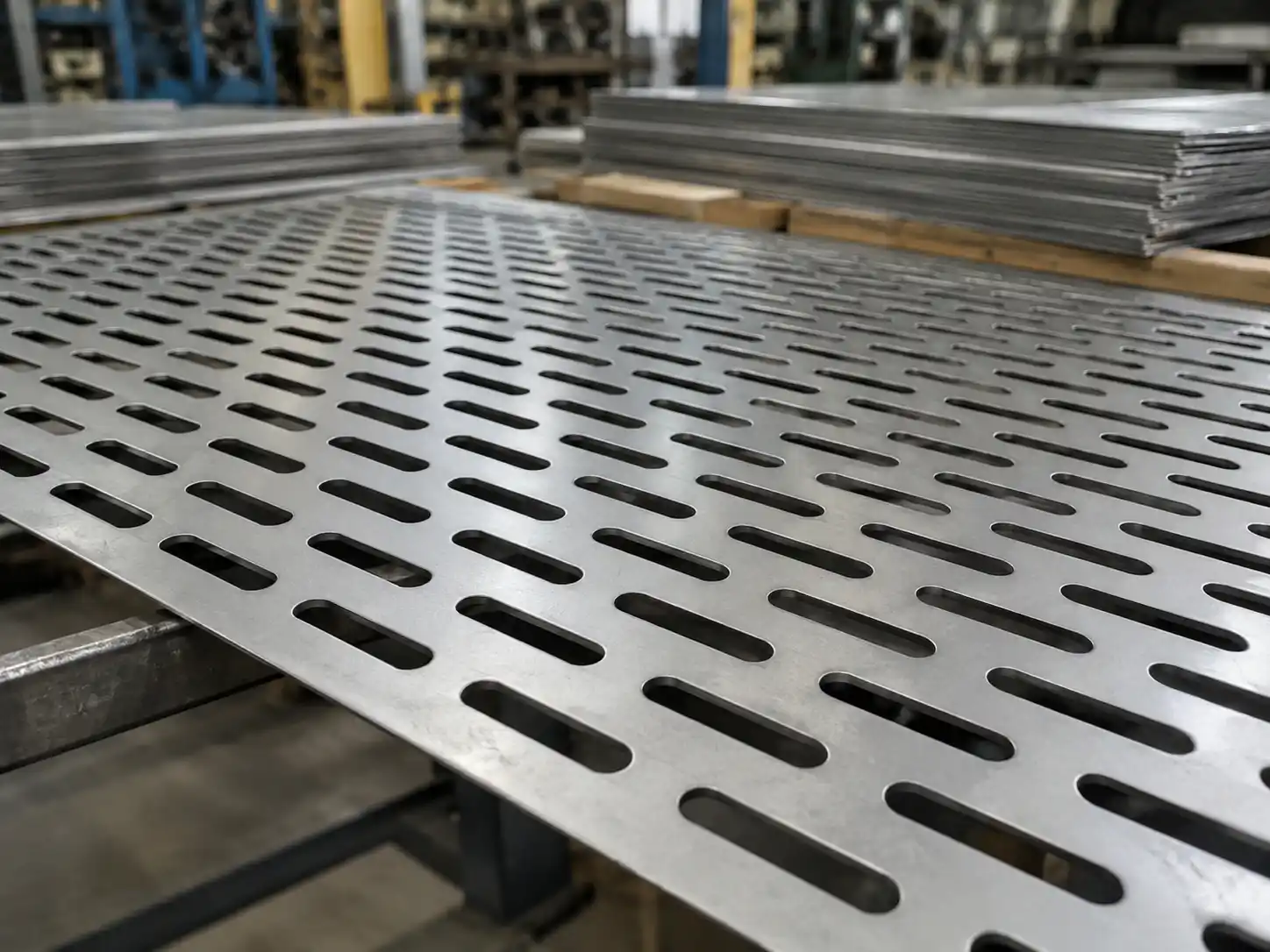
Slotted Perforated Metal
Elongated openings for directional airflow, drainage, separation and industrial screening requirements.
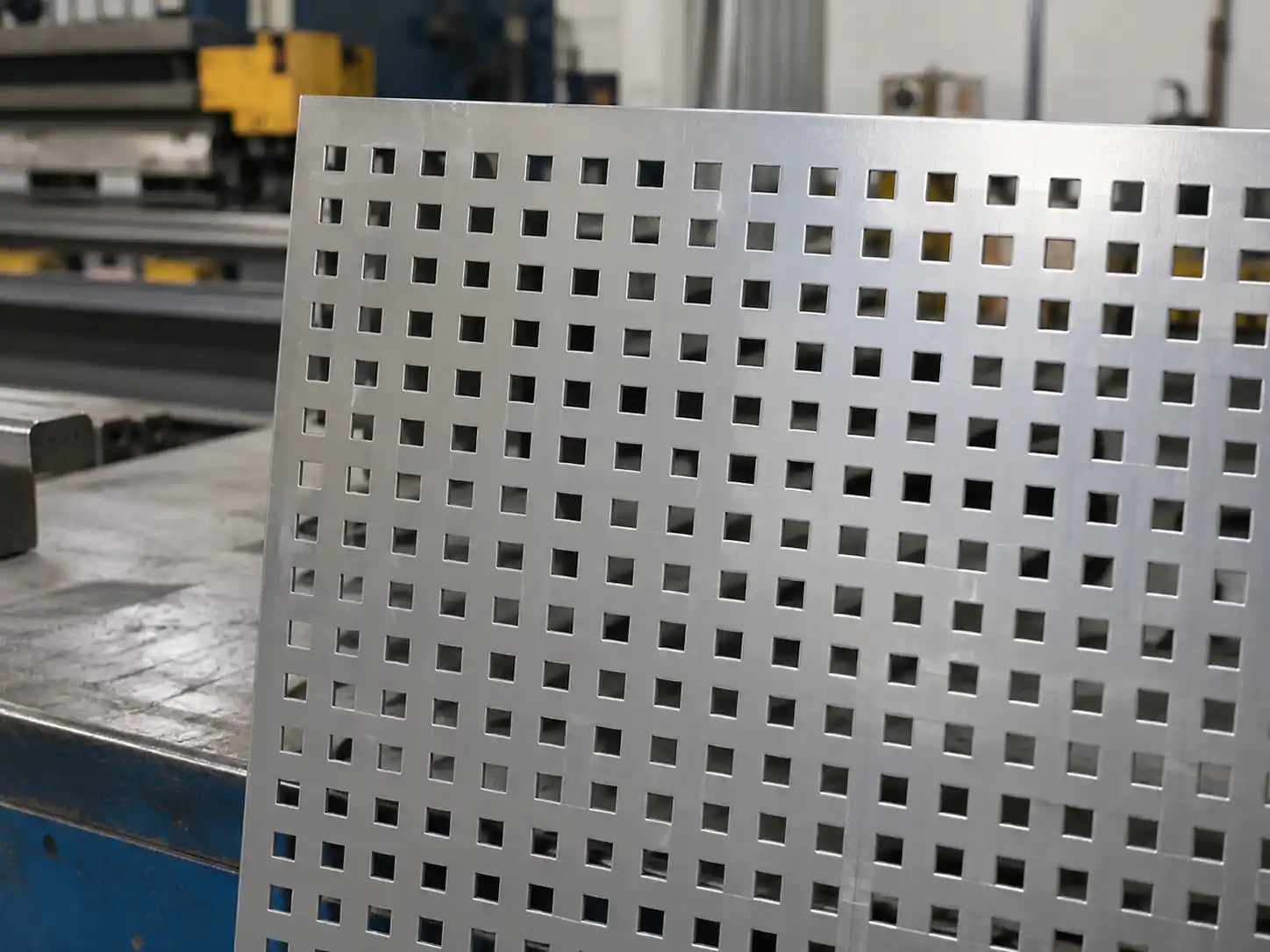
Square Perforated Metal
Square perforations create a clean geometric grid for architectural, screening and fabricated applications.
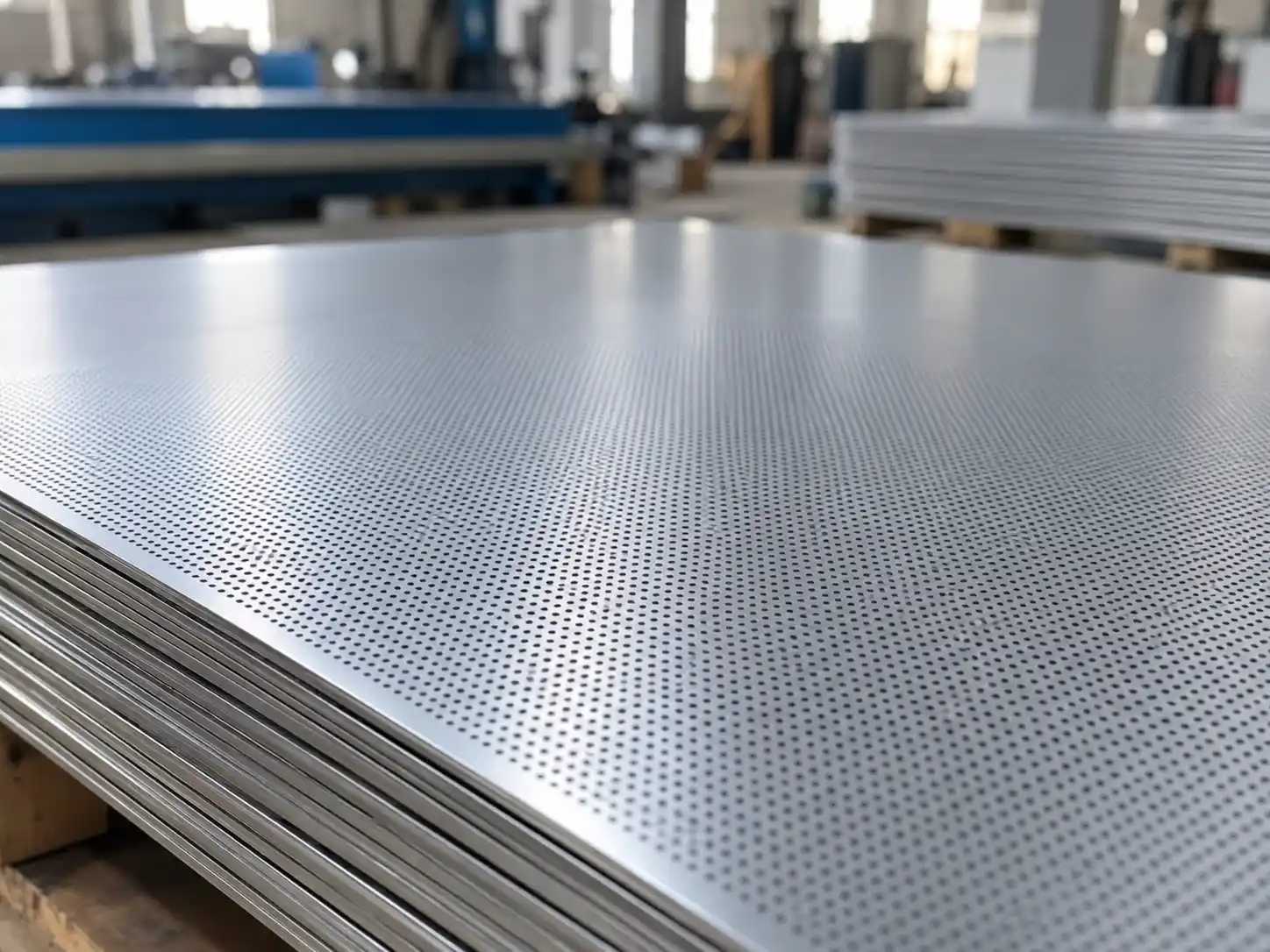
Micro-Perforated Metal
Fine precision openings for acoustic, airflow, screening and specialized technical applications.
Perforated Metal Materials
Material selection affects corrosion resistance, panel weight, strength, appearance and long-term service conditions.
Stainless Steel Expanded Metal
Stainless steel expanded metal provides excellent corrosion resistance and long service life for demanding environments.
Common applications include filtration, food processing, architecture and protective panels.
Aluminum Expanded Metal
Aluminum expanded metal provides lightweight construction with natural corrosion resistance.
It is commonly selected for architectural panels, decorative applications and lightweight fabrication.
Carbon Steel Expanded Metal
Carbon steel expanded metal offers high strength and cost efficiency for general industrial applications.
Galvanized Expanded Metal
Galvanized expanded metal provides additional corrosion protection for outdoor and exposed applications.
Perforated Metal Applications
Perforated Metal Facades & Cladding
Perforated Metal Ceilings & Acoustic Panels
Perforated Metal Filtration & Screening
Perforated Metal Railings & Privacy Screens
Machine Guards & Safety Barriers
Metal Mesh Grilles, Speaker & Radiator Covers
Custom Perforated Metal Fabrication
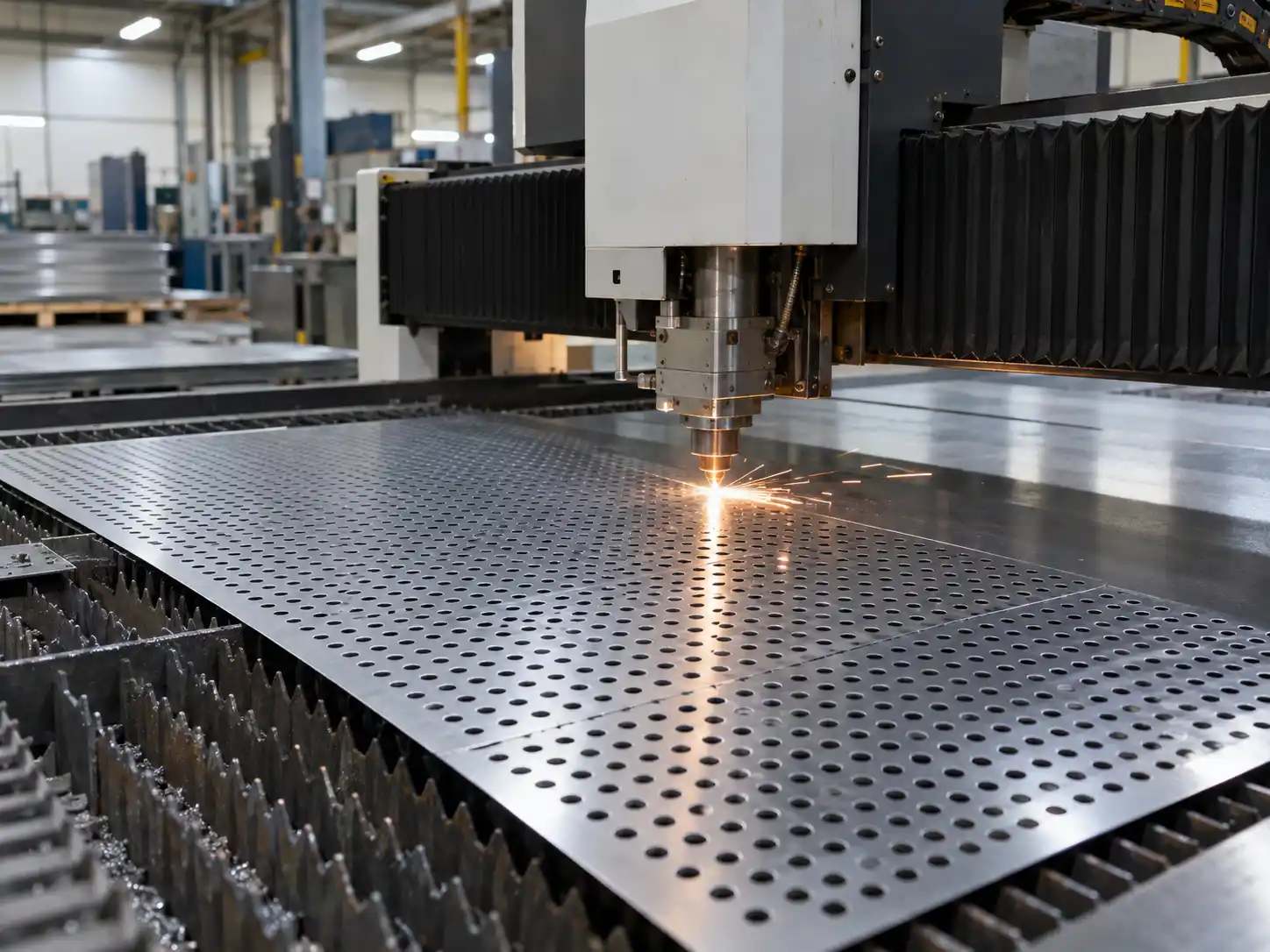
Perforated metal can be supplied as flat sheets or processed into installation-ready components according to project drawings.
Cutting and Sizing
Sheets and panels can be cut to finished widths, lengths and custom shapes.
Bending & Forming
Perforated metal can be formed into panels, covers, screens, enclosures and other fabricated components.
Framing & Mounting
Frames, folded edges, mounting holes, brackets and fixing zones can be incorporated into finished assemblies.
Surface Finishing
Powder coating, painting, galvanizing, polishing and other finishing options are available according to material and project requirements.
How to Choose Perforated Metal
The correct perforated metal specification depends on the required opening, open area, sheet performance and final application.
Choose by Product Form
Select sheets for further fabrication, finished panels for installation, screens for privacy or ventilation, and corrugated panels where additional profile rigidity is required.
Choose by Hole Pattern
Round, slotted, square, hexagonal and micro-perforated openings provide different combinations of airflow, screening and appearance.
Choose by Open Area
Open area affects ventilation, visibility, filtration, shading and the amount of solid metal remaining in the sheet.
Choose by Material
Consider corrosion resistance, weight, strength and operating environment when selecting stainless steel, aluminum, carbon steel or galvanized steel.
Why Work With Us for Perforated Metal?
Perforation Control
Hole size, pitch, layout and solid border areas can be produced according to approved specifications.
Complete Product Range
We supply raw perforated sheets, fabricated panels, screens, corrugated panels and different hole patterns.
Secondary Fabrication
Cutting, forming, framing, mounting preparation and finishing can be completed according to project drawings.
Repeat Project Production
Approved perforation layouts and panel specifications can be maintained across repeat production orders.
Perforated Metal vs. Expanded Metal
Both products create open metal surfaces, but their manufacturing processes and selection criteria are different.
| Comparison | Perforated Metal | Expanded Metal |
|---|---|---|
| Manufacturing | Openings are punched into metal sheet | Sheet is slit and stretched |
| Opening Design | Round, slotted, square, hexagonal and custom | Primarily expanded mesh patterns |
| Open Area Control | Precisely controlled through hole and pitch | Controlled through mesh and strand geometry |
| Surface | Flat or subsequently formed | Raised or flattened mesh |
| Main Strength | Precise openings and flexible pattern design | Continuous mesh structure and strength-to-weight efficiency |
| Typical Uses | Filtration, screens, panels, acoustics, facades | Guards, flooring, screens, facades and fabrication |
Choose Perforated Metal when precise opening size, open area or visual pattern is important.
Choose Expanded Metal when a continuous mesh structure, rigidity and efficient material use are the priority.
Case Study: Perforated Sunshade Panels for a School Campus
Project Requirement
A building contractor required perforated metal sunshade panels for covered walkways connecting several buildings on a school campus.
The panels needed to reduce direct sunlight while maintaining airflow and natural daylight through the walkway.
Different panel dimensions were required at corners and entrances, but the perforation appearance needed to remain consistent across the complete project.
Manufacturing Solution
Powder-coated aluminum perforated metal was selected to reduce panel weight and provide suitable corrosion resistance for outdoor installation.
The hole pattern and open area were selected according to the shading and visibility requirements. Solid border zones were retained for folded edges and mounting points.
Panels were produced according to the elevation drawings, formed to improve rigidity and prepared with fixing details for the supporting structure.
Inspection & Packaging
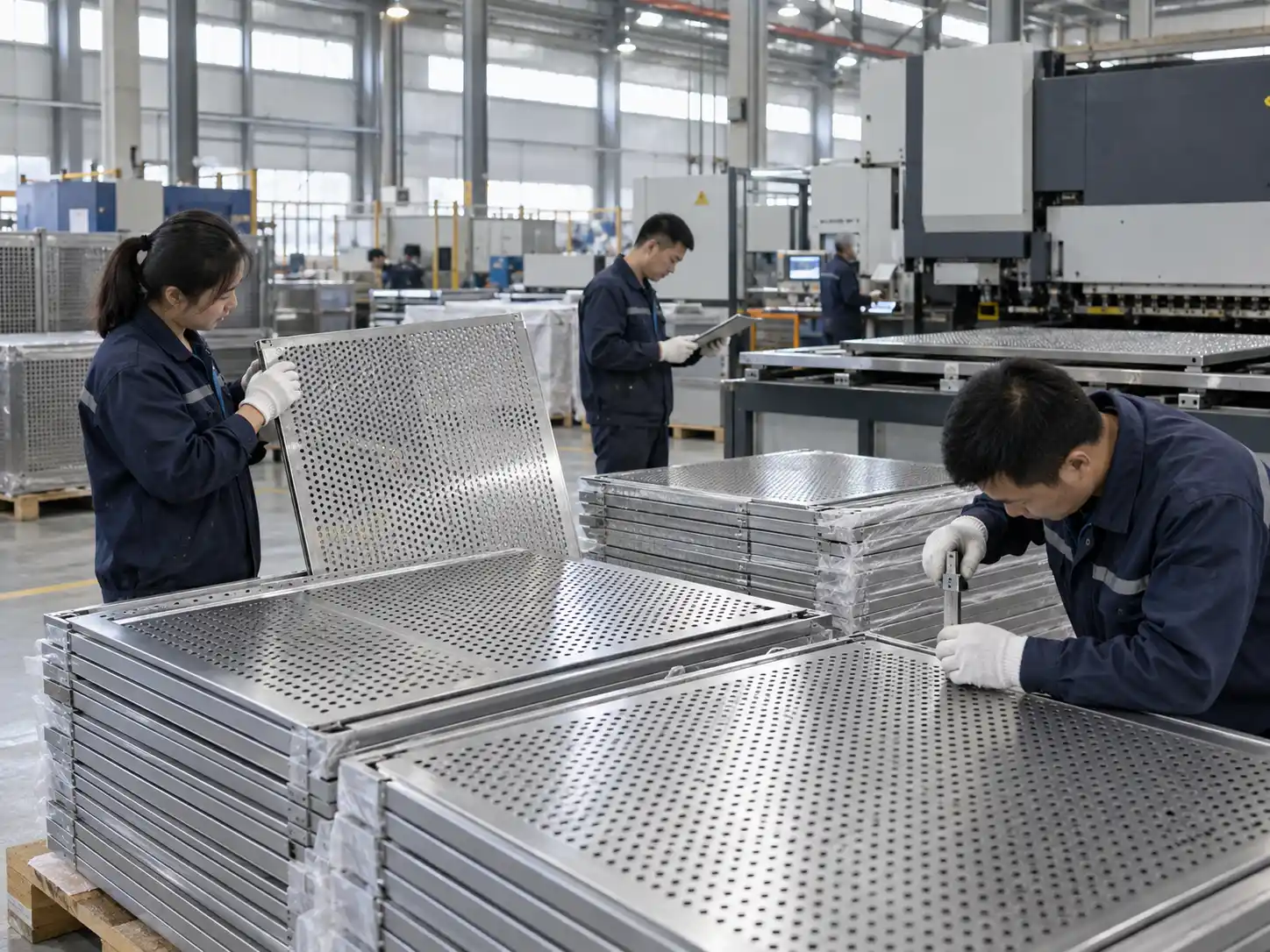
Panel dimensions, perforation alignment, border widths, formed edges, mounting positions and coating appearance were checked before packing.
Panels were numbered according to the installation drawings and packed with protective separators to simplify onsite identification.
Perforated Metal FAQs
Perforated metal is sheet metal manufactured with regularly or custom arranged openings for airflow, screening, filtration, protection and architectural design.
Common products include perforated sheets, panels, screens, corrugated panels and different round, slotted, square, hexagonal and micro-hole patterns.
Common options include stainless steel, aluminum, carbon steel and galvanized steel.
Yes. Cutting, bending, forming, framing and mounting preparation can be completed according to drawings.
Open area is the percentage of the sheet surface occupied by perforations and affects airflow, visibility, screening and strength.
Yes. Material, thickness, hole pattern, pitch, open area, dimensions, borders, fabrication and finish can be customized.
Round holes are widely used, although the best pattern depends on the required airflow, filtration, appearance or screening performance.
Perforated metal is punched with individual openings, while expanded metal is slit and stretched into a continuous mesh structure.
Related Metal Products
Explore our other metal products for different requirements, including perforated metal, wire mesh and metal grating solutions.