
Expanded Metal Lath Overview
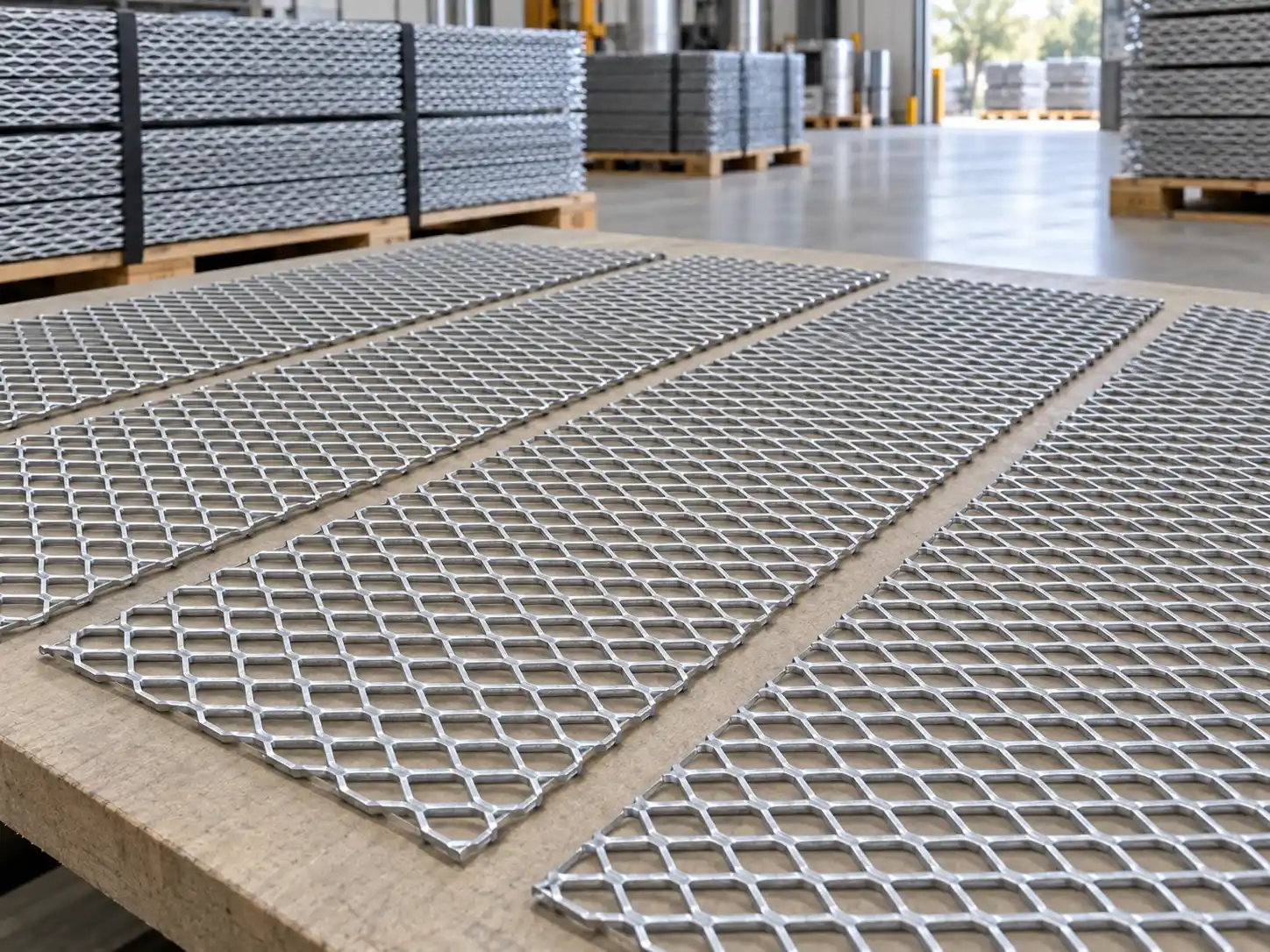
Expanded metal lath is made by slitting and stretching a metal sheet into an open pattern that provides a mechanical key for plaster, stucco and other applied coatings.
The lath can be supplied as flat sheets, self-furring products or reinforced rib lath according to the substrate, coating thickness and construction requirements.
Expanded Metal Lath Types
We supply expanded metal lath in different structures for wall, ceiling, plastering and exterior stucco projects.
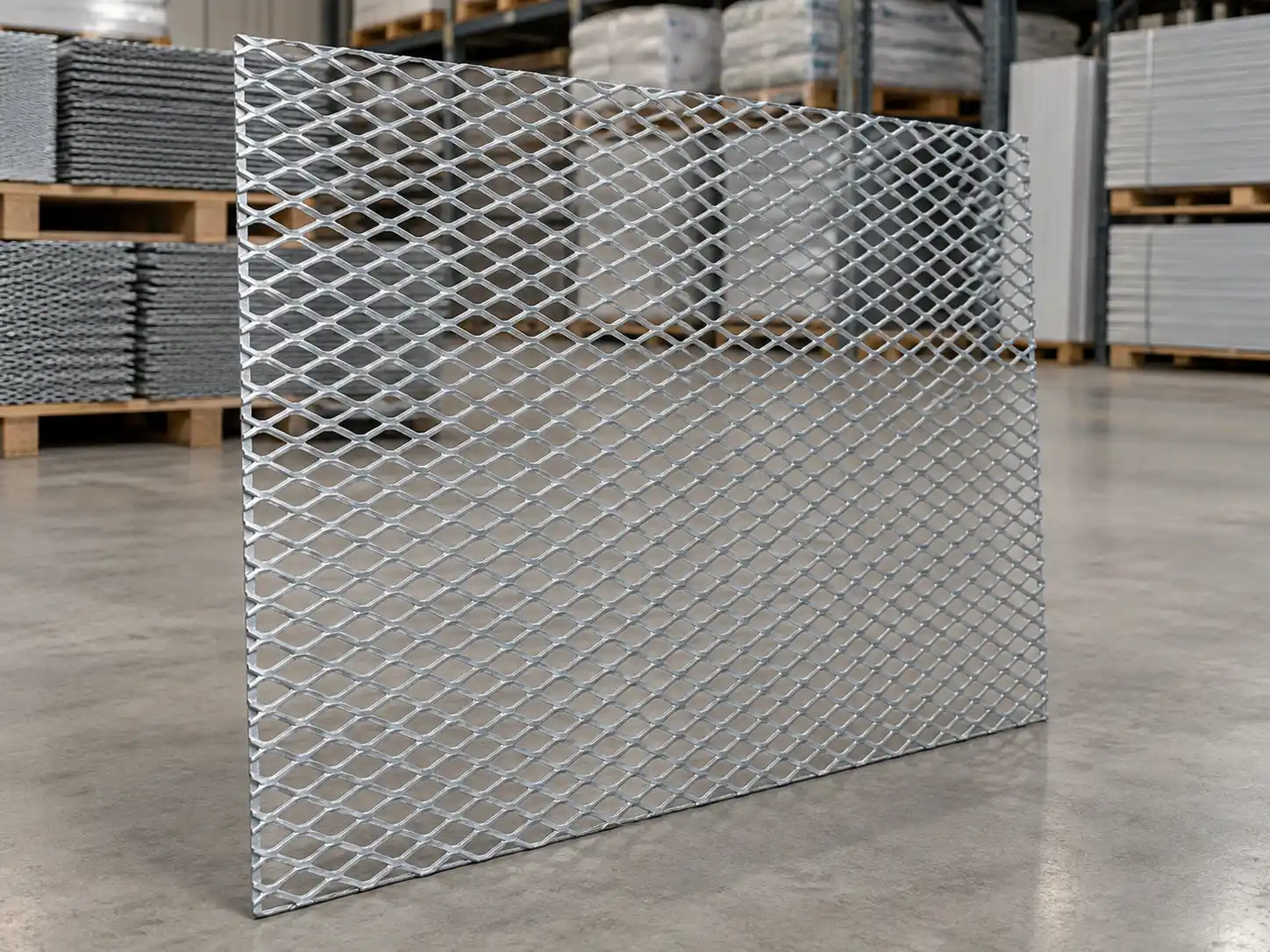
Flat Expanded Metal Lath
Flat metal lath has a level sheet profile for installation over solid substrates and framed construction. Its open pattern provides a consistent bonding surface for plaster and stucco.
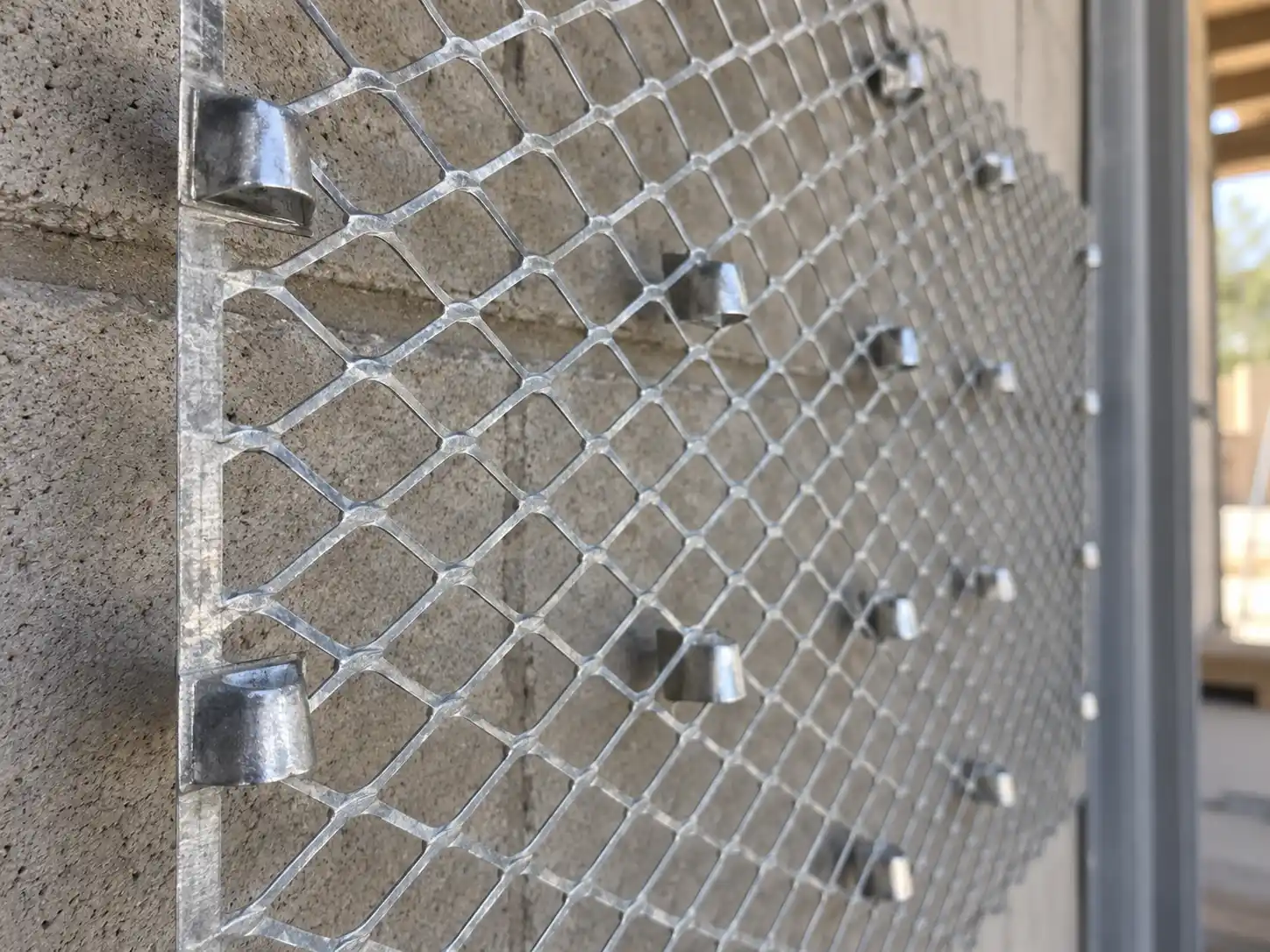
Self Furring Metal Lath
Self-furring metal lath includes dimples or formed areas that hold the mesh away from the substrate. This space allows the applied material to pass behind the lath and form a stronger mechanical key.
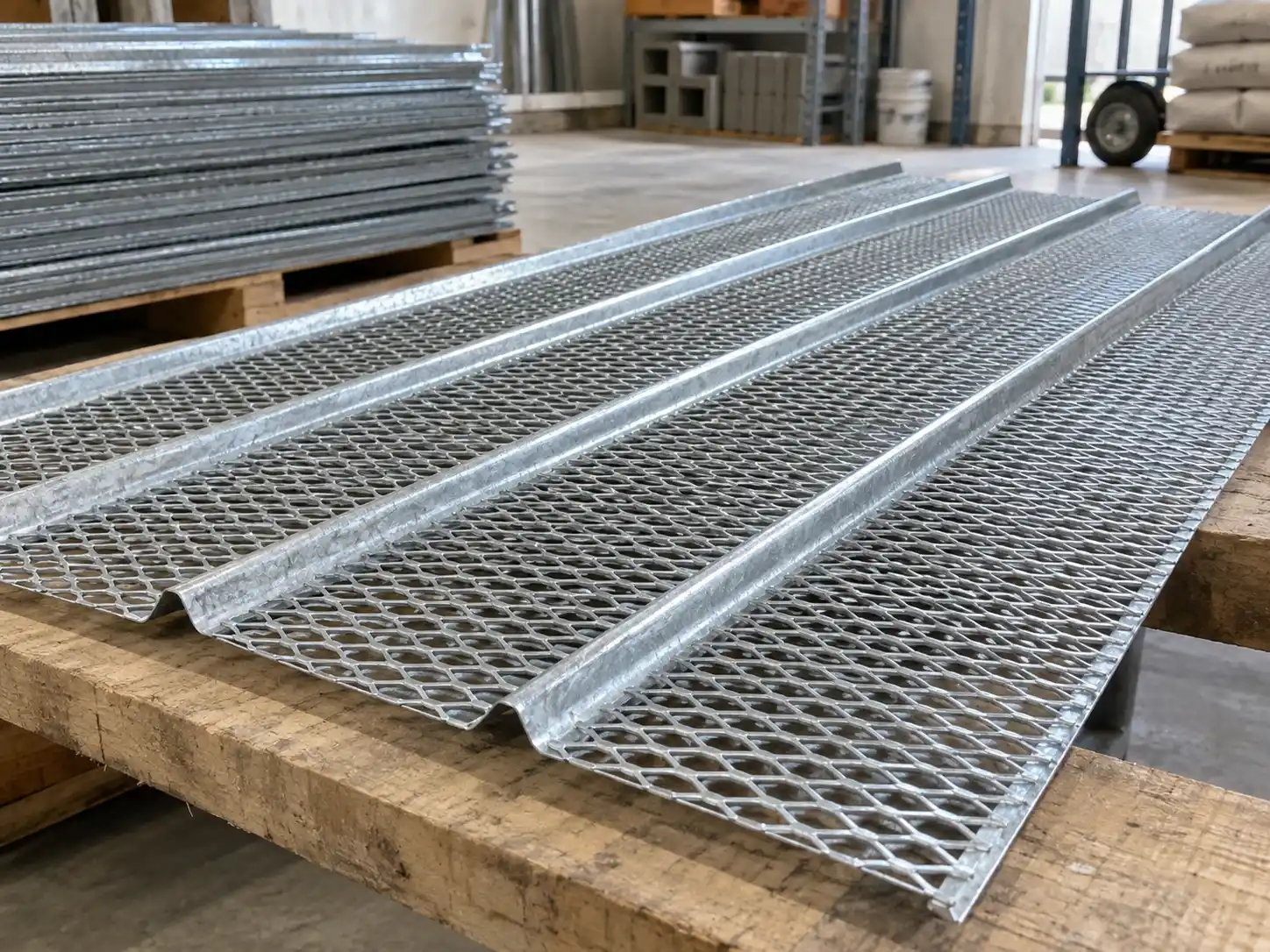
Metal Rib Lath
Rib metal lath incorporates longitudinal ribs to improve sheet rigidity and span performance. It is suitable for ceilings, partitions and other areas requiring additional structural support.
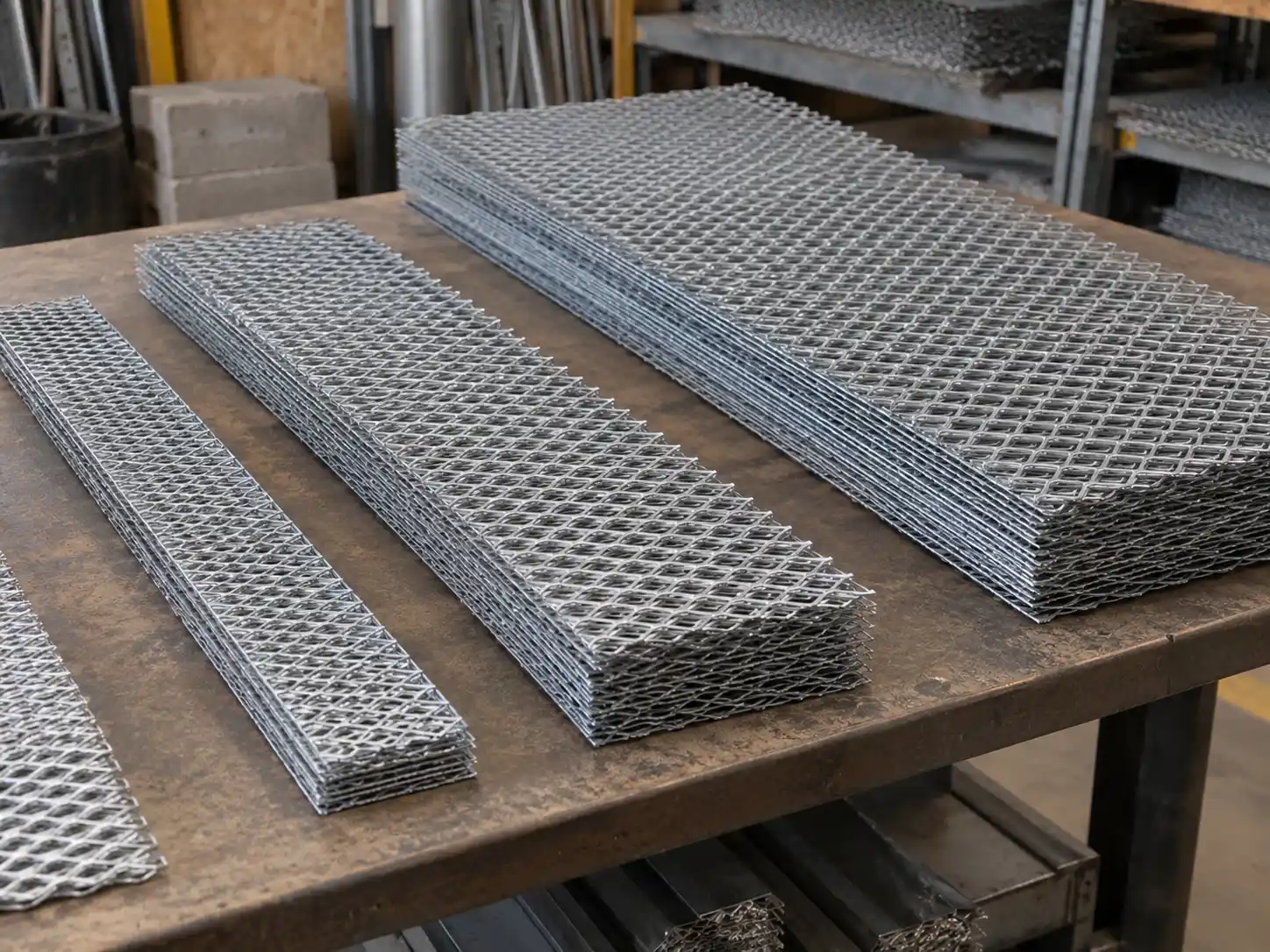
Custom-Size Metal Lath
Metal lath sheets can be supplied in custom widths, lengths, mesh patterns and weights. Cut-to-size panels, coating options and project-specific packaging are available for construction supply and OEM orders.
Expanded Metal Lath Sizes and Specifications
Expanded metal lath should be selected according to its material, sheet size, mesh pattern, weight, profile and required coating system.
| Specification | Available Options | Selection Notes |
|---|---|---|
| Product Type | Flat, self-furring or rib lath | Select according to the substrate, coating system and support requirements |
| Material | Galvanized steel, stainless steel or other specified metal | Choose according to corrosion exposure and project requirements |
| Sheet Size | Standard production formats or custom dimensions | Confirm the finished width, length and packing quantity |
| Sheet Weight | Selected according to the lath type and application | Higher sheet weight generally provides a stronger metal section |
| Mesh Pattern | Diamond or project-specific expanded pattern | Influences plaster keying, rigidity and material coverage |
| Base Thickness | Determined by the material and required lath weight | Affects sheet strength and forming performance |
| Furring Depth | Flat profile or formed self-furring depth | Determines the space between the lath and substrate |
| Rib Design | Rib height, direction and spacing | Applies to reinforced rib lath products |
| Surface Treatment | Galvanized, stainless steel finish or project-specific coating | Selected according to indoor or exterior exposure |
| Edge Condition | Standard cut or custom trimmed edge | Confirm when sheets must fit a defined installation area |
| Packaging | Bundles, pallets or wooden cases | Selected according to sheet size and transportation method |
| Quantity | Sheets, bundles or project quantity | Required for production and packing planning |
Available specifications depend on the selected lath type, material and manufacturing method. Send your drawing or required specification for confirmation.
How to Choose Expanded Metal Lath
The correct metal lath depends on the substrate, coating material, installation direction and required structural support.
Substrate Type
Confirm whether the lath will be fixed over masonry, concrete, timber framing, steel framing or another construction substrate.
Plaster or Stucco System
Provide the type and approximate thickness of the plaster, stucco or render system. This helps determine the required lath profile and metal section.
Flat or Self-Furring Profile
Flat lath is commonly used where the installation system already provides sufficient spacing. Self-furring lath creates a controlled gap between the mesh and the substrate.
Required Rigidity
Rib lath or a heavier metal section may be considered for ceilings, wider support spacing or applications requiring increased sheet rigidity.
Corrosion Exposure
Galvanized steel is commonly selected for general construction, while stainless steel may be considered for coastal, humid or corrosive environments.
Sheet Direction and Support
The lath direction, support spacing and fixing layout should be defined according to the project design and applicable installation requirements.
Custom Expanded Metal Lath Manufacturing
Expanded metal lath can be manufactured and packed according to project-specific sheet, profile and installation requirements.
Custom Sheet Dimensions
Lath sheets can be produced or cut to specified widths and lengths to match wall modules, ceiling areas and construction layouts.
Self-Furring Formation
Dimples or formed sections can be incorporated to create the required separation between the lath and the substrate.
Reinforced Rib Formation
Longitudinal ribs can be formed to increase sheet rigidity and support performance in ceilings, partitions and wider installation areas.
Galvanizing and Surface Protection
The metal and surface treatment can be selected according to the required corrosion resistance and project environment.
Expanded Metal Available Materials
Expanded metal is available in different metals to meet requirements for strength, weight, corrosion resistance and appearance.
Stainless Steel Expanded Metal
Stainless steel provides corrosion resistance for food processing, chemical, marine and demanding industrial environments.
Aluminum Expanded Metal
Aluminum is lightweight and corrosion-resistant for transportation, ventilation, architectural and decorative components.
Carbon Steel Expanded Metal
Carbon steel provides strength and cost efficiency for industrial guards, covers, racks and fabricated parts.
Galvanized Expanded Metal
Galvanized steel has a zinc-protected surface for outdoor, construction, security and general industrial projects.
Expanded Metal Lath Applications
Expanded metal lath provides a stable bonding and reinforcement base for plaster, stucco and other construction coatings.
Exterior Stucco Walls
Interior Plastering
Ceilings and Soffits
Repairs and Surface Transitions
Why Choose Us for Expanded Metal Lath Supplier?
We focus on the manufacturing details that affect installation, coating attachment and repeat project supply.
Consistent Mesh Formation
Mesh openings and strand formation are controlled to provide a uniform bonding surface across each lath sheet.
Stable Sheet Dimensions
Sheet width, length and profile are checked against the approved specification for consistent installation and overlap.
Controlled Furring and Rib Profiles
Dimples and reinforced ribs can be produced according to the required height, direction and spacing.
Construction-Ready Packaging
Sheets are bundled, supported and clearly identified to simplify handling, storage and distribution at the project site.
How to Order Expanded Metal Lath
Provide the following information so we can confirm the suitable product and prepare an accurate quotation.
Lath Type
Provide the finished external width, height, quantity and required dimensional tolerance.
Material
Confirm galvanized steel, stainless steel, carbon steel or another required metal.
Sheet Size
Provide the required sheet width, length, quantity and preferred bundle size.
Weight and Thickness
Specify the required sheet weight, base thickness or reference product specification.
Profile Details
Provide the required furring depth, rib dimensions or mesh pattern when applicable.
Project Application
Describe whether the lath will be used for stucco, plastering, ceilings, repairs or another construction system.
Installation and Fixing Considerations
Correct installation helps the lath provide a continuous and stable base for the applied coating.
Lath Orientation
The sheet direction should follow the project design and installation method. Adjacent sheets should maintain a consistent orientation.
Sheet Overlap
Side and end overlaps should be defined according to the lath type, substrate and applicable construction requirements.
Fastener Selection
Fastener material, length and spacing should be suitable for the substrate and corrosion environment.
Corners and Openings
Additional reinforcement may be required around corners, doors, windows and areas where different substrates meet.
Furring and Clearance
Self-furring features or separate supports should maintain the required space behind the lath so the applied coating can properly surround the mesh.
Typical Project Example: Galvanized Metal Lath for Exterior Stucco Walls
A construction materials supplier required galvanized expanded metal lath for an exterior stucco wall project. The lath needed to provide a consistent plastering base while remaining easy to handle and install across repeated wall sections.
Project Requirements
The supplier required uniform sheet dimensions, consistent mesh formation and a galvanized surface suitable for exterior construction. Bundles also needed clear identification for distribution to different project areas.
Product Solution
Self-furring galvanized metal lath was selected to create clearance between the substrate and the mesh. The formed areas maintained a consistent gap, allowing the stucco material to pass behind the lath and form a mechanical key.
Sheet dimensions and mesh direction were controlled across the production batch. The lath was supplied in bundles sized for site handling and installation.
Inspection and Packaging
The finished sheets were checked for overall dimensions, mesh consistency, furring profile and visible coating condition. The bundles were strapped, labeled and secured on pallets to reduce bending and movement during transportation.
This type of metal lath supply is suitable for exterior stucco walls, facade repairs and construction projects requiring consistent sheet quality and organized site delivery.
Expanded Metal Lath FAQs
It is commonly used for exterior stucco walls, interior plastering, ceilings, soffits, repairs and areas where plaster must be applied over framed or uneven substrates.
Flat metal lath has a level profile, while self-furring lath includes dimples or formed areas that create space between the mesh and the substrate.
Rib metal lath includes longitudinal ribs that increase sheet rigidity. It is commonly considered for ceilings, partitions and applications requiring additional support.
Galvanized metal lath provides improved corrosion protection and is commonly selected for exterior stucco and general construction projects. The required coating should be confirmed according to the project environment.
Yes. Stainless steel lath may be supplied for coastal, humid, chemical and other environments requiring increased corrosion resistance.
Yes. Lath can be produced or cut to specified widths and lengths. Custom dimensions should be reviewed together with the required profile and quantity.
The orientation, overlap, fasteners and support spacing depend on the lath type, substrate and coating system. Installation should follow the project drawings and applicable local requirements.
Related Expanded Metal Products
Explore other expanded metal products based on the required mesh structure, surface profile, strength and final application.
Expanded Metal Sheet
Full-size, cut-to-size and fabricated expanded metal sheets for industrial and OEM production.
Expanded Metal Mesh
Expanded metal selected according to opening dimensions, strand size and open area.
Expanded Metal Screen
Framed and fabricated panels for protection, ventilation and architectural screening.
Standard Expanded Metal
Standard unflattened expanded metal for general industrial manufacturing and fabrication.
Raised Expanded Metal
Raised mesh with a textured profile, increased rigidity and improved surface grip.
Flattened Expanded Metal
Rolled expanded metal with a smoother, thinner and more level surface.
Expanded Metal Grating
Expanded grating for industrial flooring, platforms, walkways and stair treads.
Heavy-Duty Expanded Metal
Thicker expanded metal for machinery guards, barriers and demanding industrial environments.