
Perforated Metal Screen Overview
Perforated metal screen is produced from metal sheet with precisely formed openings that provide controlled airflow, visibility and screening while retaining the rigidity of a solid metal panel.
We supply perforated metal screens as cut panels, fabricated screen sections and installation-ready assemblies. Hole size, open area, panel dimensions, borders, edges, mounting details and finishes can be customized according to project drawings.
Perforated Metal Screen Forms
Different screen forms can be selected according to panel size, screening performance and installation requirements.
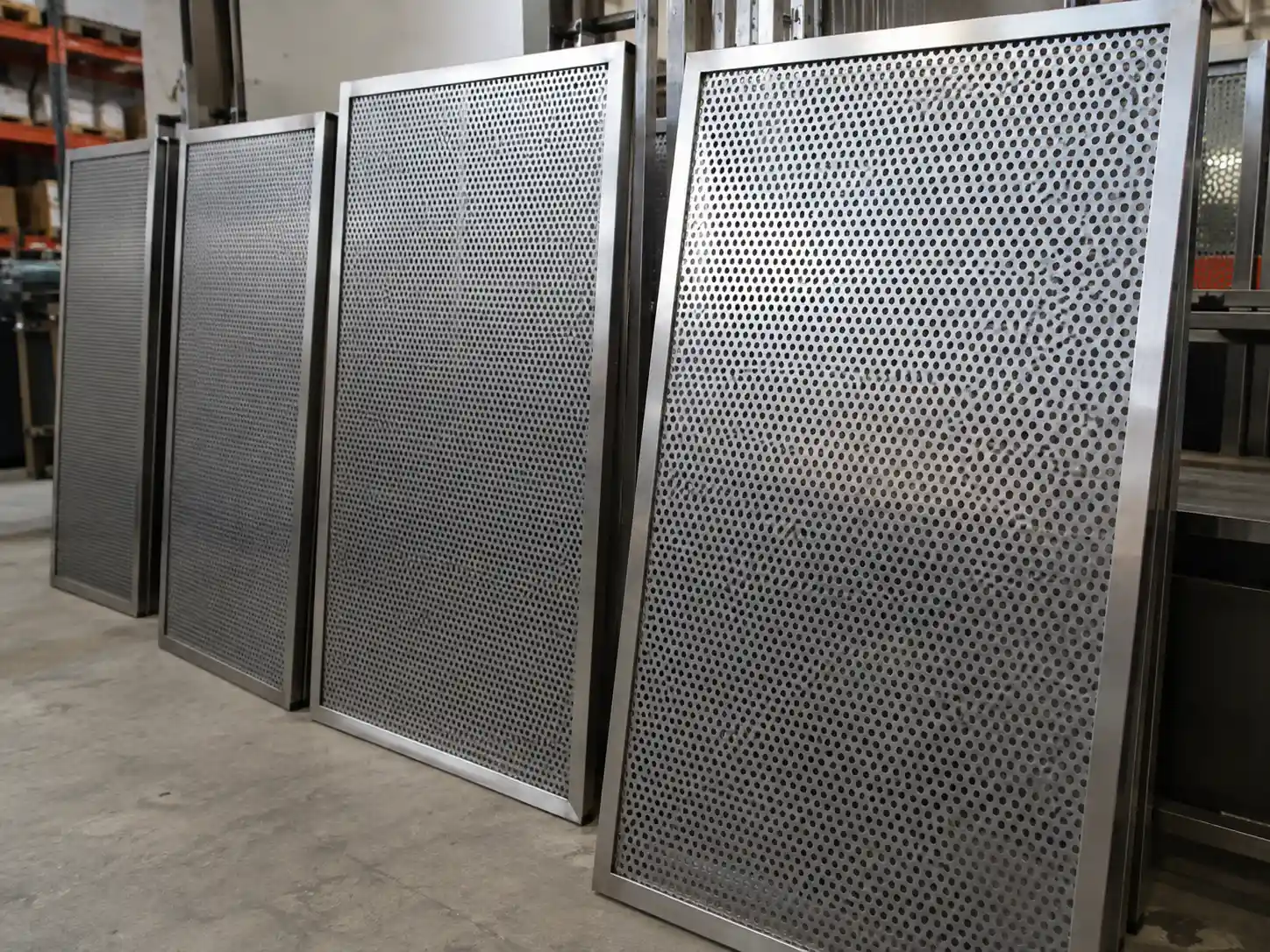
Perforated Metal Screen Panels
Perforated metal screen panels provide rigid screening for commercial, architectural and industrial projects where ventilation, visibility and physical separation are required.
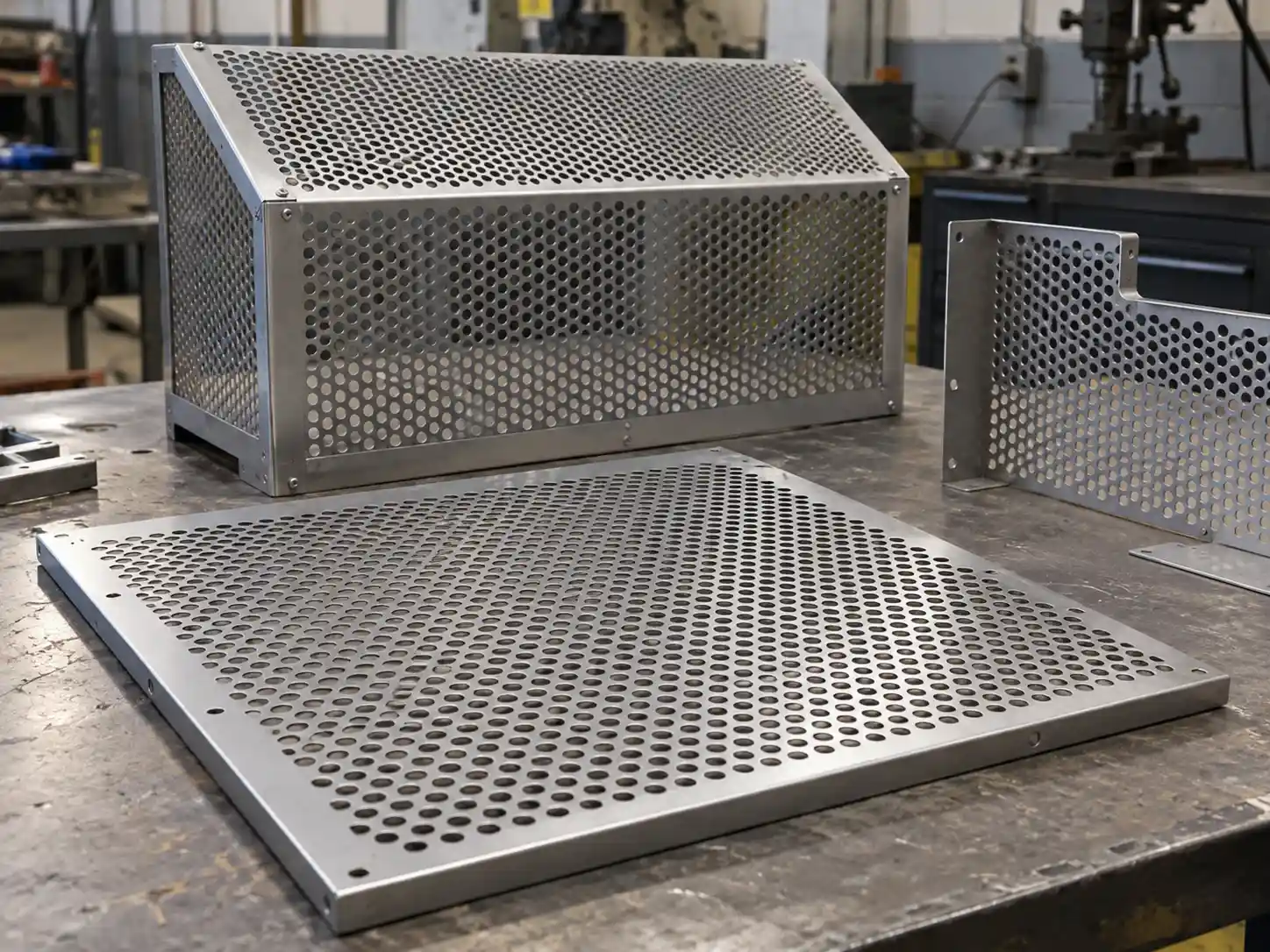
Perforated Metal Mesh
Perforated metal mesh combines accurately controlled openings with a rigid sheet structure for screening, protection and fabricated components.
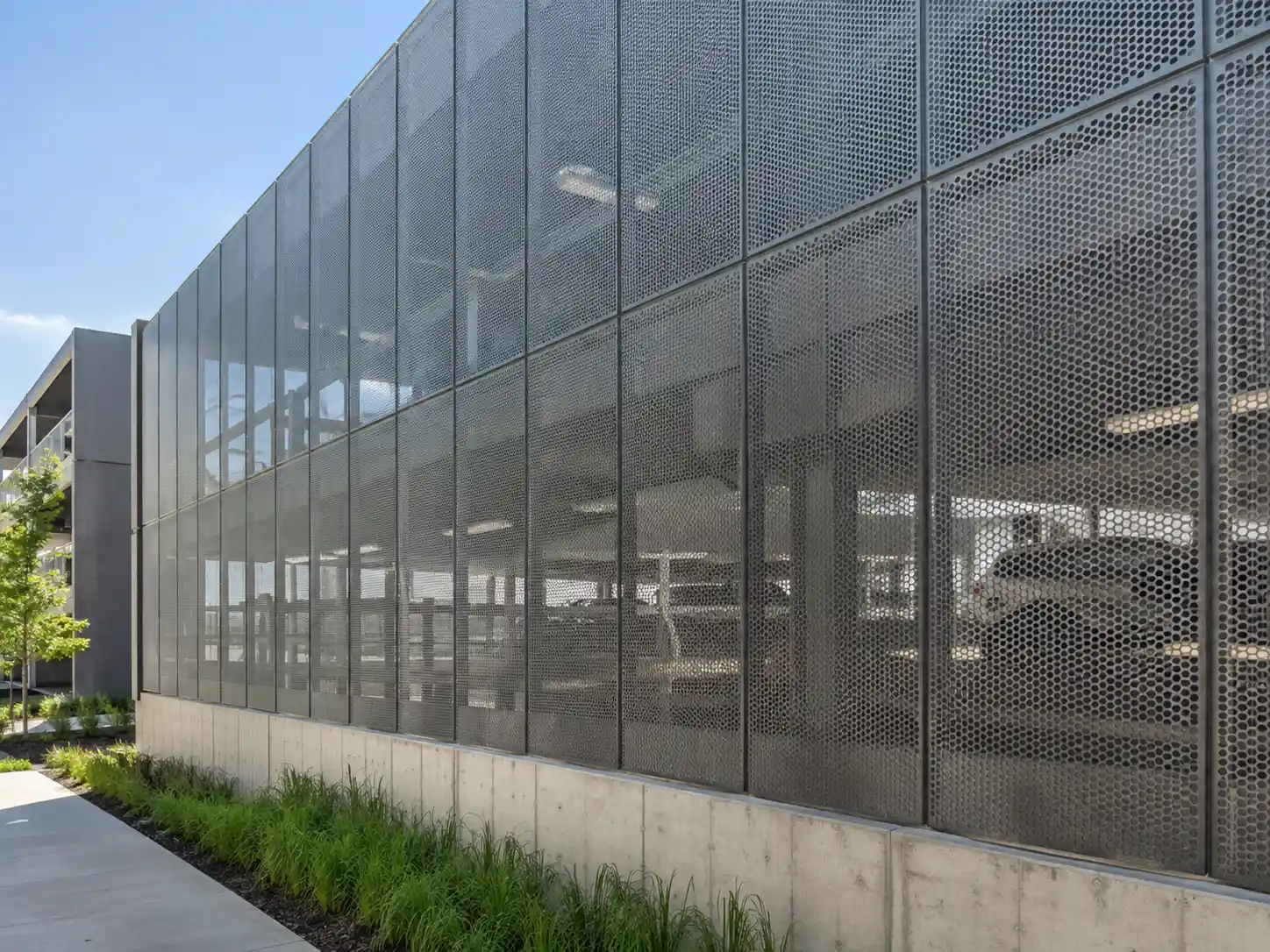
Perforated Metal Screen Walls
Perforated metal screen walls use modular panels to create larger screening surfaces for building services, parking structures and architectural areas.
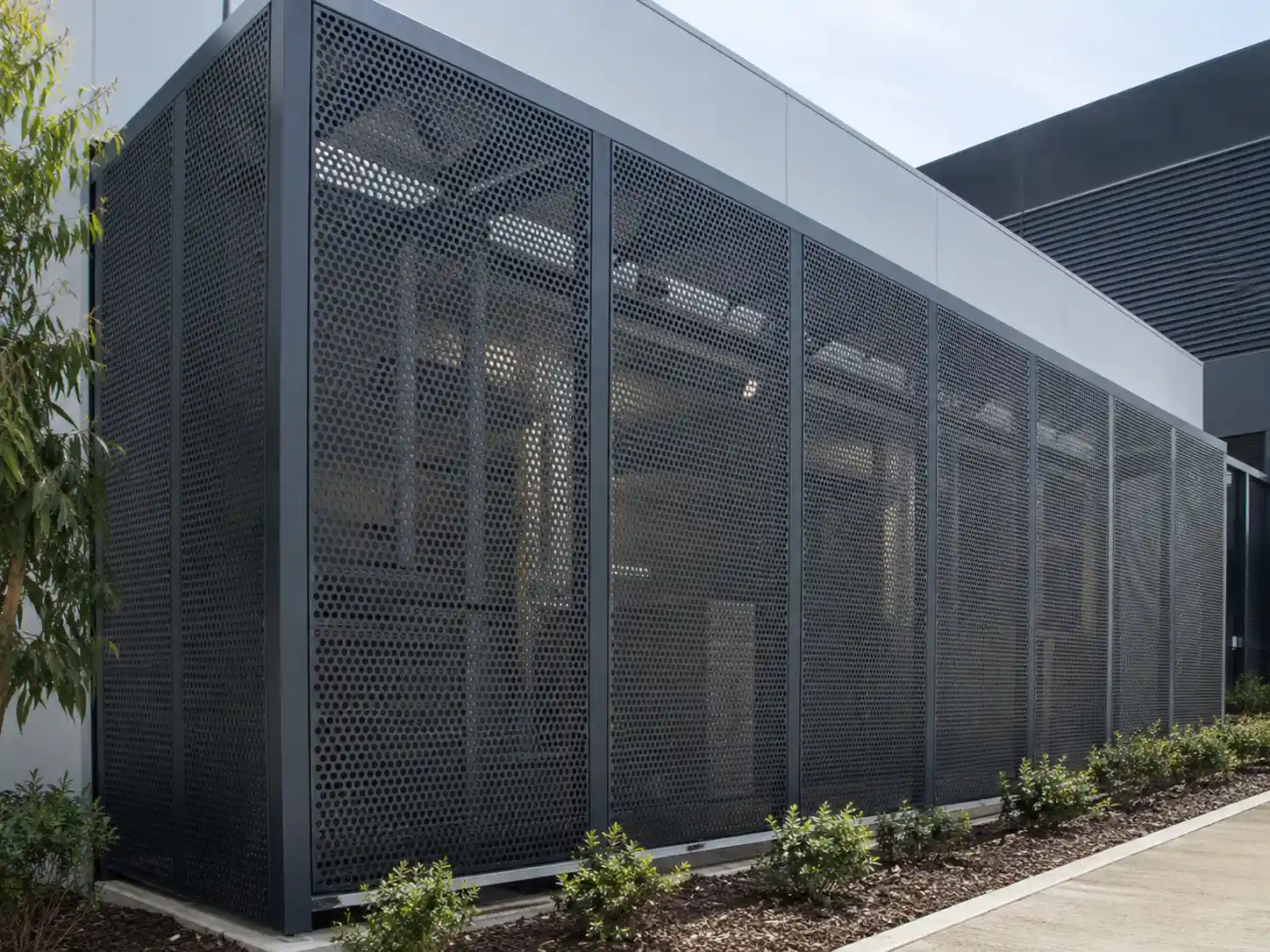
Perforated Metal Screening
Perforated metal screening can be customized by hole size, open area and panel construction to balance airflow, visibility and protection.
Perforated Metal Screen Sizes and Specifications
The correct screen specification depends on the required opening, visibility, panel rigidity, installation method and working environment.
| Specification | Available Options | Selection Notes |
|---|---|---|
| Material | Aluminum, stainless steel, carbon steel, galvanized steel | Select according to weight, corrosion resistance and environment |
| Screen Size | Standard or custom width and height | Provide finished dimensions for fabricated screens |
| Thickness | According to material, size and rigidity requirements | Larger panels may require greater thickness or reinforcement |
| Hole Pattern | Round, slotted, square, hexagonal, micro-perforated or custom | Select according to screening and appearance requirements |
| Hole Size | Custom opening dimensions | Influences airflow, visibility and screening level |
| Hole Pitch | Straight, staggered or custom spacing | Controls perforation density and open area |
| Open Area | Customized percentage | Balance airflow, visibility, shading and rigidity |
| Perforation Layout | Full, partial or custom perforation | Solid areas can be retained for forming and mounting |
| Border Area | Perforated to edge or solid perimeter | Solid borders simplify folding, framing and fixing |
| Edge Detail | Flat, folded, return edge or reinforced | Selected according to rigidity and installation |
| Frame / Reinforcement | Framed or reinforced options | Useful for larger screens and modular assemblies |
| Mounting Detail | Holes, slots, tabs, brackets or custom fixing points | Match the supporting structure and installation drawing |
| Surface Finish | Mill finish, powder coating, painting, polishing, galvanizing | Select according to appearance and exposure |
| Supply Format | Flat panels, framed screens or fabricated assemblies | Confirm required level of secondary fabrication |
For detailed hole designs, see our Round Hole, Slotted, Square, Hexagonal and Micro-Perforated Metal pages.
How to Select a Perforated Metal Screen
A perforated screen should be selected according to the required screening function rather than by hole pattern alone.
Screening Level
Hole size, spacing and open area determine how much visibility passes through the finished screen.
Airflow
Open area directly affects ventilation. Higher open area can provide greater airflow where equipment or building openings require ventilation.
Panel Rigidity
Thickness, screen dimensions, folded edges and reinforcement should be considered together, especially for larger panels.
Installation
Border width, edge forming, frames and mounting points should be confirmed before final perforation and fabrication.
Perforated Metal Screen Materials
Material selection depends on strength, corrosion resistance, weight and installation environment.
Stainless Steel Perforated Metal
Stainless steel provides excellent corrosion resistance and are suitable for demanding environments.
Aluminum Perforated Metal
Aluminum offers lightweight construction and natural corrosion resistance.
Carbon Steel Perforated Metal
Carbon steel provides strength and cost efficiency for general industrial fabrication.
Galvanized Perforated Metal
Galvanized provides additional corrosion protection for outdoor and exposed applications.
Perforated Metal Screen Applications
Perforated Metal Railings & Privacy Screens
Window Guards & Security Screens
Parking Garage Mesh Screening
Machine Guards & Safety Barriers
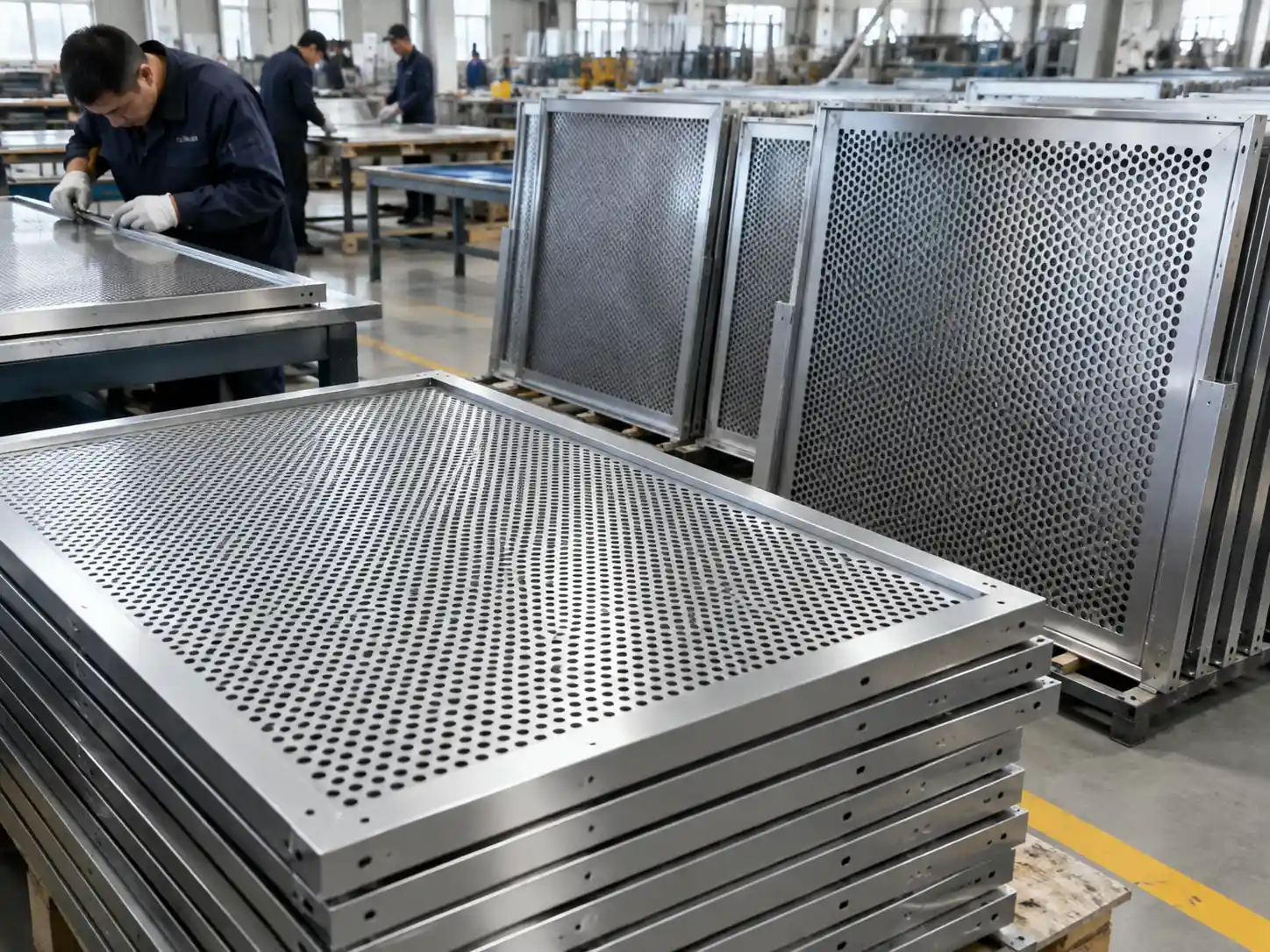
Why Choose Us as Your Perforated Metal Screen Supplier?
Controlled Perforation
Hole size, pitch, open area and perforation layout can be produced according to approved specifications.
Custom Screen Dimensions
Finished screen dimensions and solid border areas can be controlled according to installation drawings.
Installation-Ready Fabrication
Edges, frames, reinforcement and mounting details can be completed before shipment.
Repeat Panel Consistency
Screen orientation, dimensions and fixing positions can be maintained across repeat project panels.
How to Order Perforated Metal Screens
Material
Specify aluminum, stainless steel, carbon steel or galvanized steel.
Screen Size
Provide finished width, height, thickness and quantity.
Perforation
Provide hole shape, hole size, pitch or an existing reference specification.
Open Area
Specify the required open area or explain the airflow and screening requirement.
Edge & Mounting
Provide solid border, folded edge, frame, fixing hole or bracket requirements.
Finish
Specify powder coating, painting, polishing, galvanizing or another required surface treatment.
Perforated Metal Screen vs. Perforated Metal Panels
Both products can use similar perforated sheet material, but their main selection requirements are different.
| Comparison | Perforated Metal Screen | Perforated Metal Panels |
|---|---|---|
| Main Purpose | Screening, ventilation, protection and separation | Finished architectural or fabricated panel systems |
| Selection Focus | Open area, airflow, visibility and screening | Panel design, appearance and installation |
| Typical Form | Screen panel, framed screen or screen wall | Wall, facade, ceiling or decorative panel |
| Fabrication Focus | Borders, frames, reinforcement and fixing | Panel geometry, folded edges and system integration |
| Typical Use | Security, privacy, ventilation and screening | Architecture, walls, facades and ceilings |
Choose Perforated Metal Screen when screening performance, airflow or protection is the primary requirement.
Choose Perforated Metal Panels when the project primarily requires finished architectural or decorative panels.
Case Study Example: Perforated Metal Screen Wall for a Parking Garage
A parking structure contractor required perforated metal screen panels for several exterior elevations. The goal was to reduce direct views of parked vehicles and building services while maintaining natural ventilation through the facade.
Project Requirements
The screen system included multiple panel sizes installed across different sections of the parking structure.
The main requirements included:
Consistent perforation appearance across adjoining panels
Sufficient open area for natural ventilation
Partial visual screening from surrounding streets
Solid border areas for forming and mounting
Outdoor corrosion resistance
Accurate fixing locations for the supporting structure
Material and Panel Design
Aluminum was selected to reduce panel weight and provide good corrosion resistance for exterior use.
The perforation layout was designed with consistent hole spacing across adjacent panels. Solid perimeter areas were retained around each panel to allow edge forming and mounting without interfering with the perforated pattern.
Return edges were added to improve panel rigidity and provide a cleaner finished appearance.
Manufacturing and Fabrication
Each perforated metal screen was produced according to the approved panel schedule and fabrication drawings.
Production included:
- Precision perforation
- Cutting to finished panel dimensions
- Edge forming
- Mounting-hole preparation
- Powder coating
Panels used in adjoining elevations were produced with consistent perforation orientation to maintain a uniform facade appearance.
Quality Control
Before packing, each panel was checked for:
- Finished dimensions
- Hole alignment and spacing
- Solid border width
- Edge-forming accuracy
- Mounting-hole position
- Surface finish consistency
Panels were numbered according to the installation layout to simplify onsite identification.
Packaging and Delivery
Finished screens were separated with protective material to reduce scratching during transportation.
Panels were grouped and packed according to installation sequence so the contractor could identify and handle each section more efficiently onsite.
Project Outcome
The perforated metal screen wall provided a balanced solution for ventilation, visual screening and architectural appearance without fully enclosing the parking structure.
This type of system is suitable for parking garages, service areas and commercial buildings requiring ventilated exterior screening.
Perforated Metal Screen FAQs
A perforated metal screen is a metal sheet or fabricated panel with controlled openings used for ventilation, protection, separation and screening.
The terms can overlap. Perforated metal mesh generally refers to the perforated material, while a screen often refers to a finished or application-ready panel.
Screens are primarily selected for screening, airflow and protection, while panels are generally selected as finished architectural or fabricated components.
Common options include aluminum, stainless steel, carbon steel and galvanized steel.
Yes. Width, height, thickness, hole pattern, border areas and fabrication details can all be customized.
Open area should be selected according to airflow, visibility, screening level and required panel rigidity.
Yes. Frames, folded edges, reinforcement and custom mounting details can be added according to project requirements.
Yes. Aluminum, stainless steel, galvanized steel and suitable protective finishes can be selected for outdoor environments.
Related Perforated Metal Products
Explore other perforated metal products with different sheet forms, screening functions and hole patterns for industrial, architectural and custom fabrication requirements.
Perforated Metal Sheet
Perforated metal sheets with customizable materials, thicknesses, hole sizes and open areas for further fabrication and general applications.
Perforated Metal Panels
Finished perforated panels for architectural walls, facades, ceilings and project installations.
Corrugated Perforated Metal Panels
Corrugated perforated panels combine structural rigidity with ventilation and architectural appearance.
Round Hole Perforated Metal
Round hole perforated metal provides a widely used opening pattern for filtration, screening and decorative applications.
Slotted Perforated Metal
Slotted perforated metal is suitable for directional flow, screening and separation requirements.
Square Perforated Metal
Square perforated metal offers a clean geometric pattern for industrial and architectural applications.
Hexagonal Perforated Metal
Hexagonal perforated metal provides a distinctive pattern with efficient open area performance.
Micro-Perforated Metal
Micro-perforated metal provides fine openings for acoustic, filtration and specialized applications.