
Expanded Metal Mesh Overview
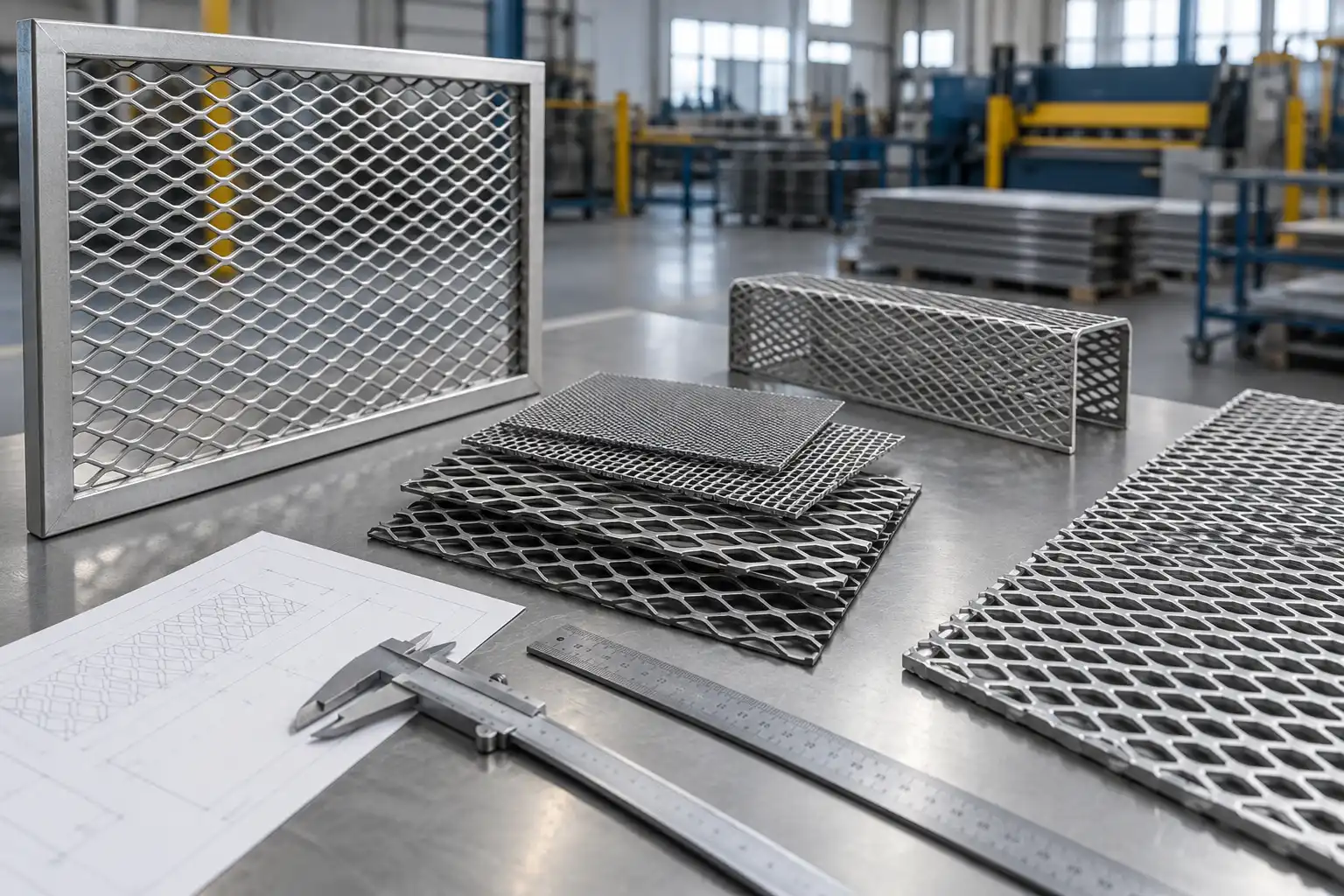
Expanded metal mesh is produced by slitting and stretching a solid metal sheet into a continuous, joint-free pattern. Its opening size, strand dimensions, thickness, mesh direction and open area can be selected according to the required airflow, visibility, strength and screening performance.
Expanded Metal Mesh Product Supply
We supply expanded metal mesh in different opening configurations to meet the screening, ventilation, protection and appearance requirements of different projects.
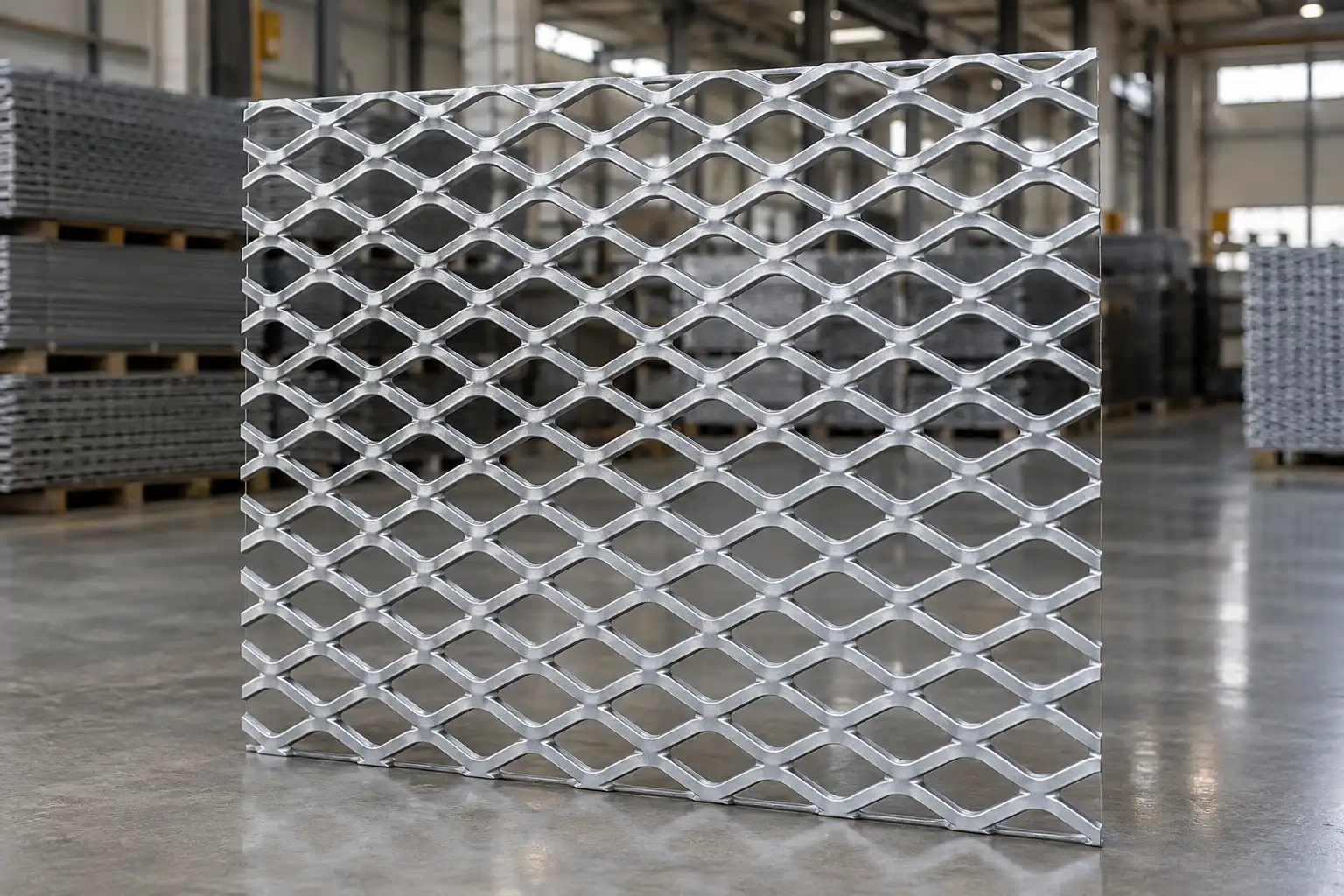
Diamond Wire Mesh
Diamond expanded metal mesh provides a practical balance of strength, visibility and open area. It is widely used for industrial guards, fencing, panels and architectural projects.
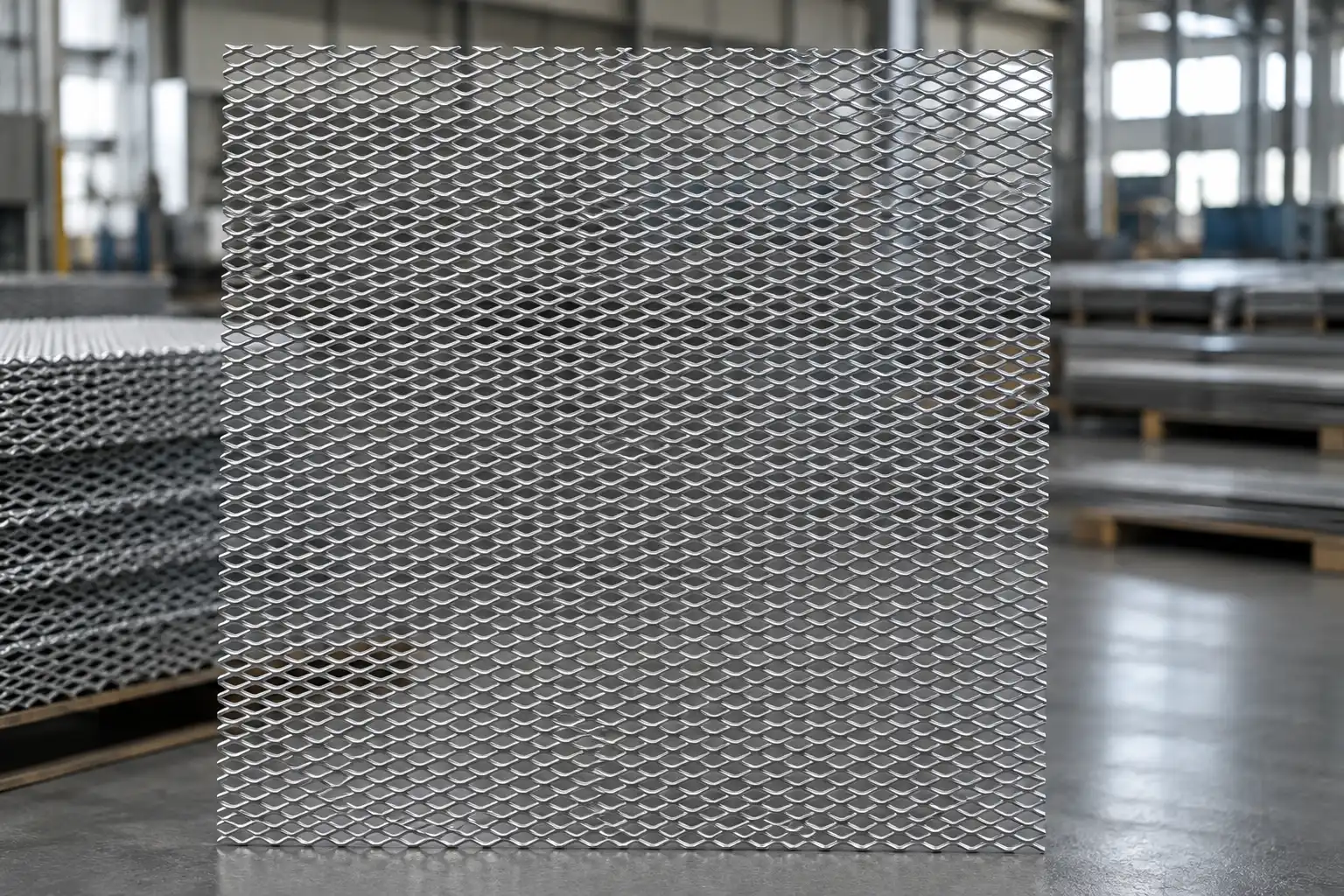
Fine Wire Mesh
Fine expanded metal mesh uses smaller openings and narrower strands for applications requiring closer screening, refined appearance or reduced passage through the mesh.
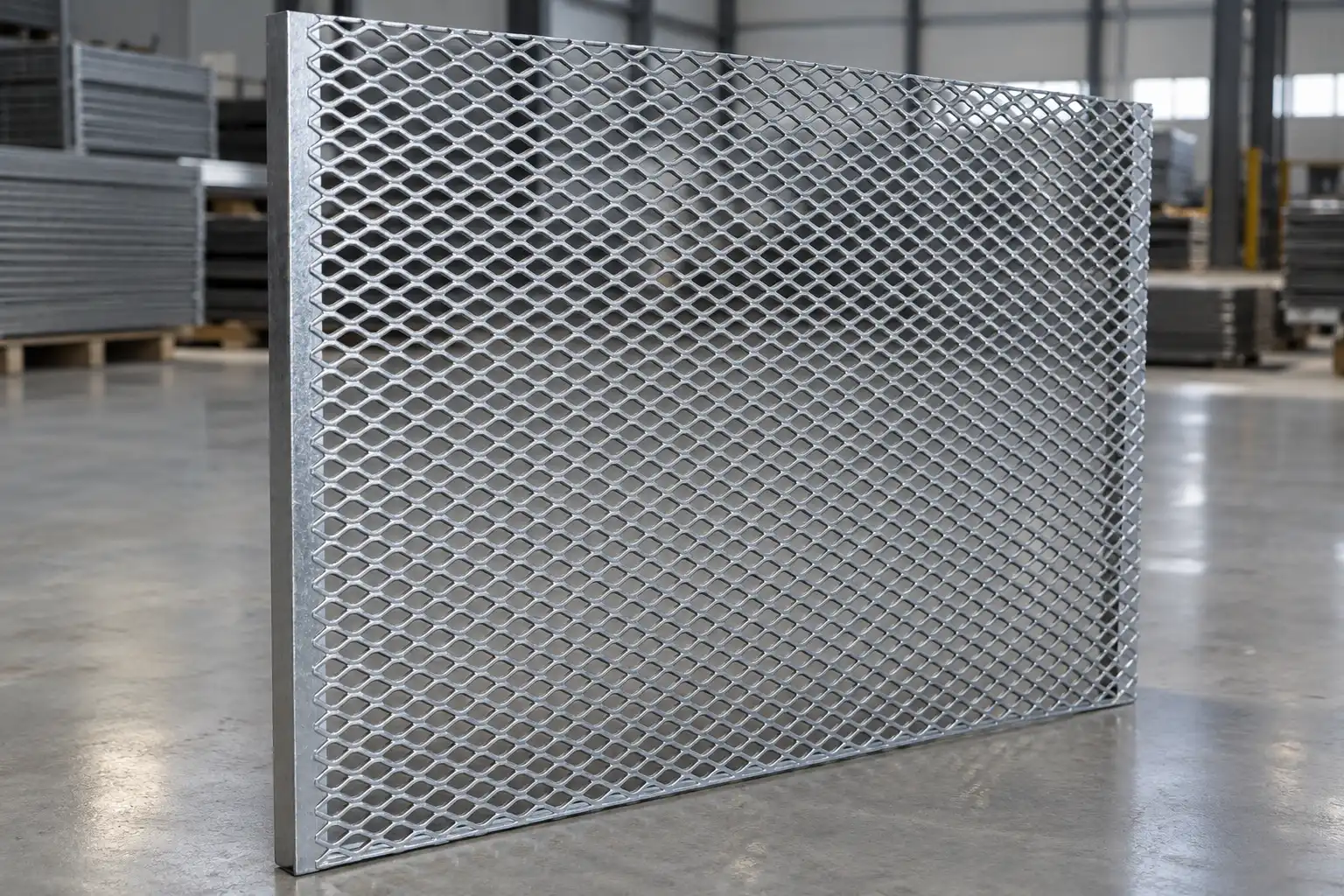
Small Wire Mesh
Small expanded metal mesh helps restrict larger particles and objects while maintaining airflow. It is suitable for equipment covers, protective inserts and ventilation components.
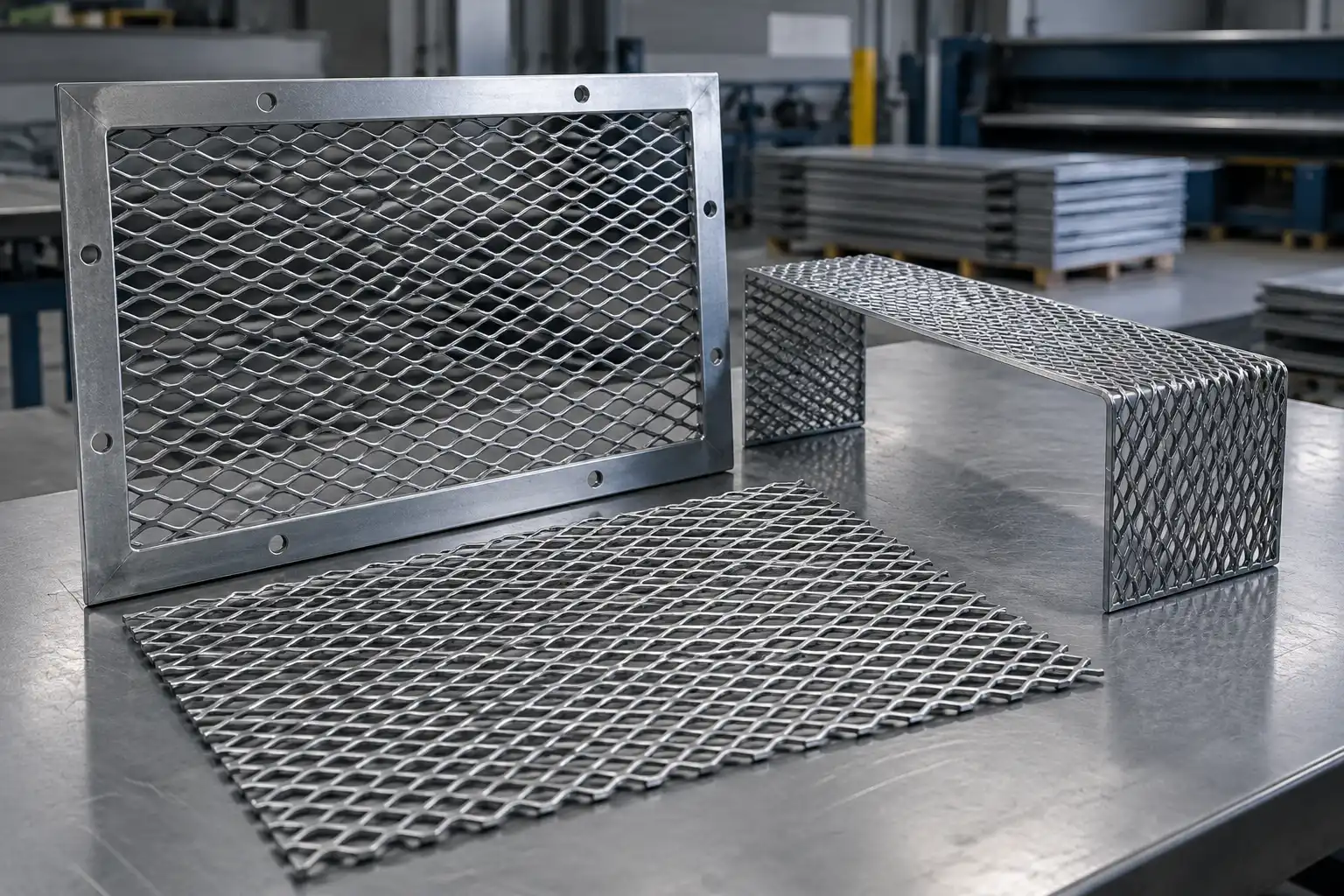
Custom Wire Mesh
Mesh openings, strand dimensions, panel sizes and surface finishes can be customized according to drawings. Panels may also be cut, formed or fabricated for OEM production.
Expanded Metal Mesh Sizes and Specifications
Expanded metal mesh is specified by its opening dimensions, strand geometry, base thickness and mesh direction. These parameters determine the finished appearance, open area, airflow, weight and strength of the product.
| Specification | Available Options | Selection Notes |
|---|---|---|
| Mesh Pattern | Diamond, fine, small-hole or custom pattern | Select according to appearance, airflow and screening requirements |
| SWD | Short way of the diamond or design | Defines the short direction of the repeating mesh pattern |
| LWD | Long way of the diamond or design | Defines the long direction of the repeating mesh pattern |
| SWO and LWO | Short and long clear opening dimensions | Determine the usable space through the mesh |
| Strand Width | Width of the metal section between openings | Influences strength, weight and open area |
| Base Thickness | Thickness of the original metal before expansion | Affects strand thickness and finished mesh rigidity |
| Open Area | Percentage of open space in the mesh | Influences airflow, visibility, light transmission and weight |
| Mesh Direction | SWD or LWD aligned with the panel length | Affects appearance, rigidity and fabrication |
| Panel Dimensions | Standard formats or custom width and length | Confirm the finished panel size and quantity |
| Surface Finish | Mill finish, galvanized, painted, powder-coated or anodized | Select according to corrosion and appearance requirements |
| Tolerance | Standard production or drawing-specific tolerance | Custom OEM panels should be based on an approved drawing |
For detailed SWD, LWD, strand and opening measurement methods, visit Expanded Metal Sizes & How to Measure.
How to Choose Expanded Metal Mesh
The correct mesh should be selected according to the required opening, airflow, visibility, strength, weight and final installation.
Opening Size
Smaller openings provide closer protection and screening, while larger openings allow greater airflow, visibility and light transmission.
Open Area
A higher open area improves ventilation and visibility but reduces the amount of metal within the panel. The required balance depends on the application.
Strand Width
Wider strands increase the metal section and can improve rigidity. Narrower strands reduce weight and create a more open appearance.
Base Thickness
Thicker base metal generally produces a stronger and heavier mesh. The required thickness should be selected together with the opening and strand dimensions.
Mesh Direction
The SWD and LWD orientation can affect panel appearance, bending behavior and rigidity. The required direction should be shown on the drawing.
Material and Finish
Material and finish should be selected according to corrosion resistance, weight, appearance, temperature and the working environment.
Custom Expanded Metal Mesh Manufacturing
Expanded metal mesh can be customized according to the required opening geometry, panel dimensions and secondary processing requirements.
Custom Mesh Patterns
SWD, LWD, strand width and base thickness can be selected to achieve the required opening, open area and finished appearance.
Cut-to-Size Mesh Panels
Expanded metal mesh can be cut into specified panel dimensions for inserts, guards, facades and repeat OEM components.
Bending and Welding
Mesh panels can be bent, formed or welded to frames and brackets according to approved drawings and installation requirements.
Surface Finishing
Galvanizing, painting, powder coating, anodizing and other finishes may be applied according to the selected base material and service environment.
Expanded Metal Available Materials
Expanded metal is available in different metals to meet requirements for strength, weight, corrosion resistance and appearance.
Stainless Steel Expanded Metal
Stainless steel provides corrosion resistance for food processing, chemical, marine and demanding industrial environments.
Aluminum Expanded Metal
Aluminum is lightweight and corrosion-resistant for transportation, ventilation, architectural and decorative components.
Carbon Steel Expanded Metal
Carbon steel provides strength and cost efficiency for industrial guards, covers, racks and fabricated parts.
Galvanized Expanded Metal
Galvanized steel has a zinc-protected surface for outdoor, construction, security and general industrial projects.
Expanded Metal Mesh Applications
Expanded metal mesh combines an open structure with continuous strands, making it suitable for industrial, security and architectural projects.
Machine Guards and Safety Barriers
Expanded metal mesh maintains airflow and visibility while helping restrict access to moving machinery and hazardous areas.
Expanded Metal Security Fencing
Rigid mesh panels can be used for perimeter fencing, restricted areas and security barriers requiring visibility and resistance to cutting.
Parking Garage Mesh Screening
Expanded metal mesh can provide ventilation, partial screening and a consistent exterior appearance for parking garage openings.
Expanded Metal Facades and Cladding
Different opening patterns and finishes can be used to create ventilated facade panels, sunshades and architectural building envelopes.
Expanded Metal Railings and Infill Panels
Expanded mesh can be framed as railing infill, balcony panels and protective barriers for architectural and public spaces.
Expanded Metal and Wire Mesh Ceilings
Fine, flattened or decorative mesh can be used for suspended ceilings, interior screening and exposed service areas.
Why Choose Us for Expanded Metal Mesh Supplier?
We focus on the mesh parameters that affect airflow, appearance, strength and repeat production.
Controlled Mesh Openings
SWD, LWD and opening dimensions are checked against the approved specification to maintain consistent mesh geometry.
Consistent Strand Dimensions
Strand width and base thickness are controlled to support stable weight, open area and product performance.
Repeatable Mesh Direction
Panel orientation can be maintained according to drawings for consistent appearance across repeat components and assembled sections.
Drawing and Sample Review
Drawings or reference samples can be reviewed before production to confirm the mesh pattern, panel dimensions and fabrication requirements.
How to Order Expanded Metal Mesh
Provide the following information so we can confirm the mesh specification and prepare an accurate quotation.
Application
Describe whether the mesh will be used for ventilation, protection, screening, fencing or architectural installation.
Opening Requirements
Provide the required SWD, LWD, SWO, LWO or the maximum object size that must be prevented from passing through.
Strand and Thickness
Specify the strand width, base thickness or required strength and weight range.
Material
Confirm carbon steel, stainless steel, aluminum, galvanized steel or another required metal.
Panel Size and Direction
Provide the finished width, length, quantity and required SWD or LWD orientation.
Finish and Fabrication
Specify galvanizing, powder coating, anodizing, cutting, bending, welding or framing requirements.
Typical Mesh Selection Example: Ventilated Equipment Panels
An industrial equipment manufacturer required expanded metal mesh panels for cabinet ventilation. The panels needed sufficient airflow while preventing accidental contact with internal components.
Selection Requirements
The mesh opening had to provide clear ventilation without creating excessive visibility into the cabinet. Panel orientation also needed to remain consistent across multiple equipment units.
Proposed Mesh Solution
A small-hole carbon steel expanded metal mesh was selected with controlled SWD, LWD and strand width. The mesh was cut into repeat panel dimensions and prepared for installation inside the cabinet openings.
Finishing and Inspection
The panels were powder-coated to match the equipment housing. Opening dimensions, panel size, mesh direction and surface appearance were checked before packing.
This type of mesh selection is suitable for equipment housings, electrical cabinets and ventilation panels requiring airflow, protection and repeatable appearance.
Expanded Metal Mesh FAQs
What is expanded metal mesh?
Expanded metal mesh is produced by slitting and stretching a solid metal sheet into a continuous open network. It does not contain woven or welded wire joints.
Expanded wire mesh is a common search term, but expanded metal mesh is not manufactured from separate wires. It is formed from a single metal sheet that is slit and expanded.
Mesh size is generally specified using SWD, LWD, SWO, LWO, strand width and base thickness. These measurements describe the pattern, clear opening and metal section.
Yes. Opening dimensions, strand width and base thickness can be selected according to the required airflow, visibility, screening and strength.
Open area is the percentage of the mesh surface that is open space. It affects airflow, visibility, light transmission, weight and appearance.
Common materials include carbon steel, stainless steel, aluminum and galvanized steel. The suitable material depends on corrosion resistance, strength, weight and environment.
Related Expanded Metal Products
Explore other expanded metal products based on the required mesh structure, surface profile, strength and final application.
Expanded Metal Sheet
Full-size, cut-to-size and fabricated expanded metal sheets for industrial and OEM production.
Expanded Metal Screen
Framed and installation-ready screens for protection, ventilation and security applications.
Expanded Metal Lath
Expanded metal products for plaster, stucco and construction reinforcement systems.
Standard Expanded Metal
Standard unflattened expanded metal for general industrial manufacturing and fabrication.
Raised Expanded Metal
Raised mesh with a textured profile, increased rigidity and improved surface grip.
Flattened Expanded Metal
Rolled expanded metal with a smoother, thinner and more level surface.
Expanded Metal Grating
Expanded grating for industrial flooring, platforms, walkways and stair treads.
Heavy-Duty Expanded Metal
Thicker expanded metal for machinery guards, barriers and demanding industrial environments.