
Corrugated Perforated Metal Overview
Corrugated perforated metal combines precisely punched openings with a formed or profiled sheet structure. After perforation, the metal is corrugated to create ribs, waves or other repeating profiles that increase panel rigidity and create a more dimensional appearance.
Compared with a flat perforated sheet, a corrugated perforated metal panel can span larger areas with improved stiffness while still providing airflow, light transmission and controlled visibility.
Panels can be supplied as individual sheets, finished screen panels or fabricated assemblies according to project drawings.
Corrugated Perforated Metal Benefits
The formed profile changes both the structural behavior and appearance of perforated metal.
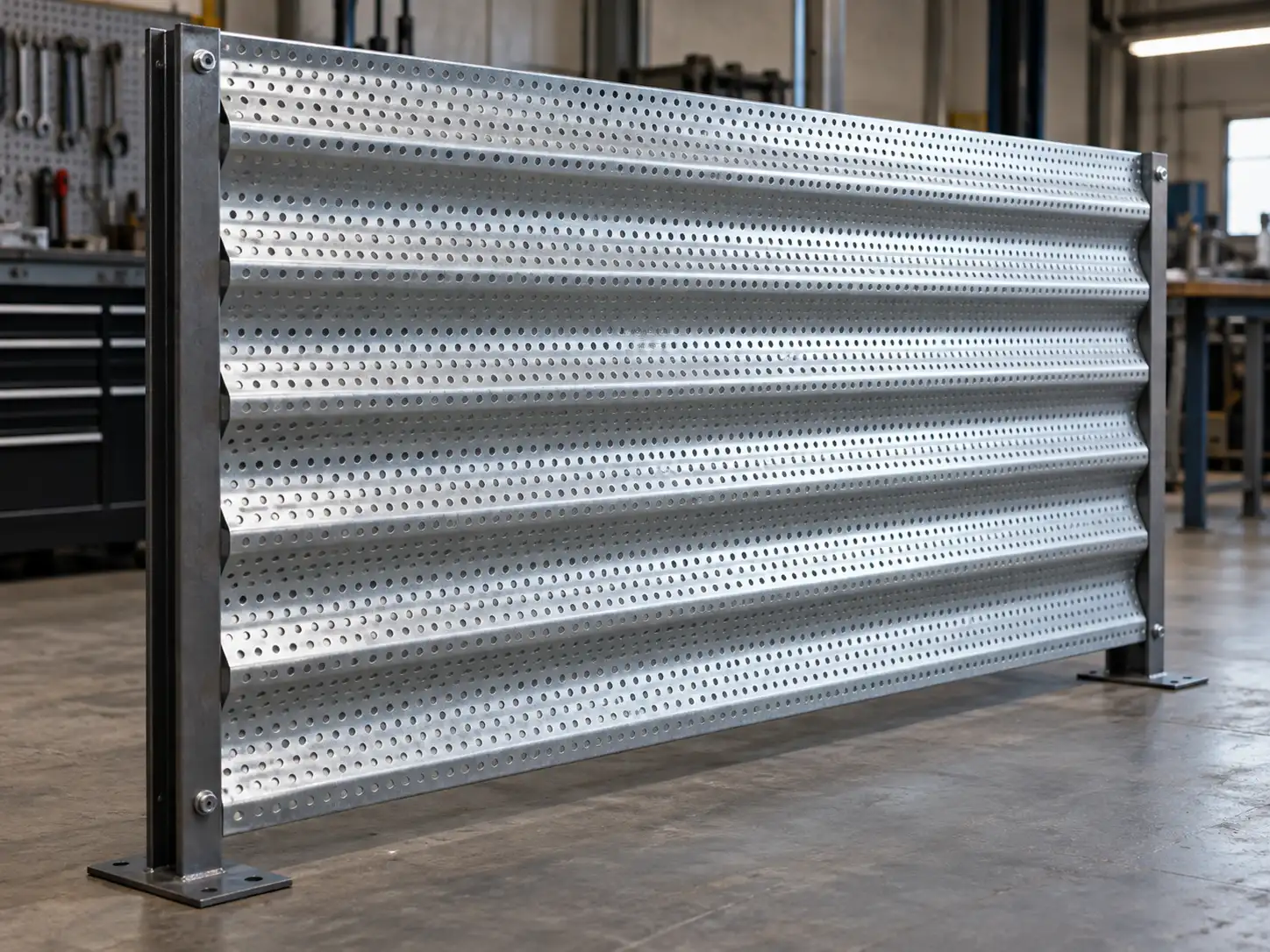
Increased Rigidity
The corrugated profile improves panel stiffness and helps reduce flexing across larger surfaces.
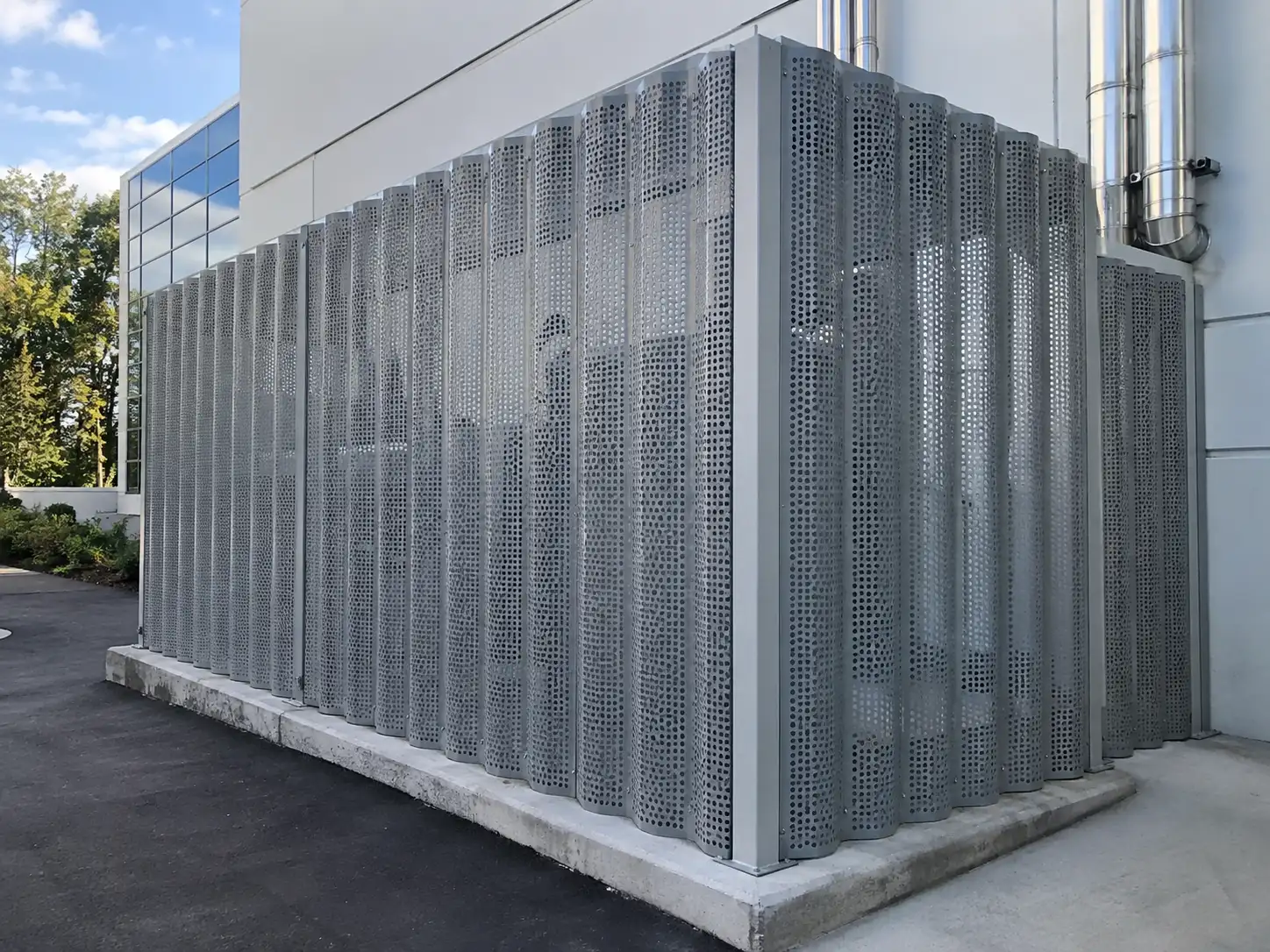
Better Ventilation
Perforations allow controlled airflow while the formed profile maintains panel strength.
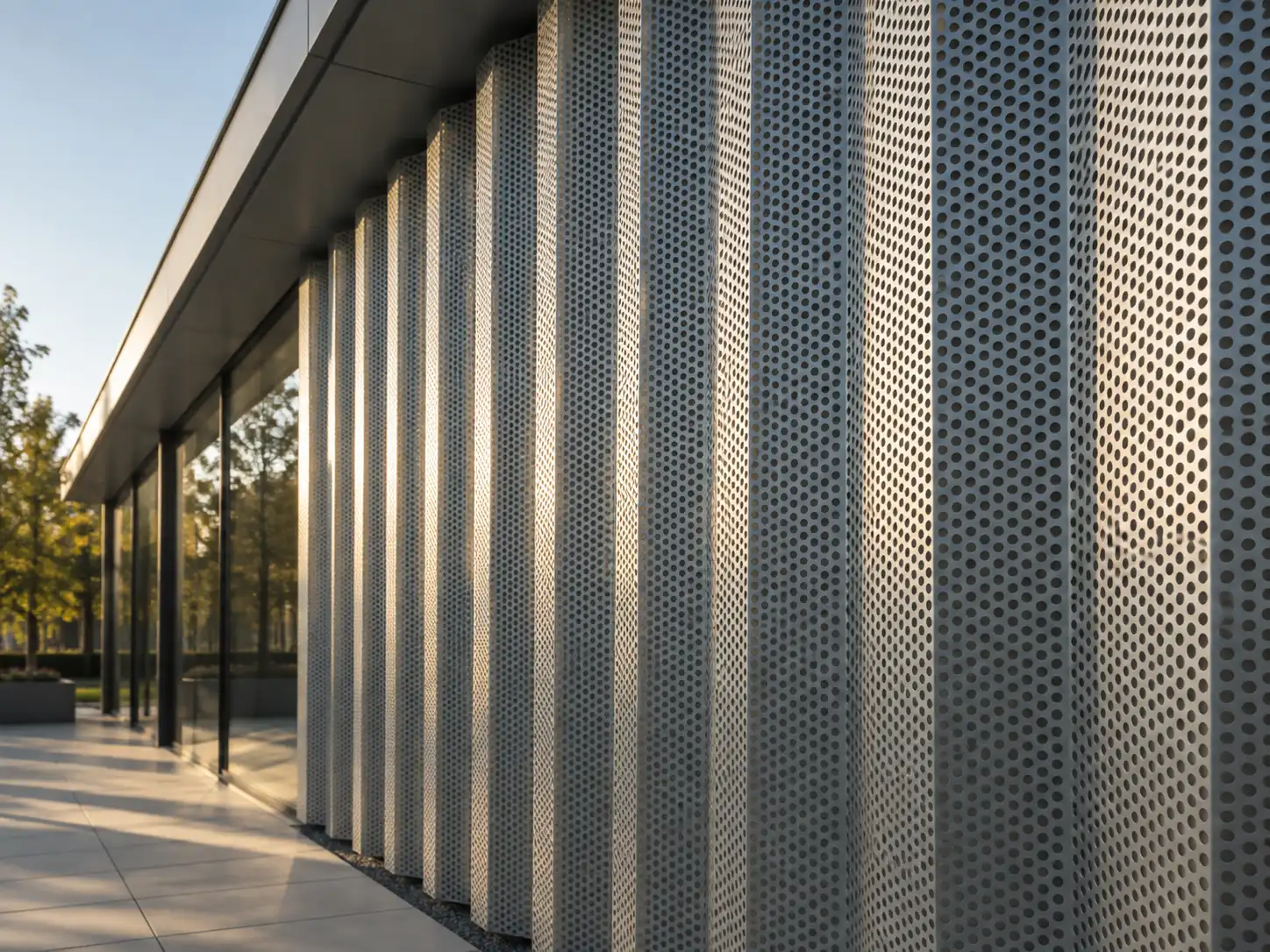
3D Appearance
Corrugated surfaces create depth, shadows and stronger architectural visual effects.
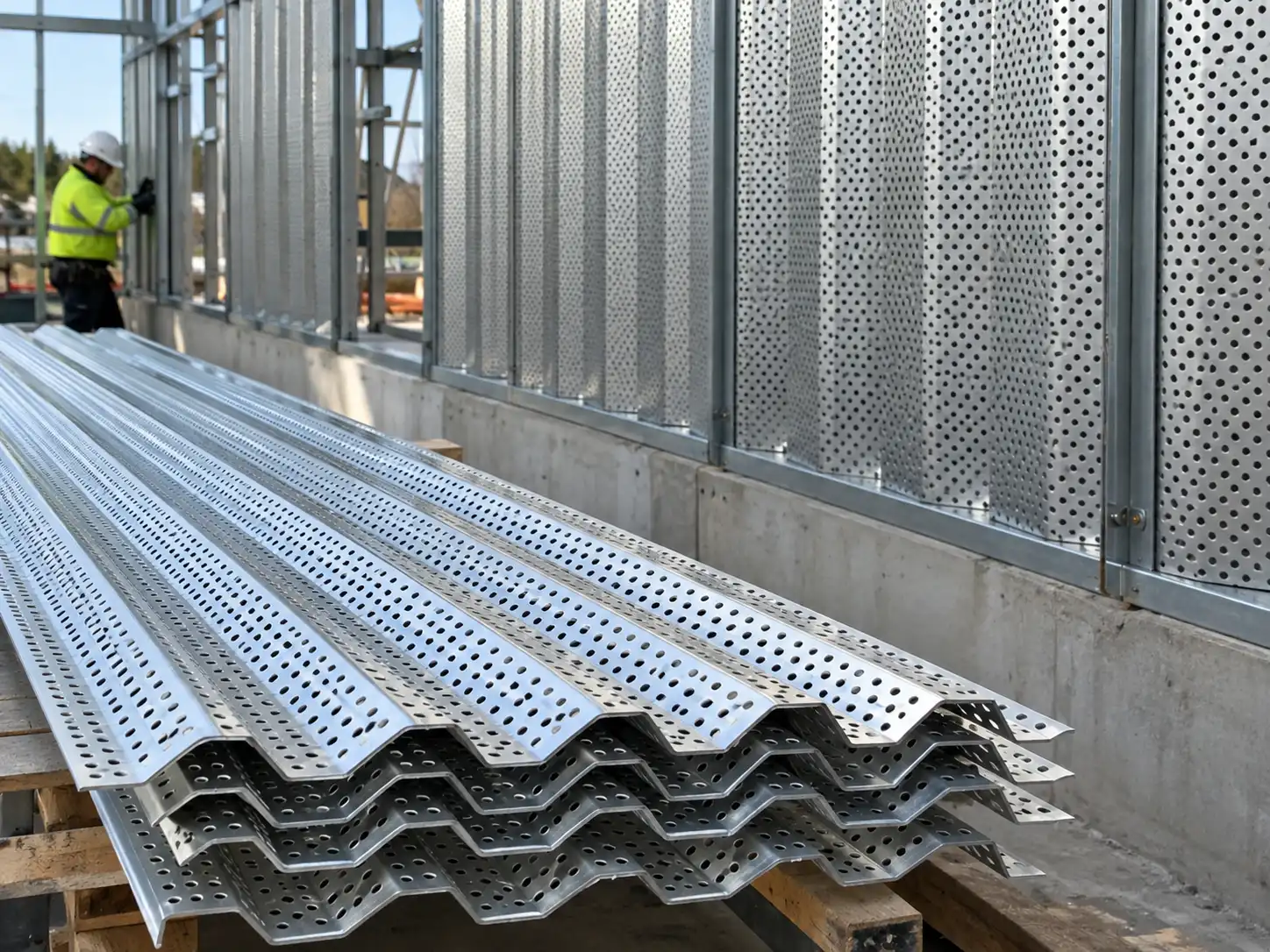
Efficient Panel Design
Profiled panels can achieve greater rigidity without simply increasing sheet thickness and weight.
Corrugated Perforated Metal Panel Specifications
Corrugated perforated panels should be specified according to both the perforation design and the formed profile.
| Specification | Available Options | Selection Notes |
|---|---|---|
| Material | Aluminum, stainless steel, carbon steel, galvanized steel | Select according to weight, corrosion resistance and environment |
| Material Thickness | According to profile and panel requirements | Influences forming capability, rigidity and finished weight |
| Panel Width | Standard or custom width | Confirm usable width after corrugation |
| Panel Length | Custom according to project requirements | Consider transport and installation conditions |
| Corrugation Profile | Ribbed, waved or custom profiled design | Select according to rigidity, appearance and supporting structure |
| Profile Depth | According to panel design | Greater depth generally increases panel stiffness |
| Profile Pitch | Custom according to corrugation design | Influences appearance, coverage and support spacing |
| Hole Pattern | Round, slotted, square, hexagonal, micro or custom | Select according to airflow and visual requirements |
| Hole Size | Custom opening dimensions | Influences open area and screening performance |
| Open Area | Customized percentage | Balance airflow, visibility, shading and strength |
| Perforation Layout | Full, partial or custom perforation | Solid zones can be retained for forming and mounting |
| Profile Direction | Vertical or horizontal according to design | Important for appearance and installation |
| Edge Detail | Cut, folded, overlapped or reinforced | Select according to panel joints and installation |
| Surface Finish | Mill finish, powder coating, painting, galvanizing | Depends on material and exposure |
| Mounting Detail | Holes, brackets, tabs or custom fixing points | Follow project installation drawings |
| Tolerance | According to formed panel dimensions | Identify critical profile and mounting dimensions |
For detailed hole designs, link to the corresponding Round Hole, Slotted, Square, Hexagonal and Micro-Perforated Metal pages.
How to Select Corrugated Perforated Metal Panels
Selection should consider the profile, perforation and installation system together.
Profile Depth
Deeper corrugations generally provide greater stiffness but also increase the overall panel depth and affect connection details.
Perforation & Open Area
Hole size, spacing and open area determine airflow, visibility, light transmission and the amount of solid metal remaining in the panel.
Panel Orientation
Vertical and horizontal corrugation create different visual effects and may require different support or fixing arrangements.
Support & Installation
Panel width, profile geometry, wind exposure and supporting structure should be reviewed before finalizing mounting details.
Corrugated Perforated Metal Materials
Material selection depends on corrosion exposure, finished weight, strength and architectural requirements.
Stainless Steel Perforated Metal
Stainless steel provides excellent corrosion resistance and are suitable for demanding environments.
Aluminum Perforated Metal
Aluminum offers lightweight construction and natural corrosion resistance.
Carbon Steel Perforated Metal
Carbon steel provides strength and cost efficiency for general industrial fabrication.
Galvanized Perforated Metal
Galvanized provides additional corrosion protection for outdoor and exposed applications.
Corrugated Perforated Metal Applications
Perforated Metal Facades & Cladding
Perforated Metal Railings & Privacy Screens
Machine Guards & Safety Barriers
Decorative & Architectural Metal Mesh
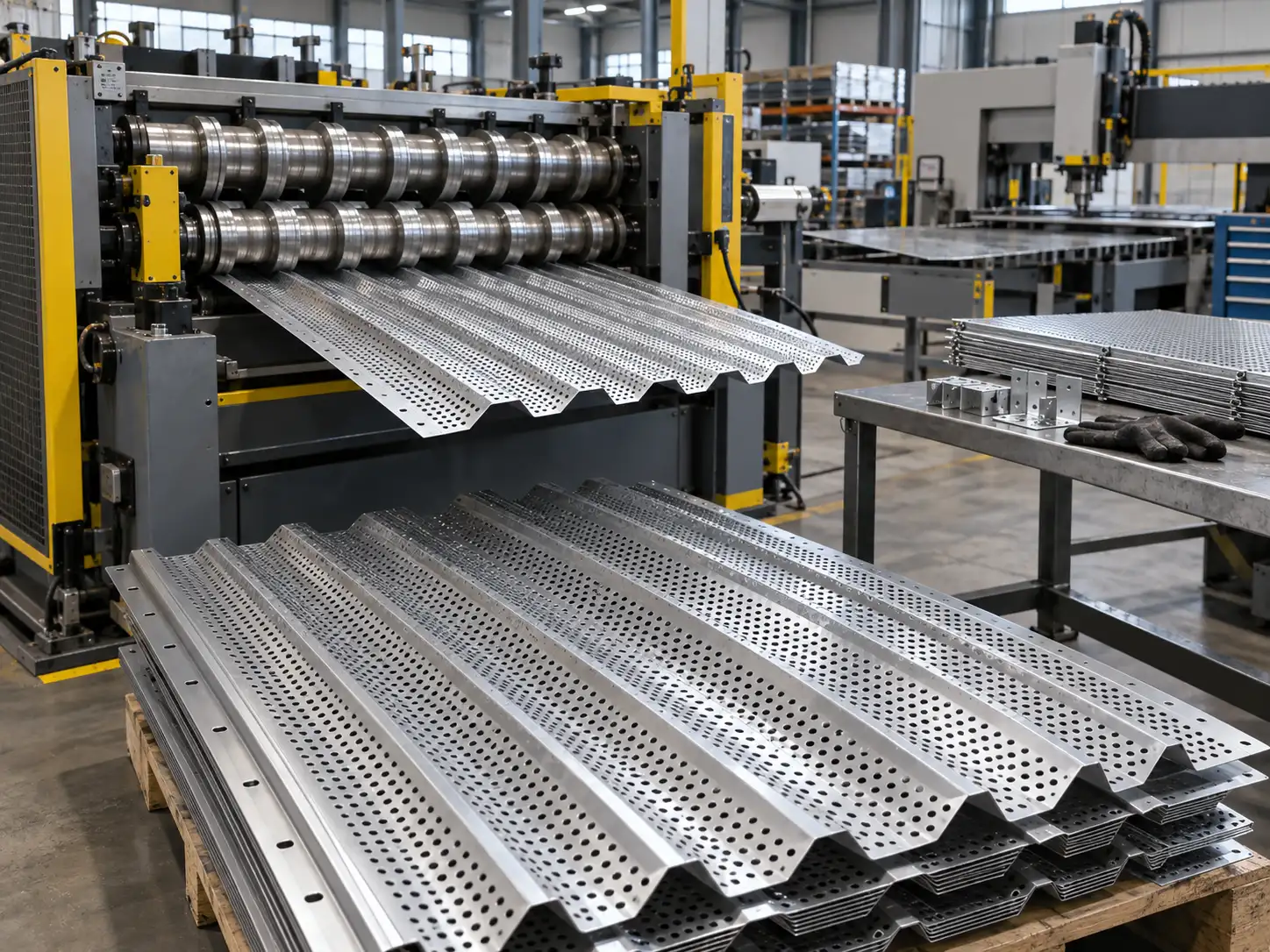
Custom Corrugated Perforated Metal Fabrication
We can manufacture perforated corrugated metal sheets as finished panels according to project drawings.
Perforating
Hole shape, diameter, pitch, open area and solid border zones can be customized before profile forming.
Corrugating & Forming
Perforated sheets can be formed into specified rib or wave profiles while maintaining consistent panel dimensions.
Cutting & Edge Finishing
Panels can be trimmed to final size with required edge conditions, overlaps and fixing zones.
Mounting Details
Fixing holes, slots, brackets and other installation features can be incorporated according to the supporting structure.
Why Choose Us as Your Corrugated Perforated Metal Panel Supplier?
Profile Control
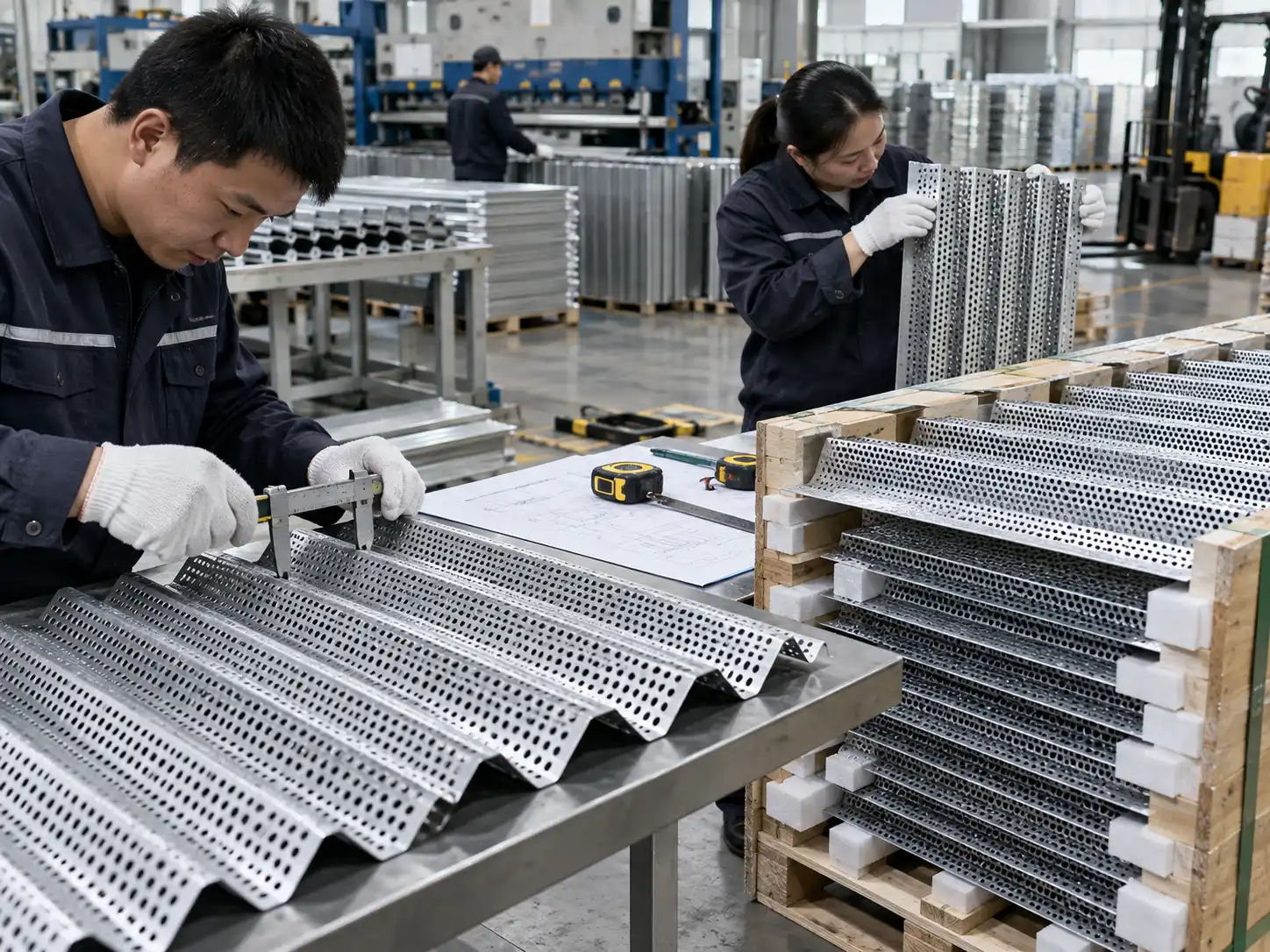
Corrugation depth, pitch and panel dimensions can be controlled according to approved specifications and drawings.
Perforation Consistency
Hole pattern, open area and perforation layout are maintained across repeat panels.
Custom Fabrication
Perforating, forming, cutting, edge preparation and mounting details can be completed as one production process.
Project Packaging
Finished profiled panels are supported and separated to reduce nesting damage, scratches and deformation during shipment.
How to Order Corrugated Perforated Metal Panels
Material
Specify aluminum, stainless steel, carbon steel or galvanized steel.
Panel Dimensions
Provide finished width, length, thickness and required quantity.
Corrugation Profile
Provide profile drawing, depth, pitch and orientation if specified.
Perforation
Provide hole shape, hole size, spacing and required open area.
Edge & Mounting Details
Confirm overlaps, folded edges, fixing holes, brackets and panel joints.
Surface Finish
Specify powder coating, painting, galvanizing or other required finish.
For custom projects, CAD or PDF drawings are recommended before quotation.
Corrugated vs. Flat Perforated Metal Panels
Corrugated and flat perforated metal panels use similar perforation methods, but the formed profile changes panel rigidity, appearance and installation requirements.
| Comparison | Corrugated Perforated Metal Panels | Flat Perforated Metal Panels |
|---|---|---|
| Surface Profile | Ribbed, waved or formed | Flat |
| Panel Rigidity | Higher due to the profiled structure | Depends more on thickness, folded edges and framing |
| Overall Depth | Greater | Lower |
| Visual Appearance | Three-dimensional with stronger shadow effects | Clean and uniform |
| Large Panel Performance | Profile helps reduce flexing | May require additional reinforcement |
| Installation | Profile direction and overlap details should be considered | Simpler flat-panel installation |
| Typical Use | Facades, screens, enclosures and feature walls | Walls, ceilings, facades and partitions |
Choose corrugated perforated metal panels when increased rigidity, a three-dimensional appearance or larger panel areas are important.
Choose flat perforated metal panels when a smooth surface, lower profile and simpler installation are preferred.
Case Study Example: Corrugated Perforated Screens for a Sports Venue
Project Background
A sports venue contractor required perforated metal screens to conceal service and equipment areas along a public concourse.
The panels needed to provide visual screening while maintaining airflow and a consistent architectural appearance across long wall sections.
Project Requirements
The project required several panel widths but a consistent corrugated profile and perforation pattern.
The screens also needed sufficient rigidity to avoid excessive flexing across the finished sections, together with mounting points that matched the existing support frame.
Manufacturing Solution
Aluminum perforated corrugated panels were selected to reduce weight while providing outdoor corrosion resistance.
The sheets were perforated first, leaving controlled solid areas around the panel edges and fixing positions. They were then formed to the specified corrugated profile.
Profile direction and perforation alignment were kept consistent across adjacent panels, and mounting holes were produced according to the installation drawings.
All panels were powder-coated in the same production batch to maintain a consistent finish.
Inspection and Packaging
Finished width, length, profile depth, perforation alignment, mounting positions and coating appearance were checked before shipment.
Panels were numbered according to the installation layout and packed with separators to reduce rubbing between raised profiles during transportation.
Corrugated Perforated Metal Panels FAQs
Corrugated perforated metal is a perforated sheet that is subsequently formed into a ribbed or waved profile to increase rigidity and create a dimensional surface.
Corrugated perforated metal has a formed profile that increases panel depth and stiffness, while flat perforated metal remains in a single plane.
Yes. Material, thickness, perforation, profile depth, profile pitch, panel size, finish and mounting details can be customized.
Common options include aluminum, stainless steel, carbon steel and galvanized steel.
Yes. Corrugated perforated panels can be fabricated into screening systems with finished edges, mounting holes and other installation details.
Yes. Powder coating and other finishes can be applied depending on the selected material and project requirements.
The formed profile generally increases panel stiffness and resistance to flexing compared with a similar flat sheet, although final performance depends on material, thickness, profile and support conditions.
Yes. Solid border areas can be retained for forming, fixing, overlapping and other installation requirements.
Related Perforated Metal Products
Explore other perforated metal products with different sheet forms, screening functions and hole patterns for industrial, architectural and custom fabrication requirements.
Perforated Metal Sheet
Perforated metal sheets with customizable materials, thicknesses, hole sizes and open areas for further fabrication and general applications.
Perforated Metal Panels
Finished perforated panels for architectural walls, facades, ceilings and project installations.
Perforated Metal Screen
Perforated screen panels for privacy, ventilation, security and separation applications.
Round Hole Perforated Metal
Round hole perforated metal provides a widely used opening pattern for filtration, screening and decorative applications.
Slotted Perforated Metal
Slotted perforated metal is suitable for directional flow, screening and separation requirements.
Square Perforated Metal
Square perforated metal offers a clean geometric pattern for industrial and architectural applications.
Hexagonal Perforated Metal
Hexagonal perforated metal provides a distinctive pattern with efficient open area performance.
Micro-Perforated Metal
Micro-perforated metal provides fine openings for acoustic, filtration and specialized applications.