
Close-Mesh Bar Grating Overview
Close-mesh bar grating uses tighter bearing-bar spacing than conventional bar grating to create smaller clear openings across the walking surface.
The reduced opening size makes it useful for pedestrian areas, accessible routes and projects where smaller openings are preferred for wheels, walking surfaces or dropped-object control.
Depending on the construction, close-mesh grating can be manufactured as welded or press-locked grating in steel, galvanized steel and aluminum.
Selected configurations may satisfy ADA opening requirements when the actual clear opening, grating orientation and finished installation meet the applicable standard.
Close-Mesh Bar Grating Construction Options
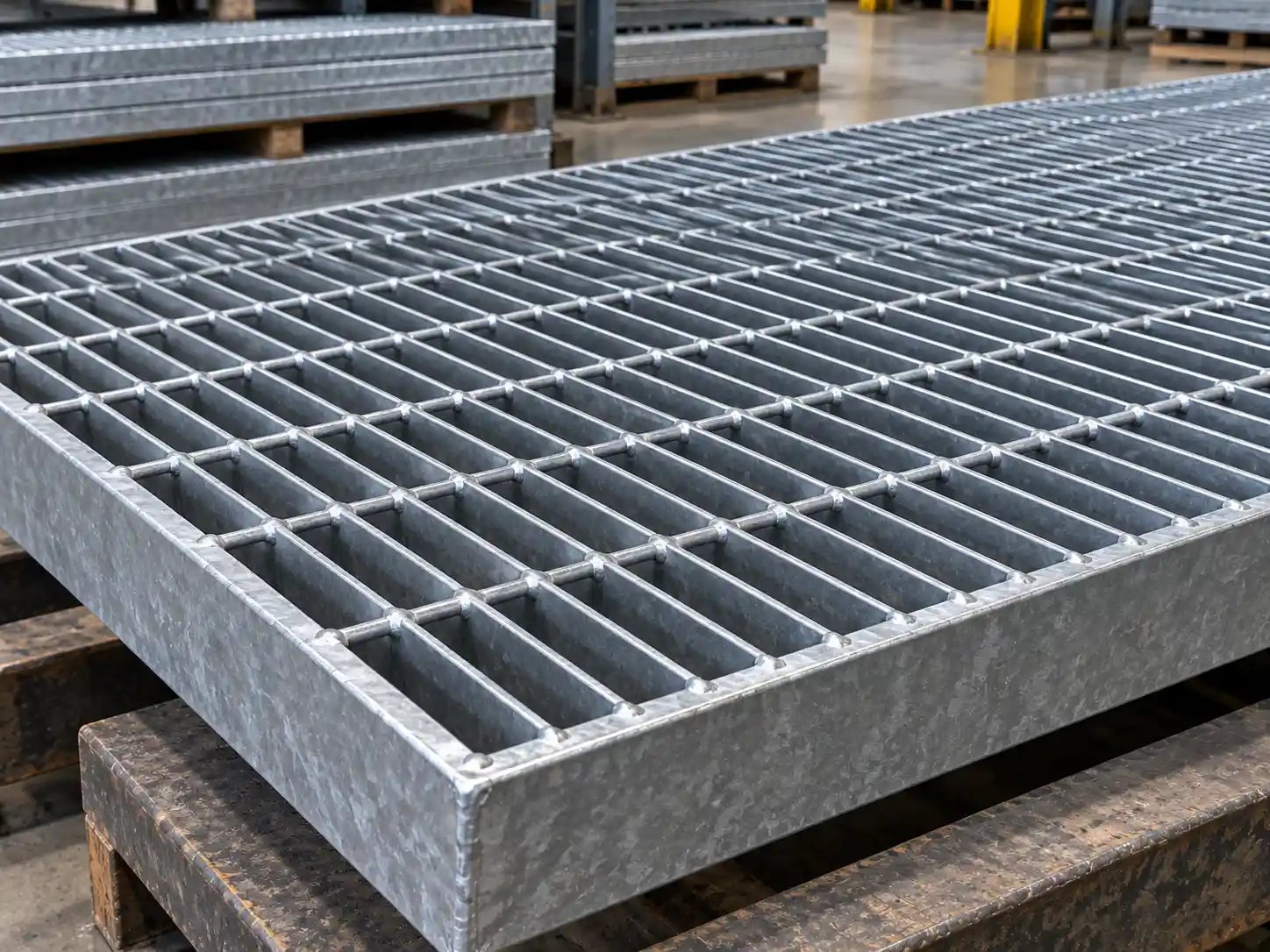
Welded Close-Mesh Bar Grating
Closer bearing-bar spacing combined with welded construction provides rigid panels for industrial and pedestrian access areas.
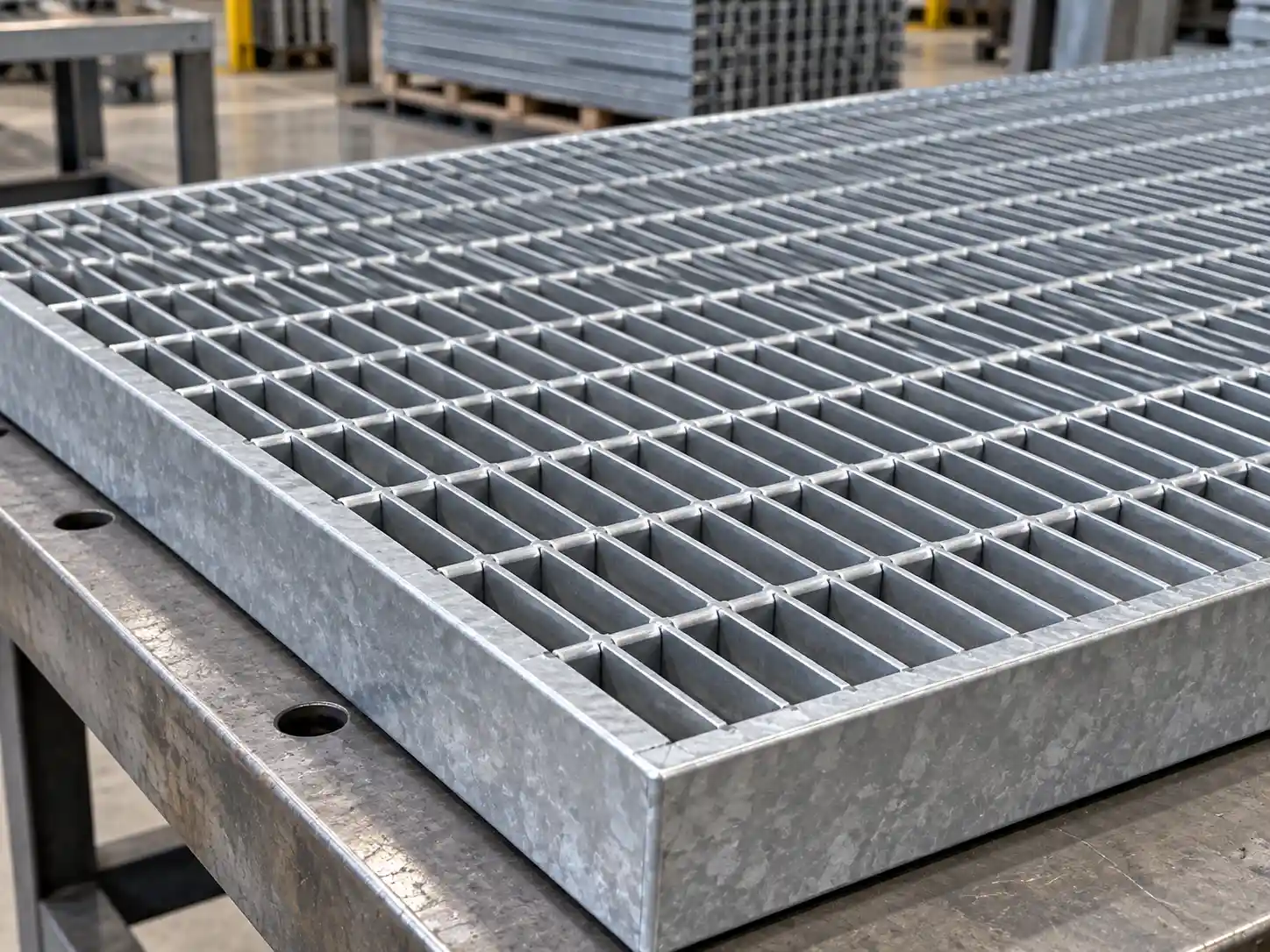
Press-Locked Close-Mesh Bar Grating
Press-locked construction allows smaller grid openings with a clean and consistent surface for industrial and architectural applications.
Close-Mesh Bar Grating Specifications
The key specification is the actual clear opening, together with bearing-bar size, spacing, construction, span and load requirements.
| Specification | Available Options | Selection Notes |
|---|---|---|
| Construction | Welded or press-locked | Select according to material and project |
| Material | Carbon steel, galvanized steel, aluminum | Depends on construction and environment |
| Bearing Bar Height | According to load and span | Influences load capacity |
| Bearing Bar Thickness | According to selected series | Also affects actual clear opening |
| Bearing Bar Spacing | Close spacing | Verify center-to-center and clear opening separately |
| Cross Bar Spacing | According to selected series | Depends on construction |
| Clear Opening | According to project requirement | Critical for accessibility-related applications |
| Surface | Smooth or serrated | Select according to traction |
| Panel Size | Standard or custom | Confirm finished dimensions |
| Bearing Bar Direction | Runs in span direction | Must match support layout |
| Clear Span | According to structure | Check with load data |
| Load Requirement | According to project design | Verify before final selection |
| Edge Condition | Open or banded | Depends on installation |
| Fabrication | Cutting, banding, notching and cut-outs | According to drawings |
ADA Grating Opening Requirements
Accessibility compliance depends on the finished opening dimensions and installation—not simply on the product being described as “close mesh.”
1. Maximum Opening
ADA Standards Section 302.3 states that openings in floor or ground surfaces must not allow passage of a sphere more than:
1/2 inch (13 mm) diameter.
2. Opening Direction
Where elongated openings are used, the long dimension must be perpendicular to the dominant direction of travel.
3. Verify the Actual Clear Opening
Bearing-bar spacing is normally specified center-to-center.
The actual opening therefore depends on both:
Bearing Bar Spacing − Bearing Bar Thickness
This should be checked using the final grating specification.
4. Check the Complete Installation
Meeting the grating opening requirement alone does not automatically make an entire walkway, platform or facility ADA compliant.
The complete project must meet all applicable accessibility requirements.
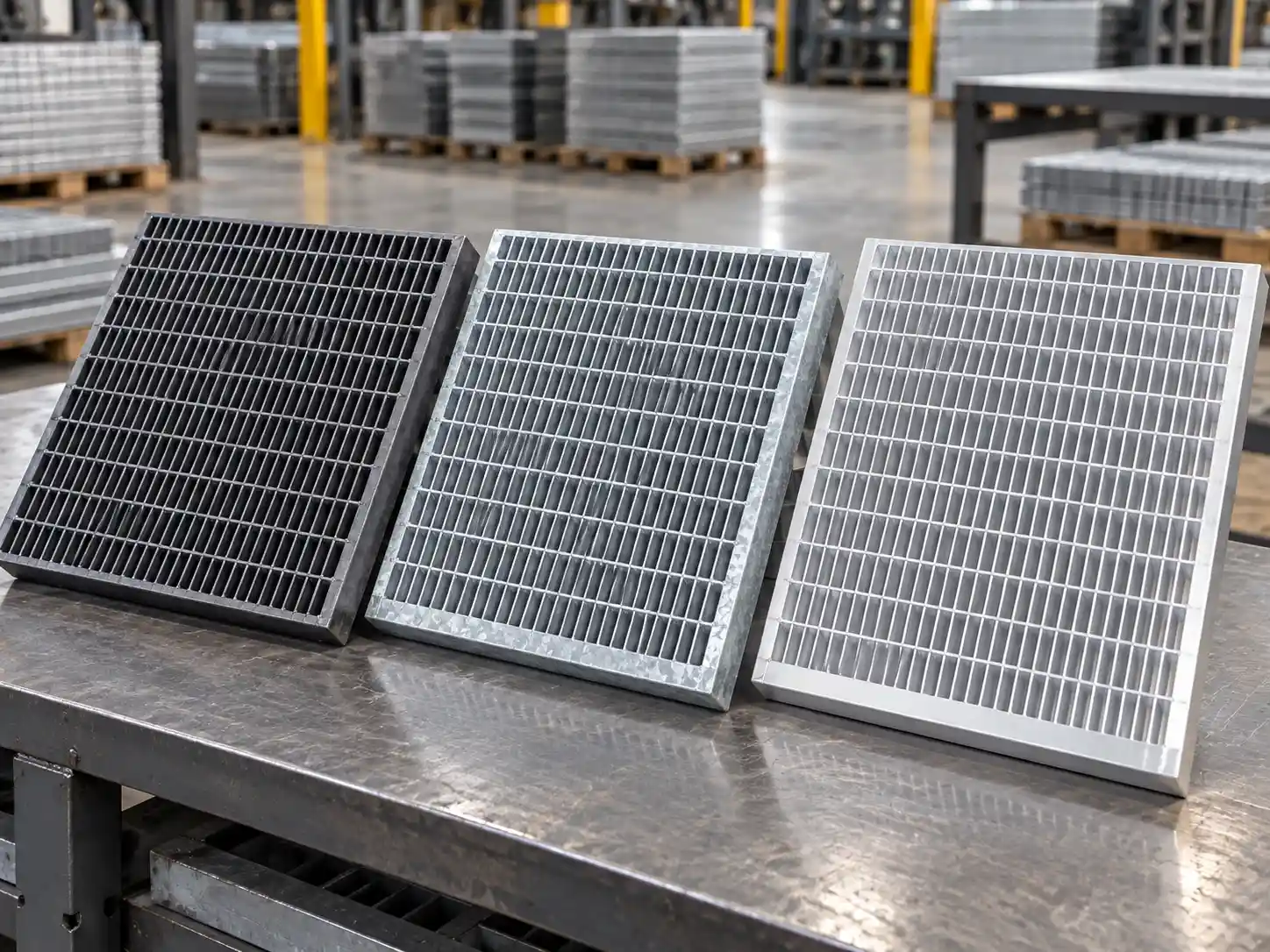
Close-Mesh Bar Grating Materials
Carbon Steel
Strong and economical close-mesh grating for industrial and pedestrian flooring applications.
Galvanized Steel
Zinc-protected close-mesh grating for outdoor and moisture-exposed walkways and access areas.
Aluminum
Lightweight and corrosion-resistant close-mesh grating, particularly suitable for press-locked constructions.
Close-Mesh Bar Grating Applications
Reduced openings make close-mesh grating particularly useful for pedestrian flooring and access areas where conventional grating openings may be too large.
Metal Grating Platforms & Walkways
Industrial Bar Grating Flooring
Metal Grating Stair Treads
Trench & Drain Grating
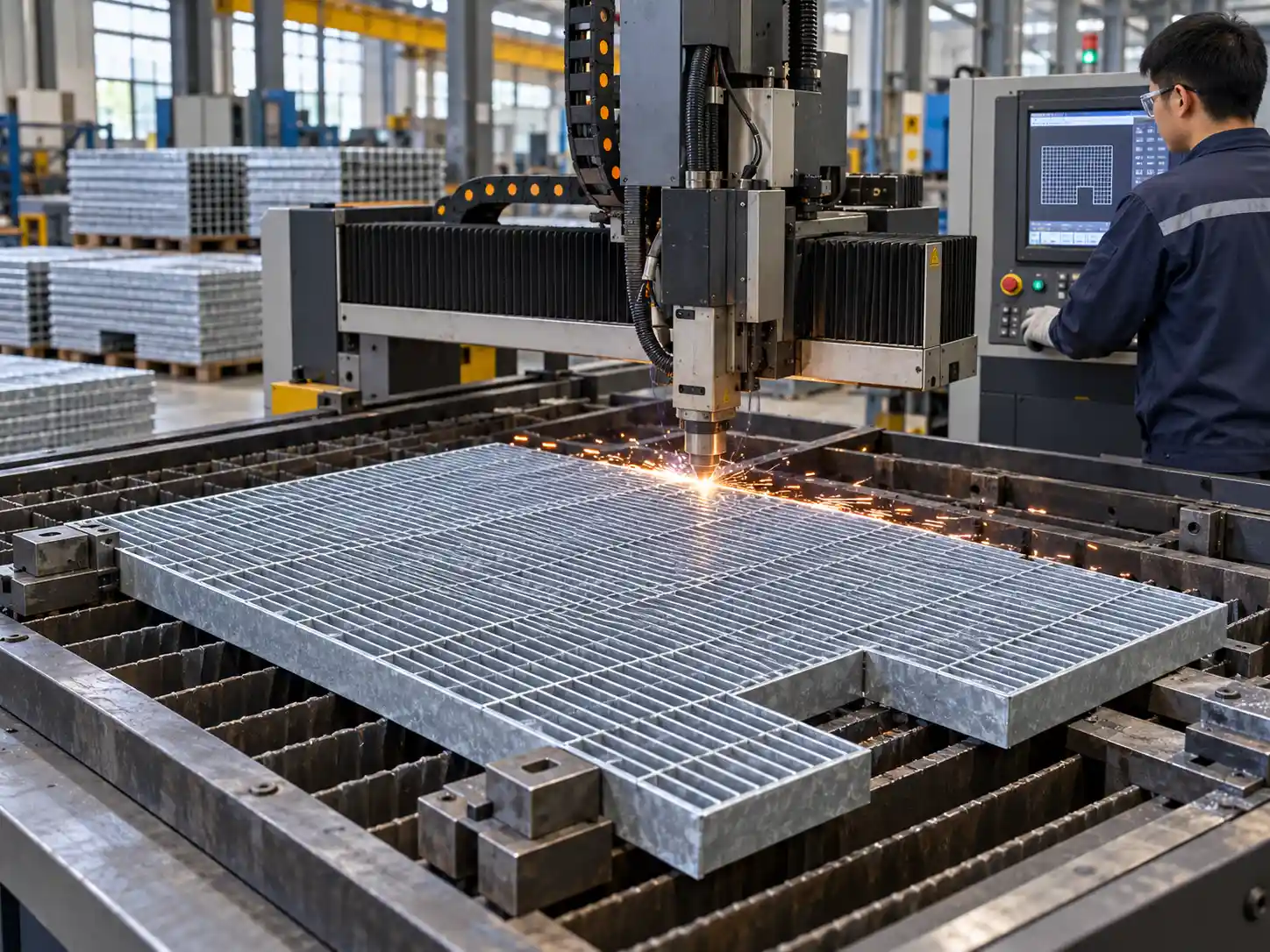
Custom Close-Mesh Bar Grating Fabrication
Close-mesh panels can be fabricated according to finished dimensions, support layouts and accessibility-related project drawings.
Cutting & Sizing
Panels can be cut to finished widths, lengths and project dimensions.
Banding
Panel edges and openings can be banded where required for installation and finished appearance.
Cut-Outs & Notching
Custom openings can be produced around columns, pipes and equipment.
Panel Orientation
Bearing-bar and opening direction can be controlled according to structural and walking-direction requirements.
Why Choose Us as Your Close-Mesh Bar Grating Supplier?
We supply custom close-mesh grating with controlled opening dimensions, spacing, panel orientation and project-based fabrication.
Opening Control
Bearing-bar spacing and thickness can be controlled to achieve the required finished opening.
Construction Options
Welded and press-locked configurations support different material and design requirements.
Custom Fabrication
Panels can be cut, banded and prepared with project-specific openings and notches.
Panel Orientation
Grating direction and panel identification can be prepared according to installation drawings.
For quotation, send us the construction type, material, bearing bar size, spacing, required clear opening, panel dimensions, span, load requirement, quantity and fabrication drawings.
Close-Mesh vs. Standard Bar Grating
The main difference is the bearing-bar spacing and resulting clear opening—not simply the overall panel size.
| Comparison | Close-Mesh Bar Grating | Standard Bar Grating |
|---|---|---|
| Bearing Bar Spacing | Closer | Wider conventional spacing |
| Clear Openings | Smaller | Larger |
| Open Area | Generally lower | Generally higher |
| Pedestrian Surface | More compact | Conventional open-grid surface |
| Accessibility Applications | Selected configurations may be suitable | Many standard configurations have openings too large |
| Weight | May be higher for comparable panel area | Depends on specification |
| Typical Use | Pedestrian and accessibility-related areas | General industrial flooring |
Choose Close-Mesh Bar Grating when smaller clear openings are a key project requirement.
Choose conventional bar grating where larger openings are acceptable and standard industrial access is the main requirement.
Case Study : Close-Mesh Grating for a Public Transit Maintenance Walkway
This project required close-mesh galvanized grating panels for pedestrian access around a public transit maintenance facility.
Project Requirement
The project included maintenance walkways crossing several drainage and service areas.
The contractor required smaller openings than conventional industrial grating and multiple fabricated panel sizes to match the existing structural layout.
Panel orientation also had to remain consistent across the walking route.
Manufacturing Solution
Close-mesh galvanized steel grating was prepared according to the approved opening, panel and support requirements.
Finished panel dimensions and bearing-bar direction were controlled according to the layout drawings.
Panels were cut to size, with local notches and service openings fabricated where required.
Edges and selected openings were banded according to the finished installation requirements.
Inspection & Packaging
Clear openings, panel dimensions, bearing-bar direction, fabricated openings and identification marks were checked before shipment.
Panels were labeled by installation location and grouped according to the walkway layout.
Close-Mesh & ADA Bar Grating FAQs
Close-mesh bar grating uses reduced bearing-bar spacing to create smaller clear openings than conventional grating.
No. Compliance depends on the actual clear opening, opening orientation and complete installation.
Under ADA Standards Section 302.3, floor or ground openings must not allow passage of a sphere more than 1/2 inch (13 mm) in diameter.
Their long dimension should be perpendicular to the dominant direction of travel.
No. Bearing-bar spacing is generally measured center-to-center, while clear opening is the actual space between adjacent bearing bars.
Welded and press-locked constructions are commonly available for close-mesh grating.
Carbon steel, galvanized steel and aluminum are common choices depending on construction and project requirements.
Selected configurations can use serrated surfaces where additional traction is required.
Yes. Panels can be cut, banded and fabricated according to project drawings.
Provide construction type, material, bearing bar size, spacing, required clear opening, panel dimensions, span, load requirement, quantity and fabrication drawings.
Related Bar Grating Products
Explore other bar grating constructions, surfaces and fabricated products.
Bar Grating Stair Treads
Fabricated grating treads with nosing, end plates and mounting details for industrial stairs.
Serrated Bar Grating
Slip-resistant grating with serrated bearing-bar surfaces for wet and demanding walking areas.
Heavy-Duty Bar Grating
Higher-capacity grating for demanding load and traffic requirements.
Riveted Bar Grating
Mechanically riveted grating for specialized industrial and traffic applications.
Press-Locked Bar Grating
Mechanically locked grating with standard and close-mesh configurations.
Welded Bar Grating
Rigid welded grating for industrial flooring, platforms and access systems.
Swage-Locked Bar Grating
Mechanically locked grating commonly used for lightweight and aluminum constructions.
Bar Grating Clips & Fasteners
Mounting accessories for securing grating panels to supporting structures.