
Aluminum Bar Grating Overview
Aluminum bar grating uses parallel bearing bars connected by cross bars to create a strong, open walking surface with relatively low weight.
Compared with steel grating, aluminum helps reduce dead load, handling weight and installation effort, while providing good corrosion resistance for many outdoor and industrial environments.
Aluminum Bar Grating Types
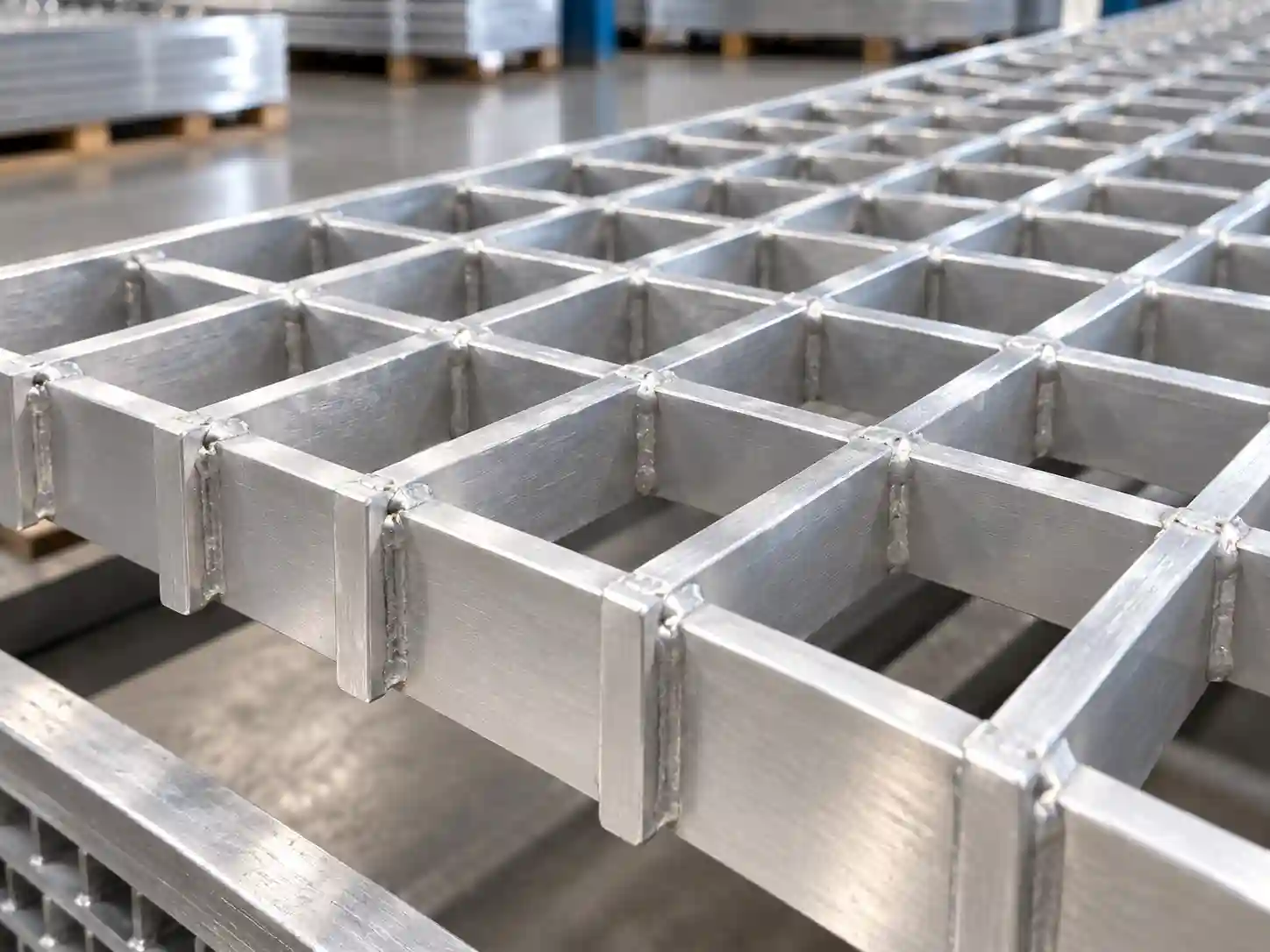
Welded Aluminum Bar Grating
Bearing bars and cross bars are permanently joined to create a rigid grating panel for industrial access and platform applications.
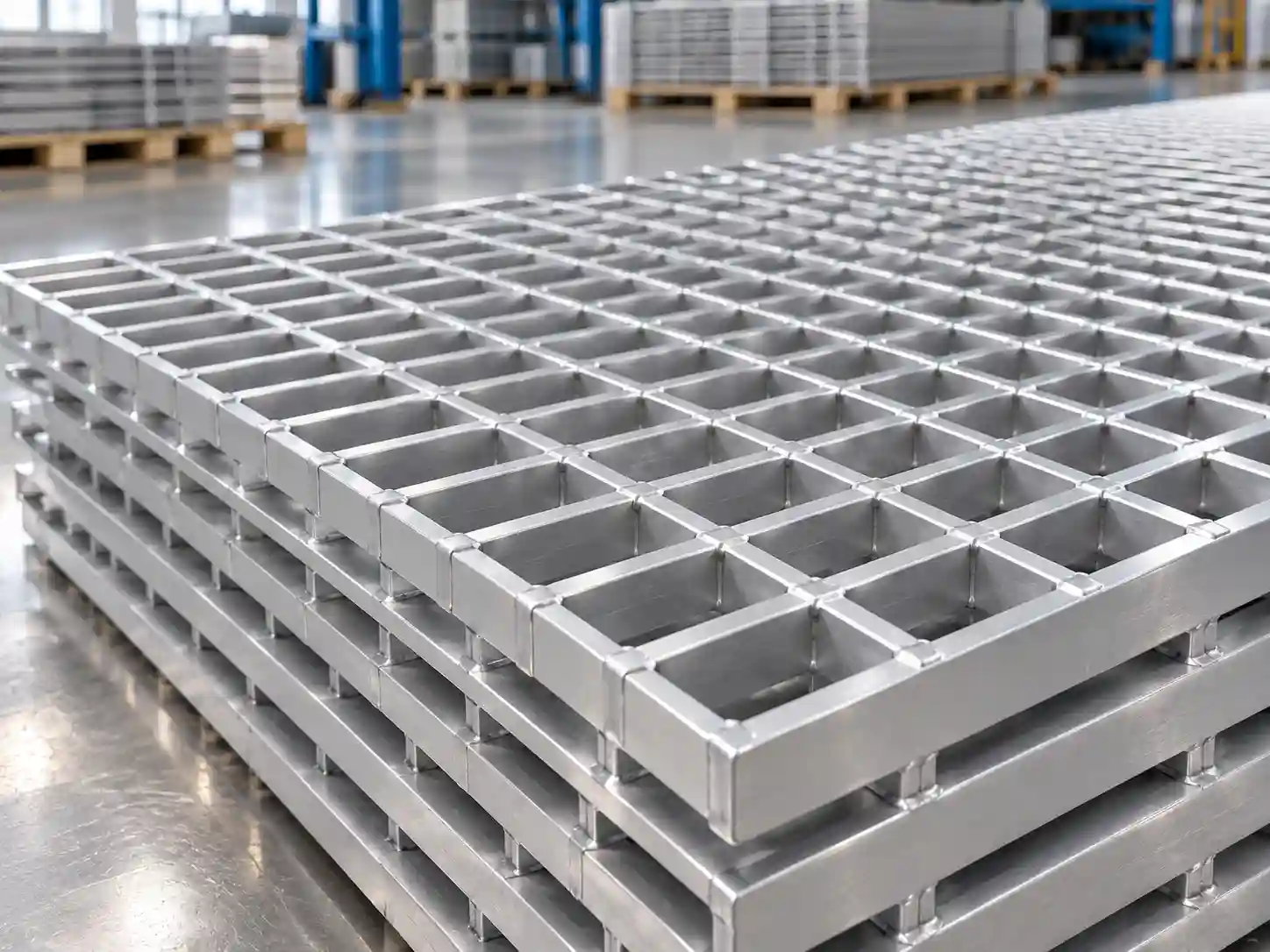
Press-Locked Aluminum Grating
Cross bars are mechanically pressed into bearing bars to create a clean, uniform appearance.

Serrated Aluminum Bar Grating
Bearing bars include a serrated surface to improve traction in wet, oily or outdoor environments.
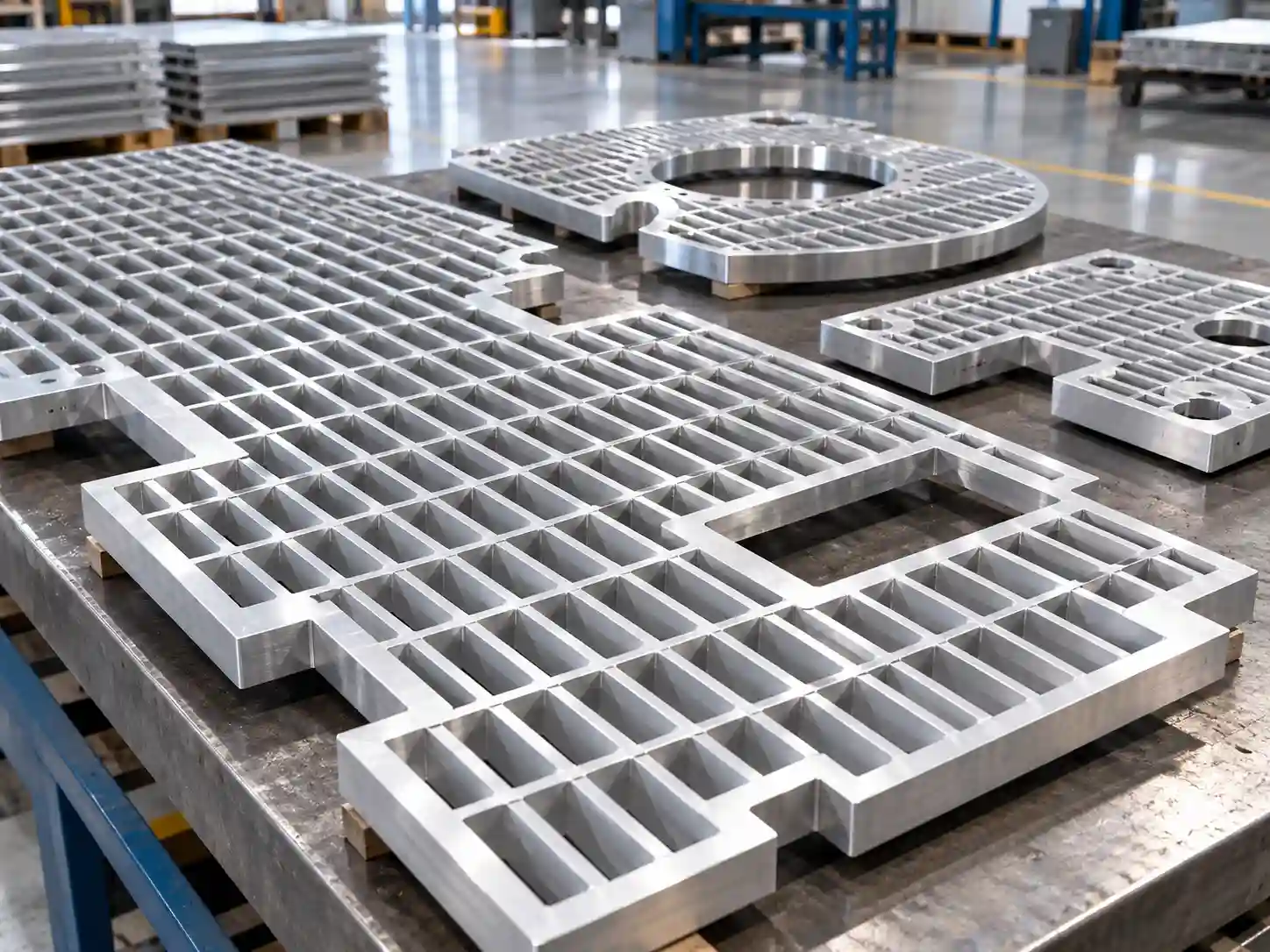
Custom Aluminum Grating
Bearing bar size, spacing, panel dimensions and edge treatment can be customized according to drawings and load requirements.
Aluminum Alloys
The alloy should be selected according to strength, corrosion resistance, fabrication and structural requirements.
| Alloy | Key Characteristics | Typical Consideration |
|---|---|---|
| 6061 Aluminum | Good strength and structural performance | Industrial platforms, walkways and structural grating |
| 6063 Aluminum | Good corrosion resistance and surface finish | Architectural and selected access applications |
| 5052 Aluminum | Good corrosion resistance and formability | Selected fabricated grating components, subject to design |
| 3003 Aluminum | Good formability and corrosion resistance | Selected non-structural or lighter-duty applications |
For load-bearing grating, 6061 and 6063 are generally the more relevant alloys, while other alloys should be reviewed against the actual project specification.
Aluminum Bar Grating Specifications
Grating performance depends mainly on bearing bar size, bearing bar spacing, cross bar spacing and span.
| Specification | Available Options |
|---|---|
| Material | Aluminum |
| Common Alloys | 6061, 6063 and selected alternatives |
| Bearing Bar Type | Plain or serrated |
| Bearing Bar Size | Custom |
| Bearing Bar Spacing | Custom |
| Cross Bar Spacing | Custom |
| Panel Size | Standard and custom |
| Surface | Mill finish or project-specific finish |
| Edge | Plain, banded or fabricated |
| Supply Form | Panels, stair treads and custom components |
| Fabrication | Cutting, banding, notching and framing |
Applications of Aluminum Bar Grating

Metal Grating Platforms & Walkways

Metal Grating Stair Treads
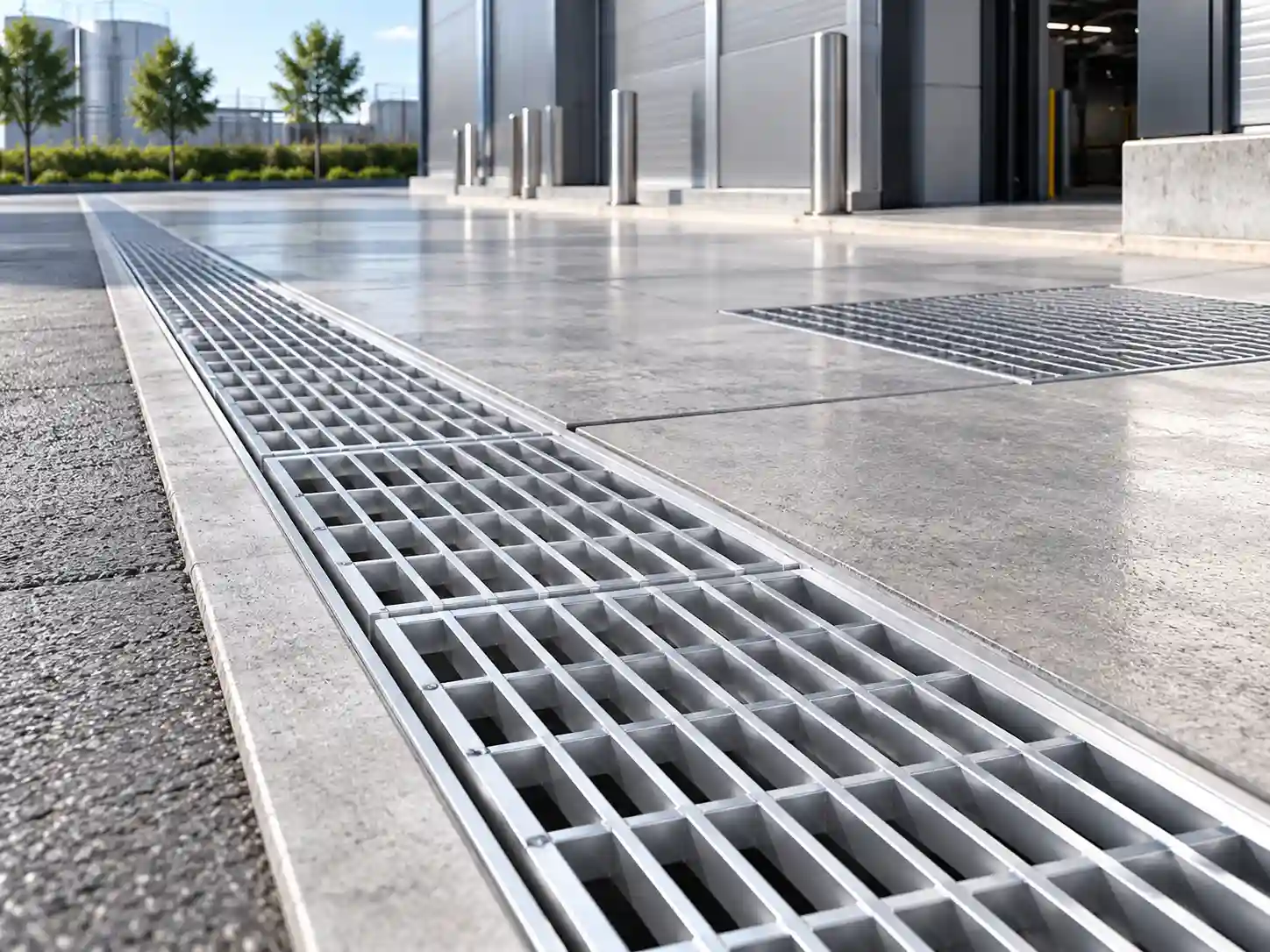
Trench & Drain Grating
How to Choose Aluminum Bar Grating
The correct grating should be selected according to the required load, span and installation environment.
| Requirement | Selection Focus |
|---|---|
| Pedestrian walkway | Bearing bar size and span |
| Maintenance platform | Load requirement and panel support |
| Stair tread | Width, depth and anti-slip surface |
| Drain cover | Load, opening and drainage requirement |
| Outdoor access | Corrosion resistance and slip resistance |
| Lightweight structure | Panel weight and required load capacity |
For structural applications, load requirement and clear span should always be confirmed before selecting a grating size.

Custom Fabrication & Quality Control
Aluminum bar grating can be fabricated and inspected according to project drawings before shipment.
Precision Cutting
Panels cut to required dimensions.
Banding
Edges can be reinforced or finished according to installation requirements.
Notching
Custom cut-outs for columns, pipes and structural interfaces.
Dimension Check
Finished panel dimensions verified before packing.
Visual Inspection
Bars, joints and fabricated edges checked before shipment.
Why Choose LH as Your Aluminum Bar Grating Supplier?
Lightweight Solutions
Aluminum reduces panel and installation weight.
Custom Spacing
Bearing bars and spacing made to project requirements.
Fabrication Support
Cutting, banding and notching available.
Reliable Supply
OEM and bulk production support.
6061 vs. 6063 Aluminum Bar Grating
| Comparison | 6061 Aluminum | 6063 Aluminum |
|---|---|---|
| Strength | Higher | Moderate |
| Structural Use | Well suited | Suitable for selected applications |
| Corrosion Resistance | Good | Good |
| Surface Finish | Good | Very good |
| Fabrication | Good | Good |
| Typical Use | Industrial platforms and walkways | Architectural and lighter-duty access systems |
Choose 6061 where higher structural strength is the priority.
Choose 6063 where surface appearance and lighter-duty architectural use are more important.
Case Study: Lightweight Aluminum Grating for Maintenance Platform
An industrial equipment project required an elevated maintenance platform that could provide safe access while minimizing additional structural weight.
Aluminum bar grating was selected because it provided:
- Lower panel weight
- Open drainage and airflow
- Good corrosion resistance
- Easy handling during installation
- Custom panel dimensions
- Suitable access surface for maintenance personnel
Panels were cut according to the platform layout, with selected areas notched around structural supports before shipment.
Frequently Asked Questions
Aluminum bar grating is commonly used for platforms, walkways, stair treads, drainage covers and other access applications where low weight and corrosion resistance are important.
6061 is commonly considered where higher structural strength is required, while 6063 can be suitable for selected architectural or lighter-duty applications. The final alloy should be selected according to the load and project specification.
5052 provides good corrosion resistance and fabrication performance, but its suitability depends on the grating design and required load. For structural applications, the alloy should be confirmed against the engineering requirement.
3003 may be used for selected lighter-duty or non-structural applications, but it should not automatically be substituted for higher-strength structural aluminum alloys.
Yes. Aluminum has significantly lower density than carbon or stainless steel, which can reduce panel weight, structural dead load and handling requirements.
Yes. Serrated bearing bars can be supplied for applications requiring additional traction, including outdoor, wet and industrial access areas.
Yes. Bearing bar size, spacing, panel dimensions and fabricated details can be customized according to drawings and project requirements.
Yes. Aluminum bar grating can be fabricated into stair treads with custom width, depth, edge treatment and optional anti-slip surfaces.
Related Products
Welded Bar Grating
Rigid metal grating for industrial platforms and access systems.
Press-Locked Bar Grating
Clean-profile grating for architectural and access applications.
Serrated Bar Grating
Anti-slip grating for wet and industrial environments.
Bar Grating Stair Treads
Fabricated stair treads for industrial access systems.
Aluminum Expanded Metal
Lightweight continuous mesh for screens, guards and architectural panels.
Aluminum Perforated Metal
Lightweight perforated panels with customizable open area.